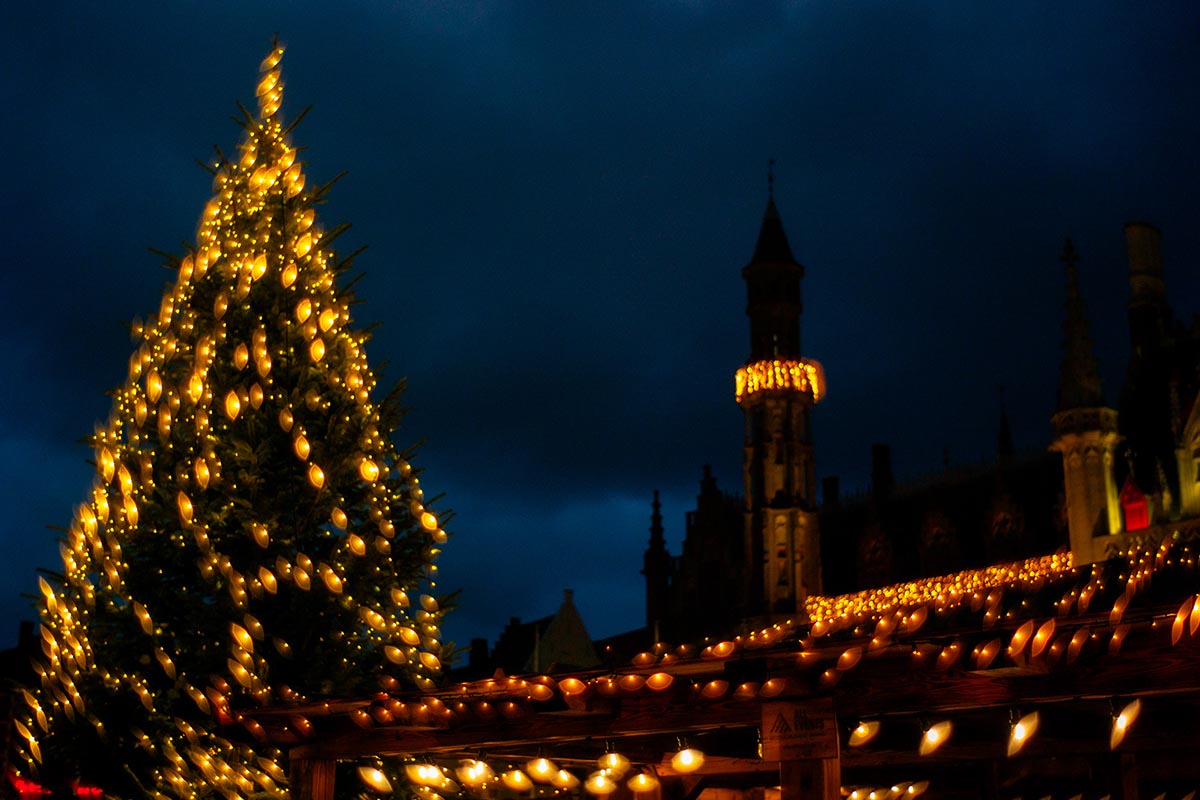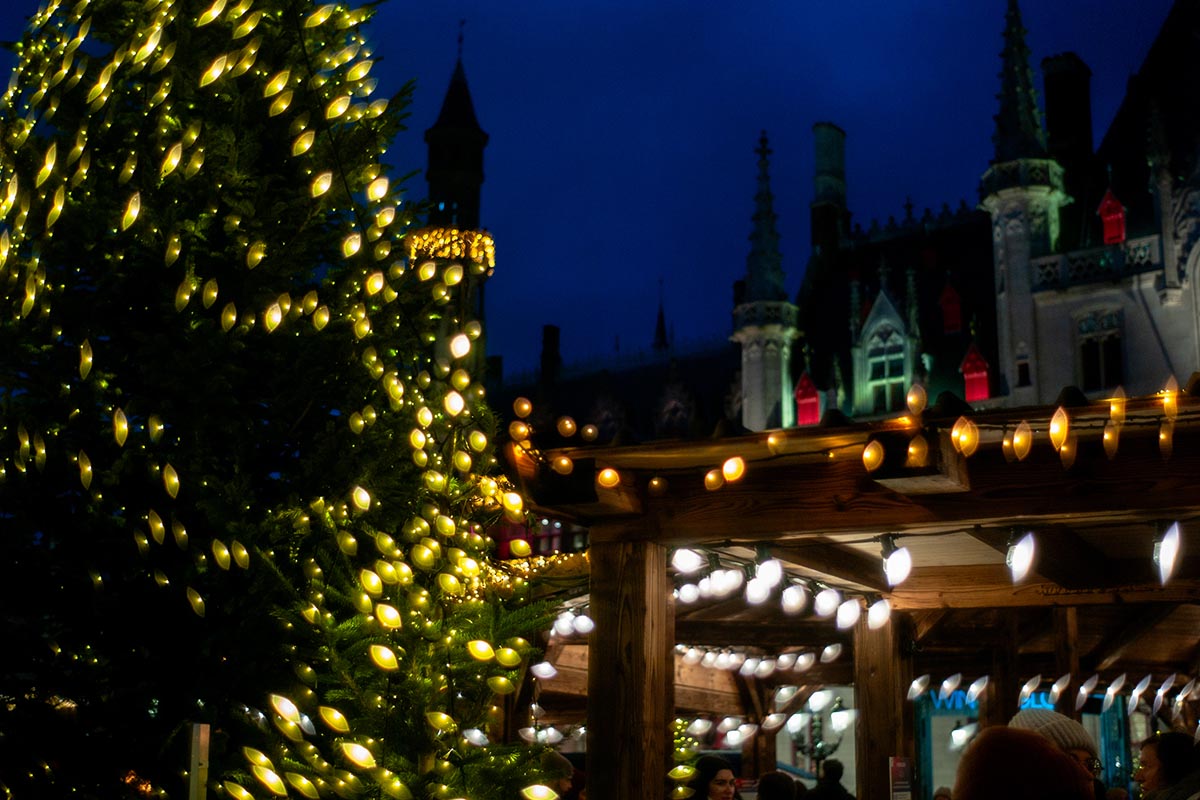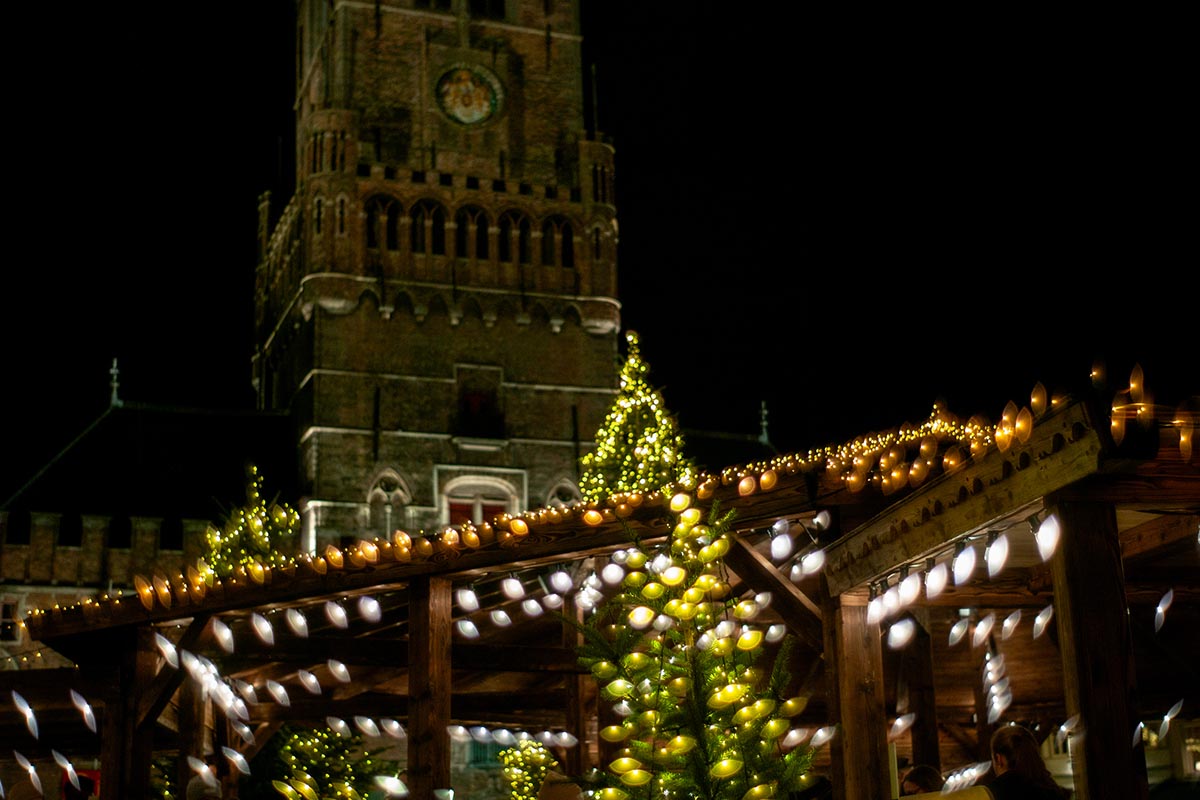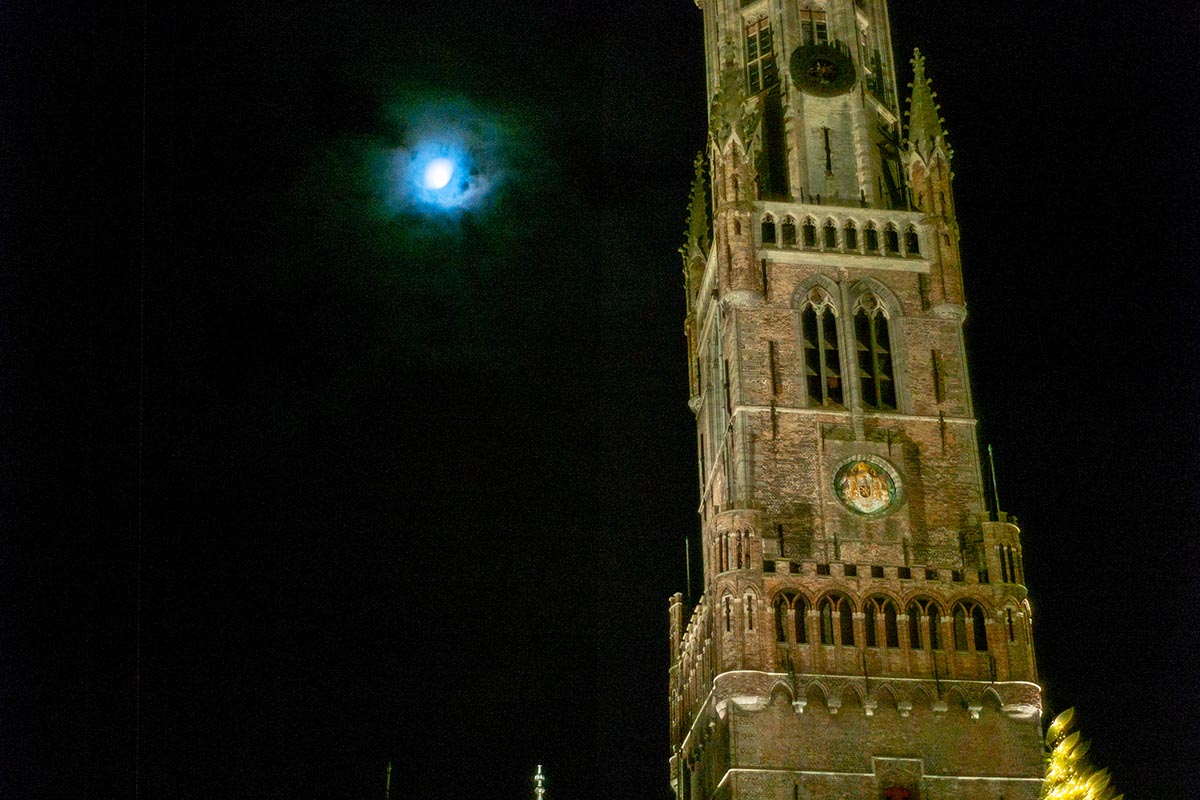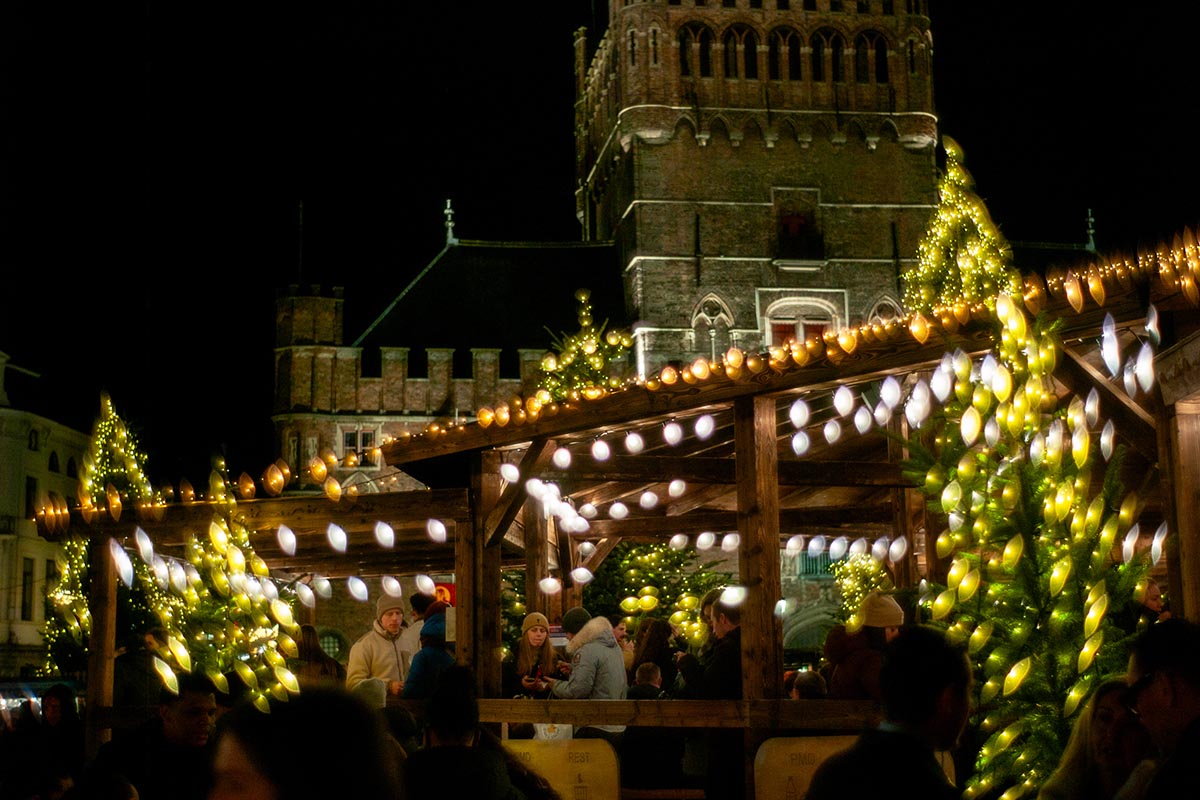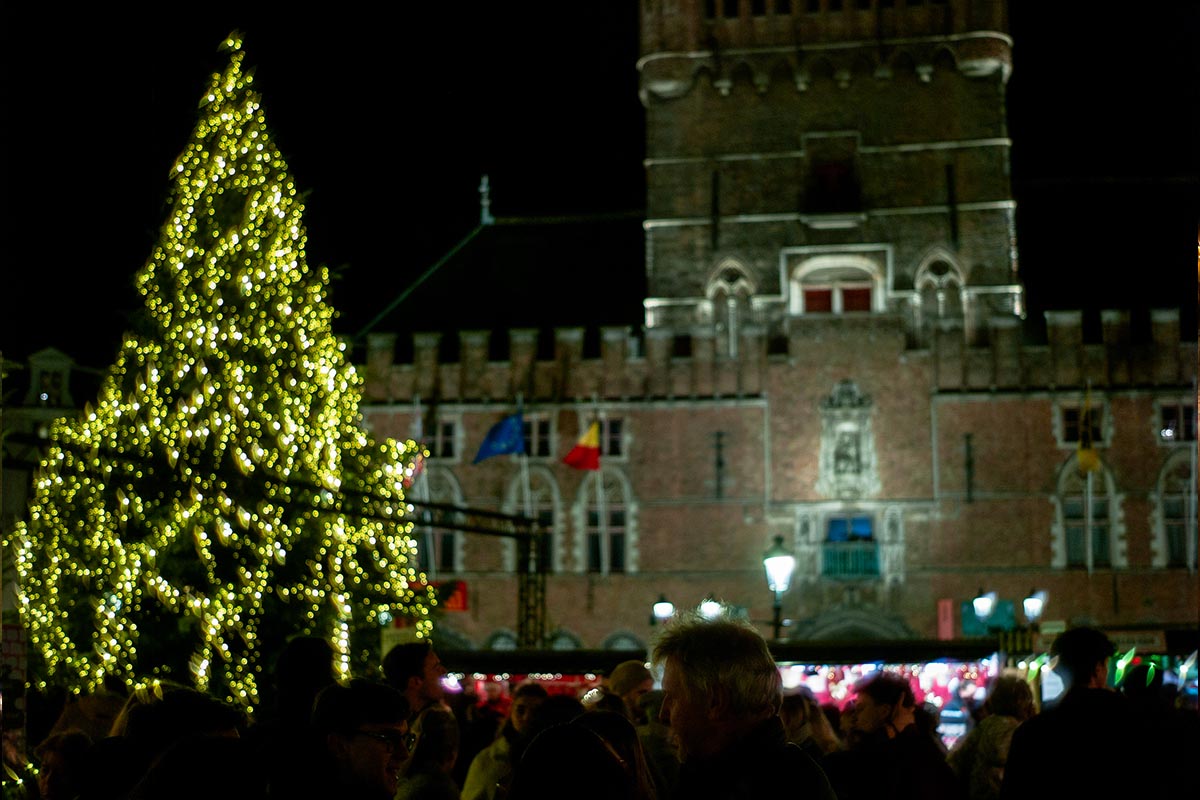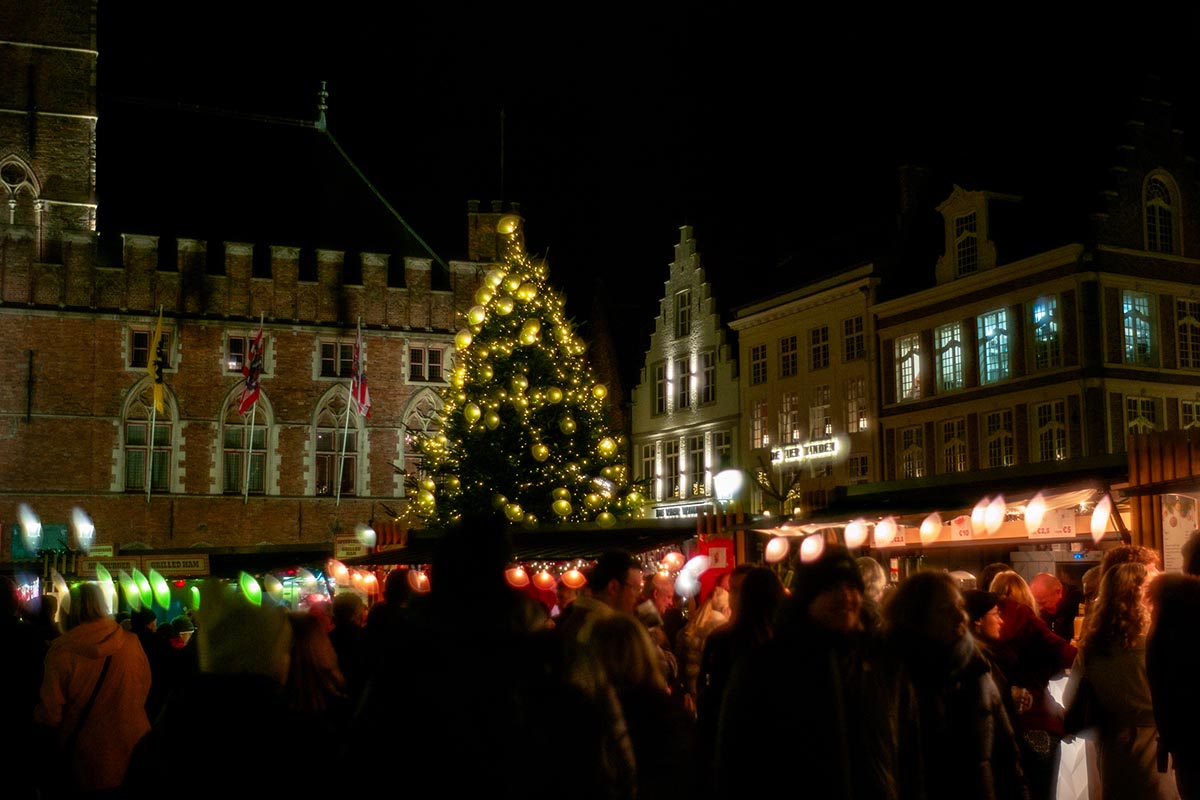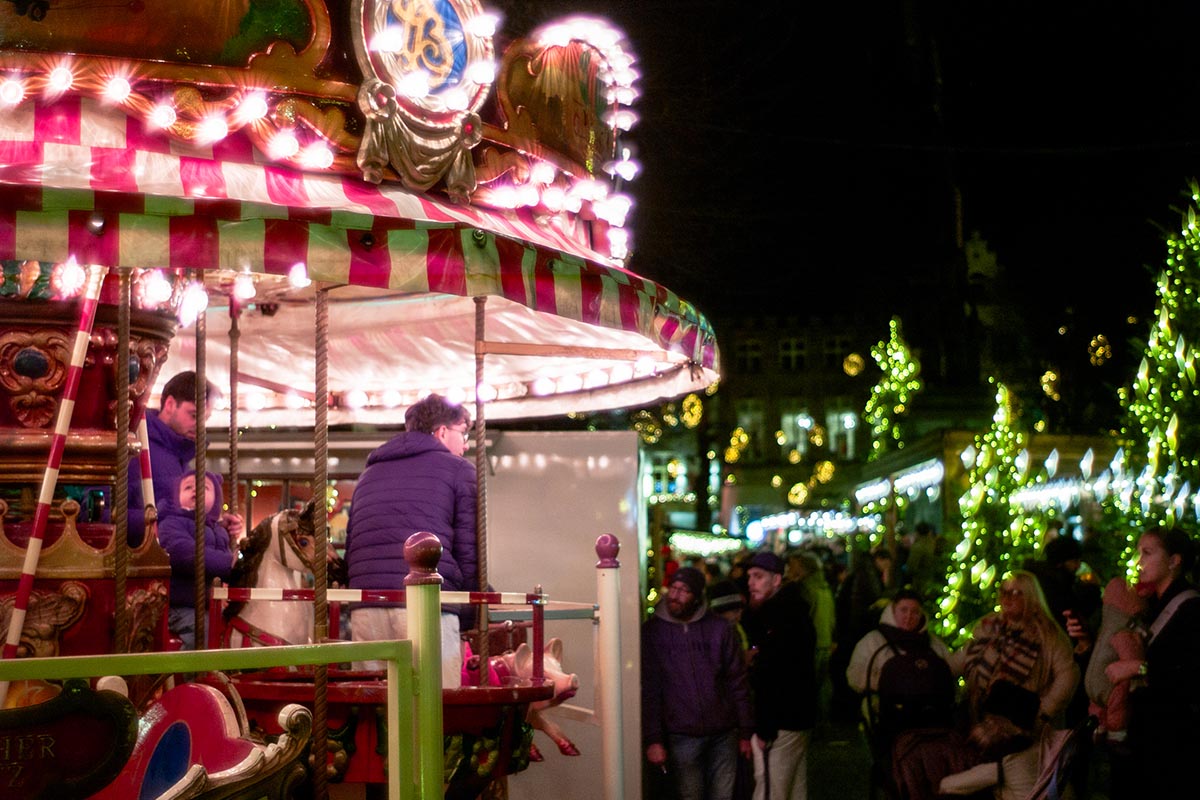

Christmas has always been one of my favorite times of the year, and this winter I finally embarked on a journey I had been dreaming about for a long time. An 11-city Christmas market hopping adventure across Germany, France, and Belgium, visiting some of the very best Christmas markets in Europe.
Growing up in California, the concept of Christmas markets simply did not exist in my world. Christmas meant family gatherings, last minute gift shopping, and driving around the neighborhood to admire decorated houses. It was not until I became an adult and started traveling more that I realized people actually travel to Europe in winter specifically for Christmas markets.
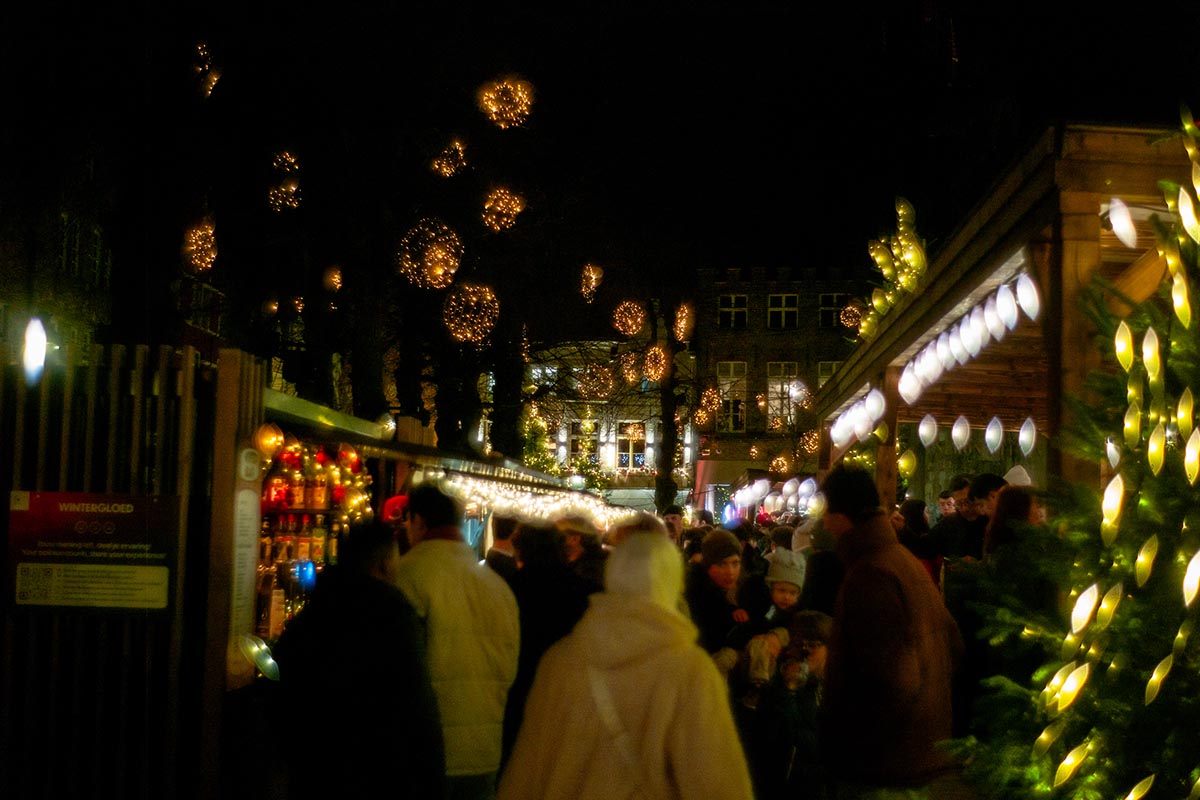
European Christmas markets are truly something special. Walking through them feels like stepping into a real life Disneyland, except the buildings are hundreds of years old and the town squares have been gathering places for generations. Many of the stalls are still selling the same traditional foods, drinks, and crafts they have for decades. Combined with festive lights, holiday decorations, comforting food, and buzzing crowds, each city creates its own unique atmosphere and experience.
I began my trip by flying into Frankfurt. While based near Frankfurt Hbf (central station), I took several day trips by train to Cologne, Rüdesheim, Heidelberg, Mainz, Wiesbaden, and Nuremberg. After exploring these incredible German Christmas markets, I continued on to Strasbourg, often called the Capital of Christmas in eastern France, as well as the nearby fairytale town of Colmar. To end the trip on a festive high note, I traveled by train to Belgium and experienced the magical Christmas markets of Brussels and Bruges.

Skip ahead:
- Frankfurt, Germany
- Nuremberg, Germany
- Cologne, Germany
- Heidelberg, Germany
- Rüdesheim, Germany
- Mainz, Germany
- Wiesbaden, Germany
- Strasbourg, France
- Colmar, France
- Brussels, Belgium
- Bruges, Belgium
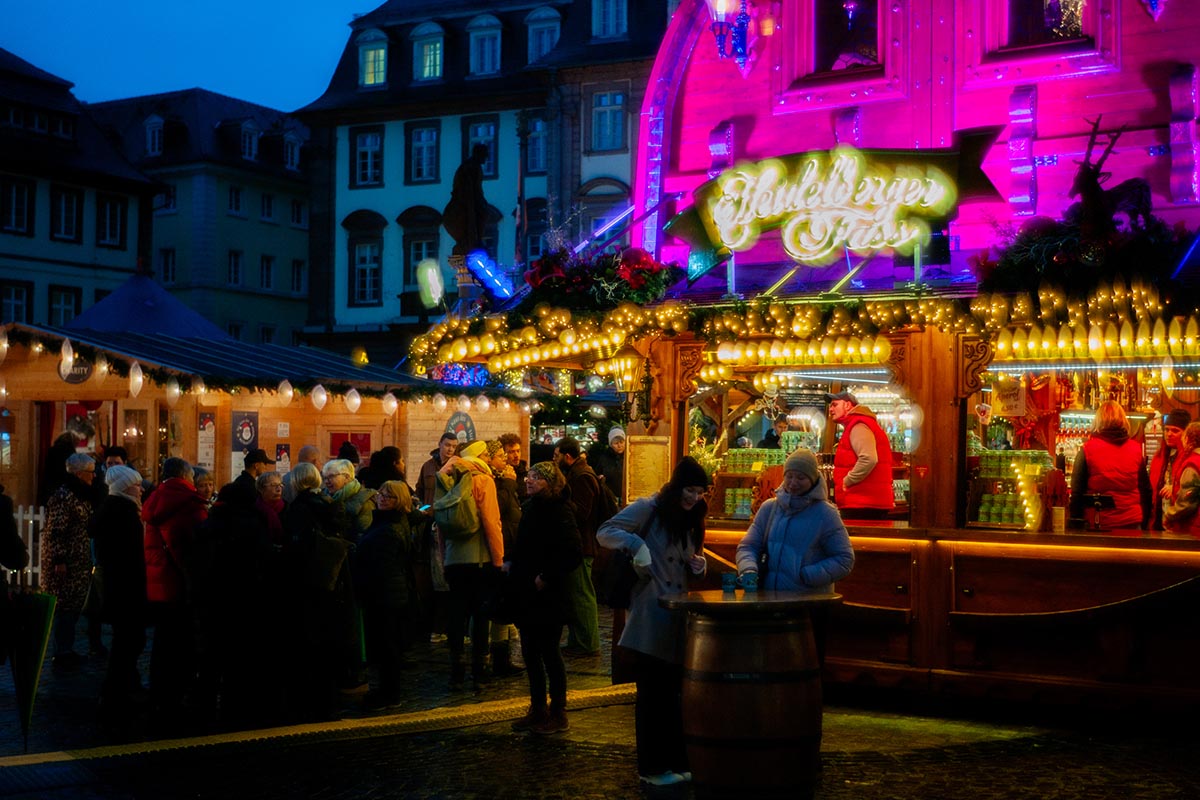
Things to Know Before Visiting European Christmas Markets
Before diving into what each of the eleven amazing Christmas market cities is like, it helps to know a few key things that can make your trip much smoother and more enjoyable.
- Each market has different opening and closing dates – Christmas markets are organized by individual cities, so their start and end dates vary. This is especially important when planning the exact dates of your trip. I had to shuffle my itinerary slightly to avoid spending a full day in a city where the Christmas markets had not yet opened.
- Some markets are far from the main train station – Not all Christmas markets are within walking distance of the train station. Knowing how far the market is from the station helps you plan your time better. For example, Heidelberg’s train station is about three kilometers from the main Marktplatz, where the central Christmas market is located. It takes roughly forty minutes to walk, or about ten minutes by bus or tram. If the weather is nice, walking through the city can actually be a lovely way to experience the destination.
- Most cities and towns have multiple Christmas markets – Cities that are well known for their Christmas markets usually host more than one. Beyond the main market in the city center, there are often smaller neighborhood markets with different themes. Knowing where they are ahead of time helps ensure you do not miss any hidden gems.
- Daytime and nighttime vibes are completely different – Most Christmas markets open around ten or eleven in the morning, but they truly come alive after sunset. Once the lights turn on and the decorations glow, the atmosphere feels completely different and much more magical.
- Weather in November and December is cold, gloomy and wet – Late autumn and early winter in Europe can feel quite dark and damp, with shorter daylight hours and frequent drizzle. Dressing in warm layers, wearing waterproof shoes, and planning indoor breaks between markets will make the experience far more comfortable and enjoyable.
- Train tickets are cheaper when booked in advance – Train tickets in Europe can become significantly more expensive if purchased the day before or on the day of travel. If your schedule is fixed, booking tickets weeks in advance can save you a lot of money. If you value flexibility, paying more allows you to travel at your own pace. I chose to buy tickets on the spot for maximum flexibility, but that meant paying a higher price.
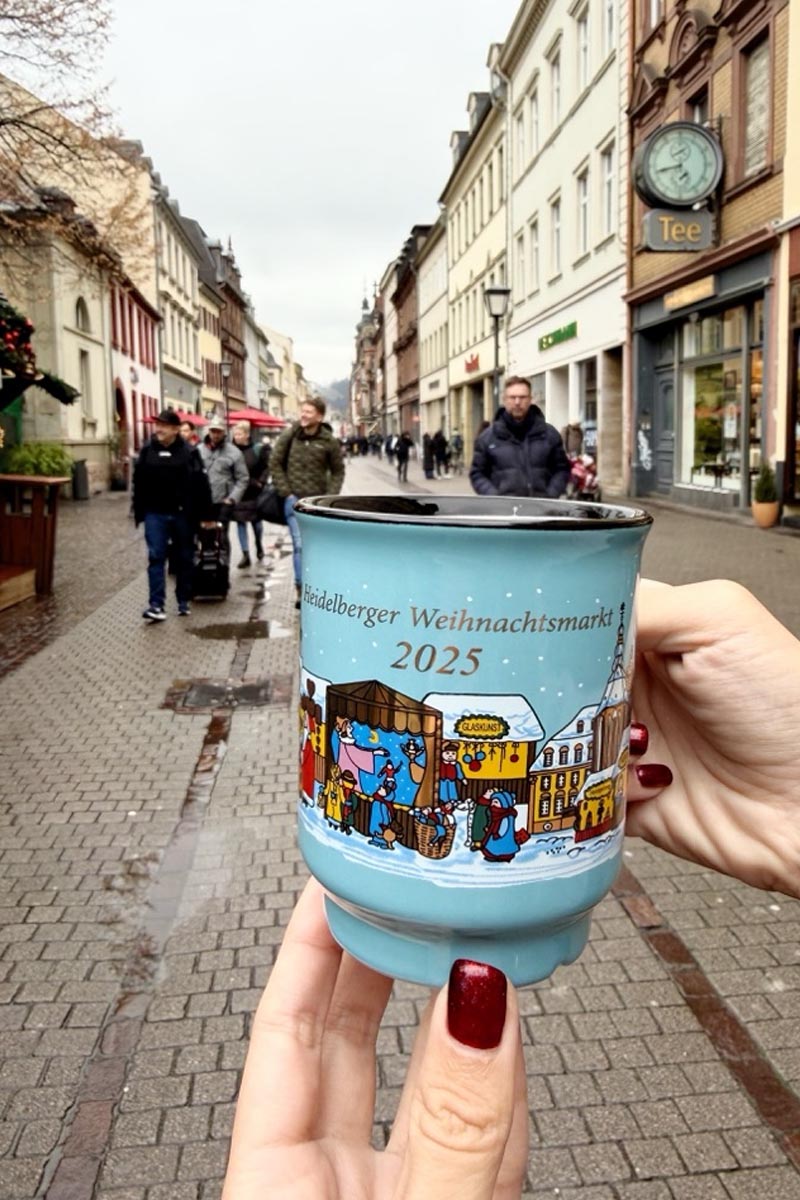
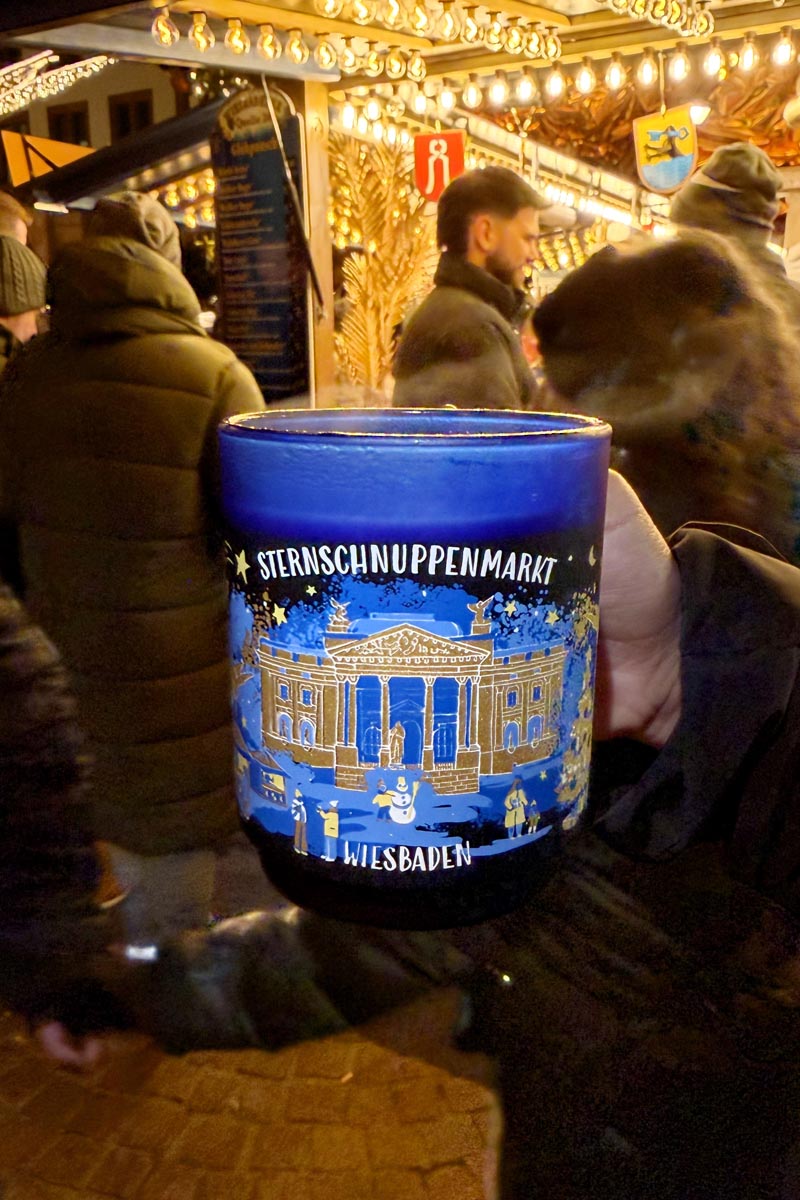
- You pay a deposit for ceramic or glass cups – Christmas markets do not use paper or styrofoam cups. Instead, you pay a small deposit in euros when ordering drinks like mulled wine or beer. After finishing your drink, you can return the cup to get your deposit back. If you like the design, you can also keep the cup in exchange for the deposit.
- Popular cities design new Christmas mugs every year – Well known cities such as Cologne, Munich, and Strasbourg create new Christmas mug designs each year. This gives the markets a fresh look and makes mug collecting a popular souvenir tradition. Keep an eye out for unique designs and take home the ones you love.
1. Frankfurt
Frankfurt is often seen as a transit hub, with most people flying in and out of the city. While it may not be the most picturesque or unique spot for Christmas markets, it’s still a must-visit, especially if you’re arriving or departing through Frankfurt.
Where to Stay in Frankfurt for Easy Train Access
If you’re like me and using Frankfurt mainly as a base for day trips to nearby cities, IntercityHotel Frankfurt Hauptbahnhof Süd is an ideal choice thanks to its unbeatable location. The hotel sits directly across from Frankfurt Hauptbahnhof, literally a 30 second walk across the street, making train travel incredibly convenient.
Because of its location, this hotel is perfect for travelers who just need a comfortable place to rest after a long day of Christmas market hopping. No complicated commutes, no extra transfers, just quick and easy access to your room.
One extra perk is that booking directly through IntercityHotel’s official website includes a free Frankfurt City Pass. This pass lets you ride the subway within Frankfurt city for the duration of your stay, which is especially useful if you want to head to Dom/Römer or explore the city after returning from nearby day trips.
Markets and Highlights
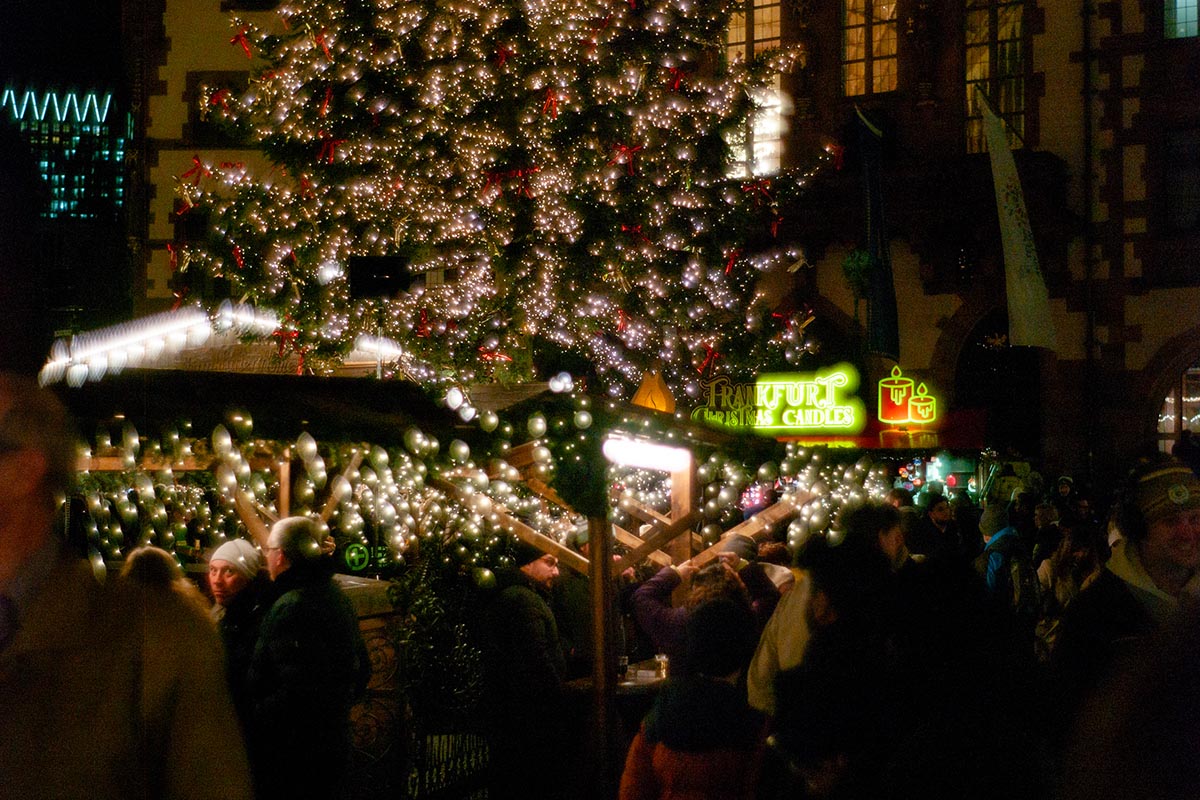
Frankfurt is a relatively large city, so its Christmas markets are scattered throughout the city, but the main market is located right at the heart of old town so starting at Dom/Römer is a good way to start your market hopping.
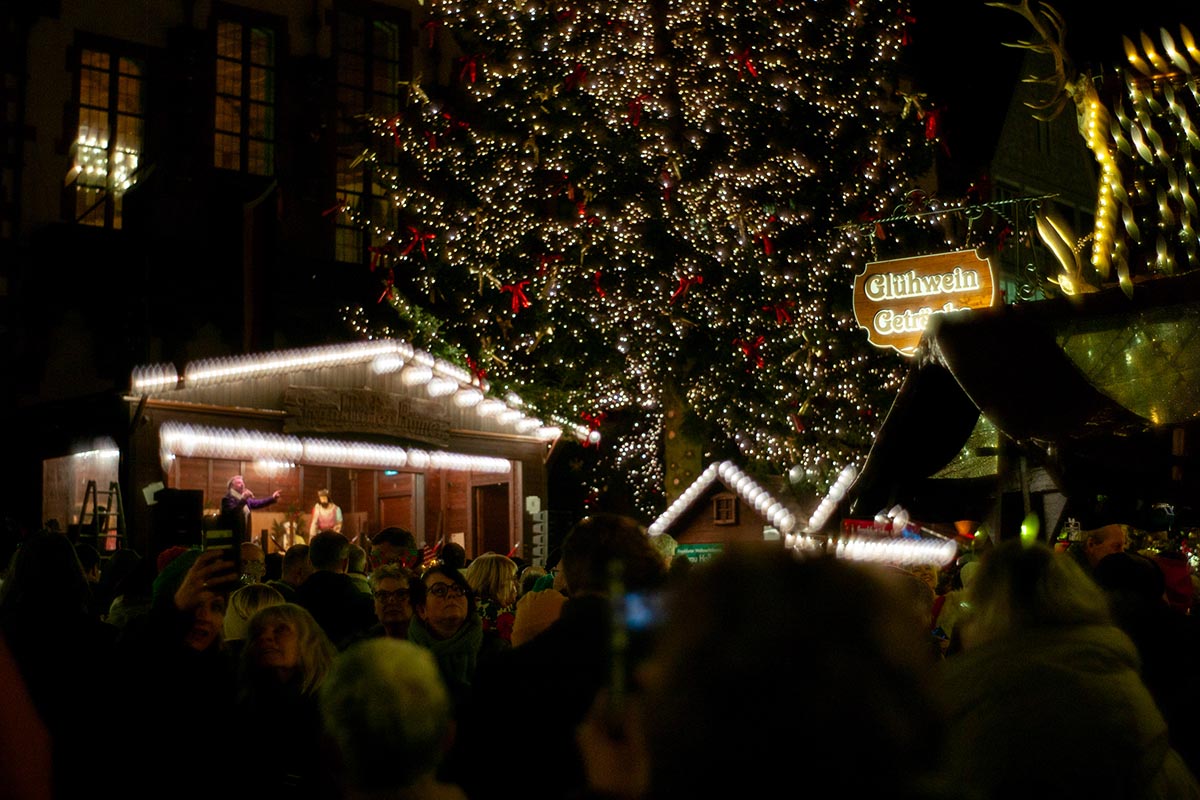
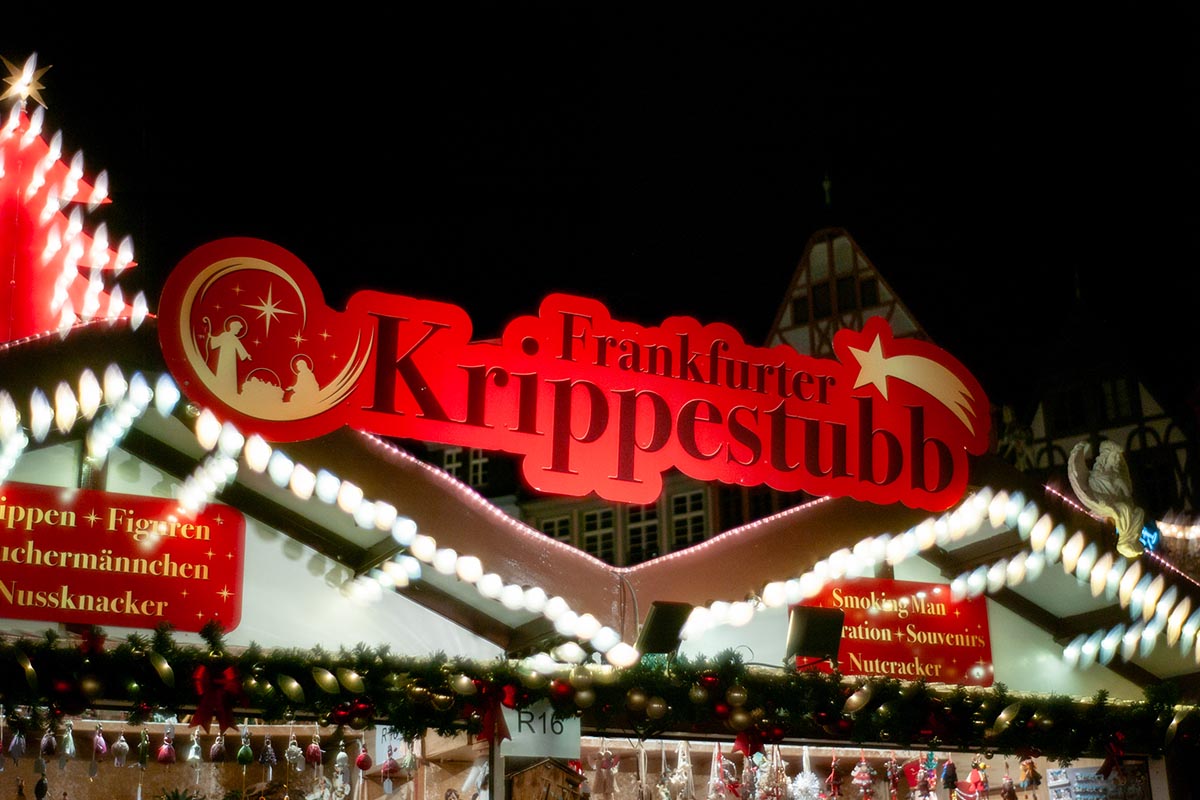
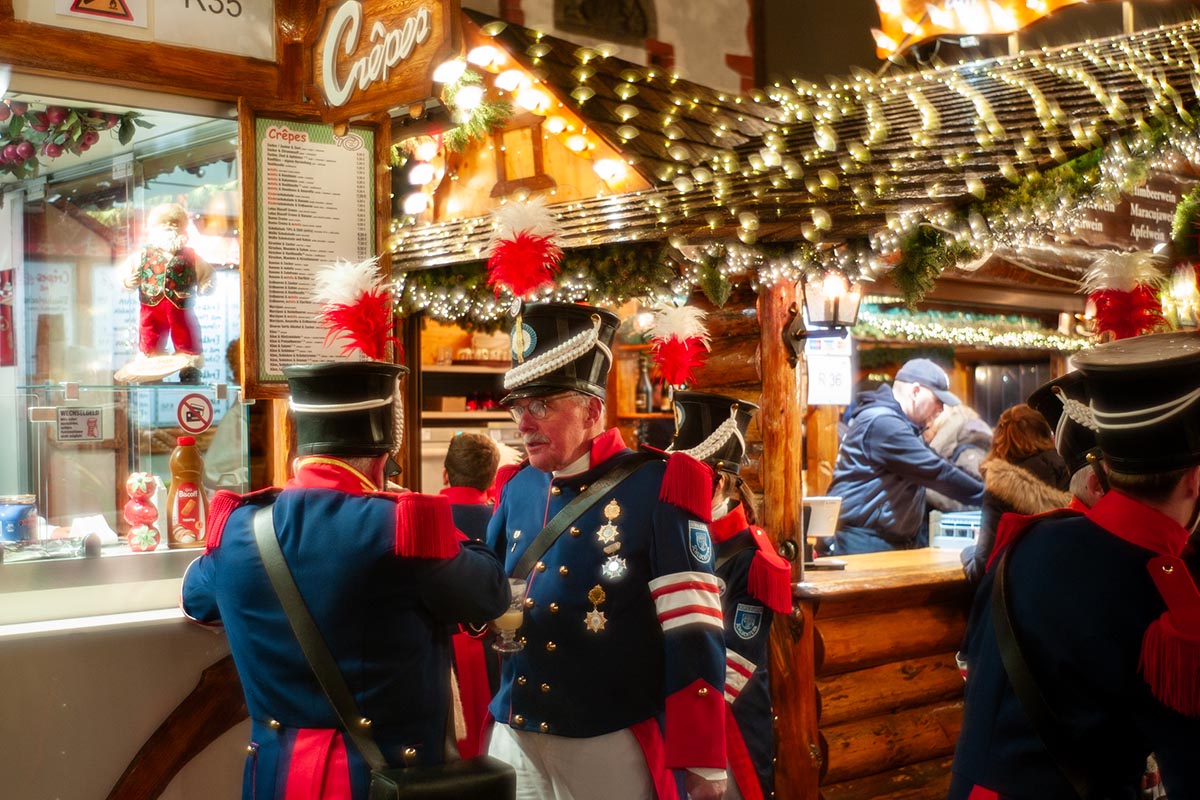
- Frankfurt Christmas Market (Frankfurter Weihnachtsmarkt) – The central and largest Christmas market in Frankfurt stretches across multiple squares and streets, including: Römerberg & Paulsplatz, Mainkai, Hauptwache, and Friedrich-Stoltze-Platz & Roßmarkt. Going through all the stalls and enjoying this main market will take several hours, so if you’re limited on time, this is the only market you need to focus on.
- Pink Christmas Market (Rosa Weihnacht) – A colorful LGBTQ friendly market near Friedrich Stoltze Platz with music and drinks.
- City Christmas Market (CityXmas) – A modern Christmas market often located on a rooftop parking garage near Konstablerwache, known for skyline views.
- Christmas Market at Thurn und Taxis Platz – A smaller, cozy market near the MyZeil shopping area.
- Swedish Christmas Market (Schwedischer Weihnachtsmarkt) – A Nordic themed market featuring Swedish food and traditions, usually held only on specific Advent weekends.
- Finnish Christmas Bazaar (Finnischer Weihnachtsbasar) – A Scandinavian style market with Finnish crafts and food, also limited to certain dates.
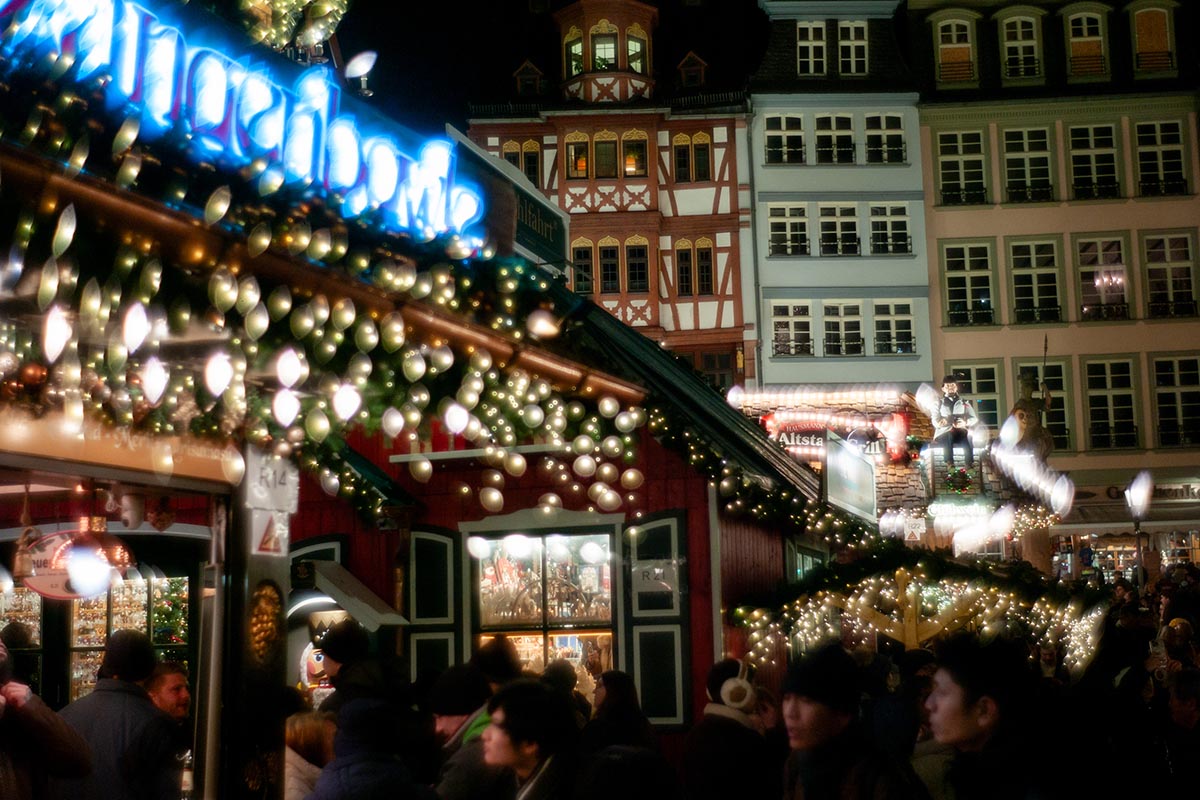
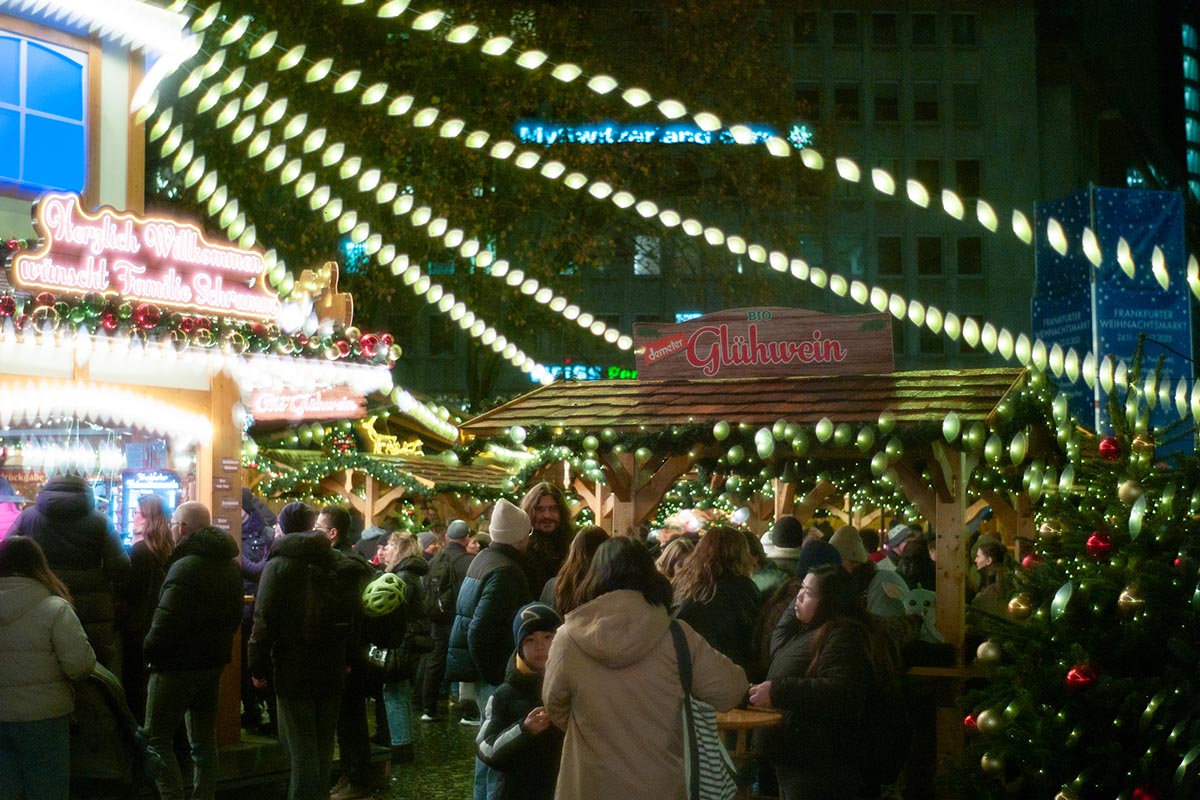
Frankfurt’s main Christmas market spans across several areas, making it easy to experience everything in one walk.
Getting There
Most people arrive in Frankfurt by plane or train. Either way, getting to the Frankfurter Weihnachtsmarkt is quick and easy using public transport. Take the S Bahn or U Bahn and get off at Dom/Römer station, which drops you right in the heart of the Christmas market.
Vibe and Atmosphere
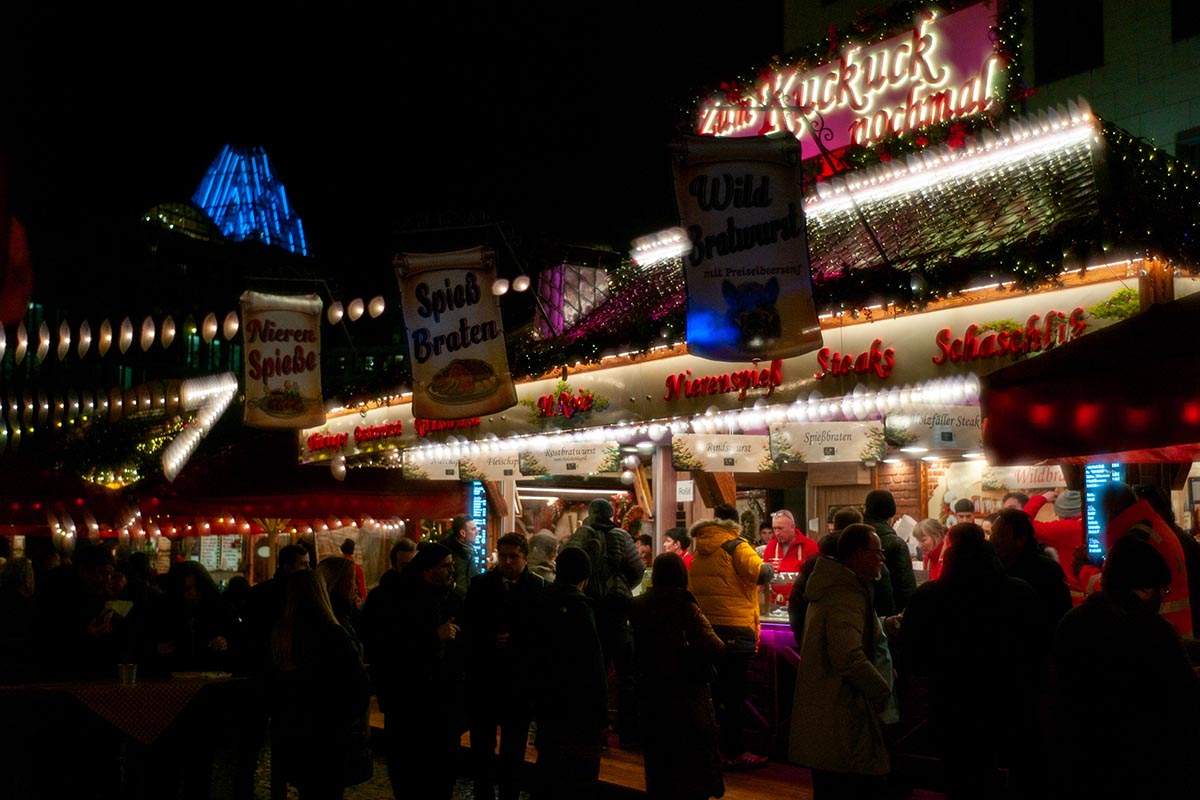
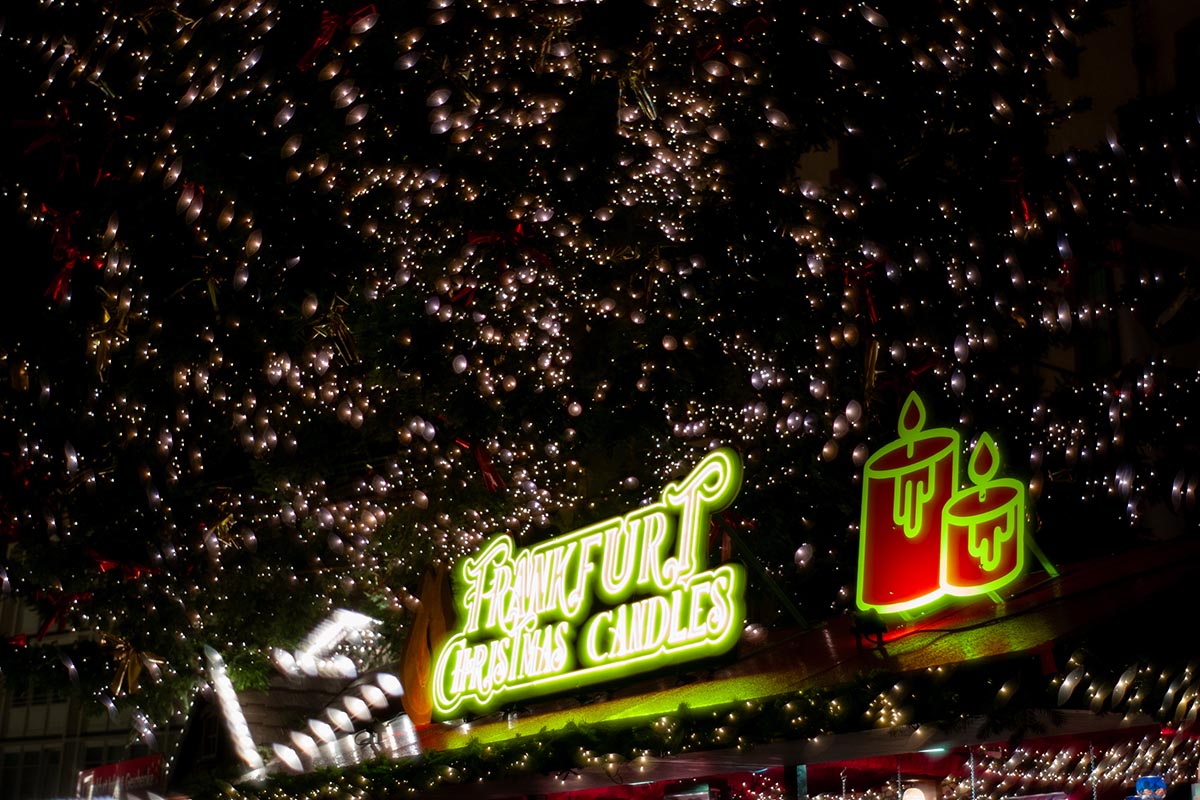
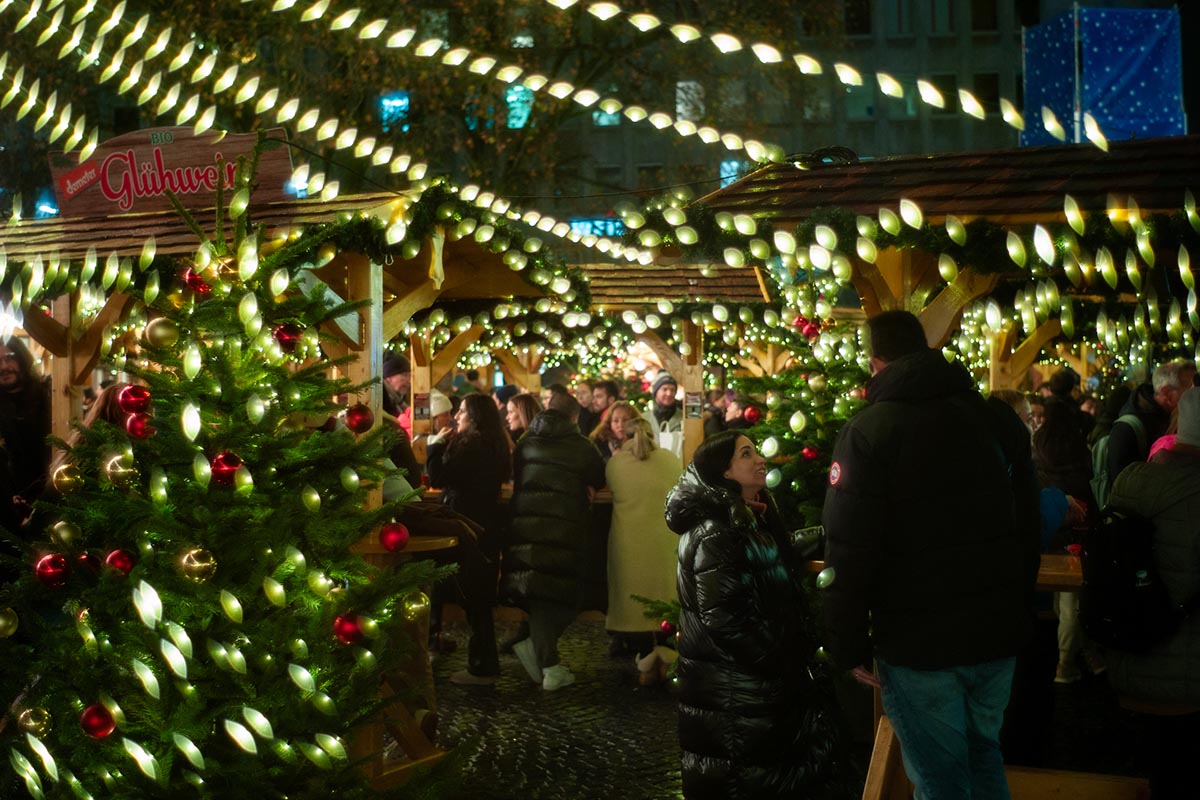
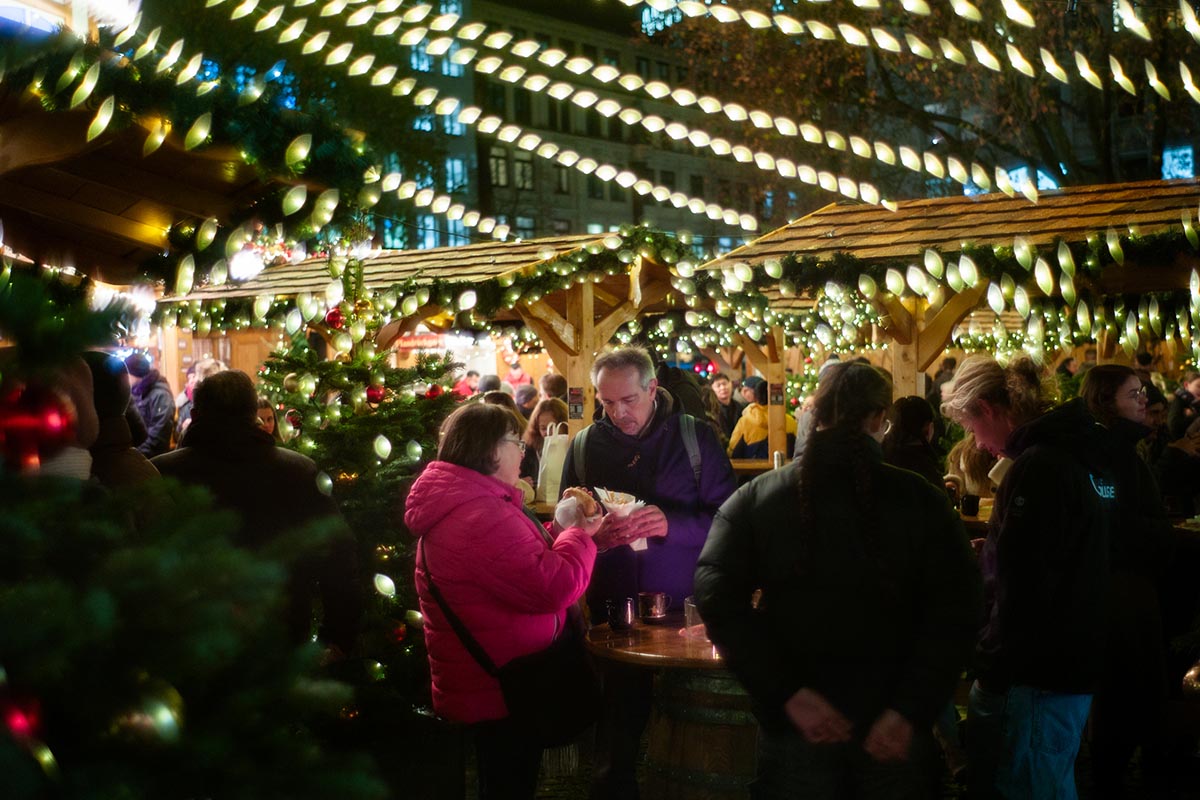
Frankfurt is a modern city filled with high rises and newer construction, and its Christmas markets are tucked right in between these towering buildings. The atmosphere feels busy and energetic, with large crowds moving through the market from late afternoon into the evening. Unlike smaller, storybook towns, Frankfurt’s Christmas markets feel more urban and lively, making them a great introduction to Christmas markets for travelers arriving in Germany.
2. Nuremberg
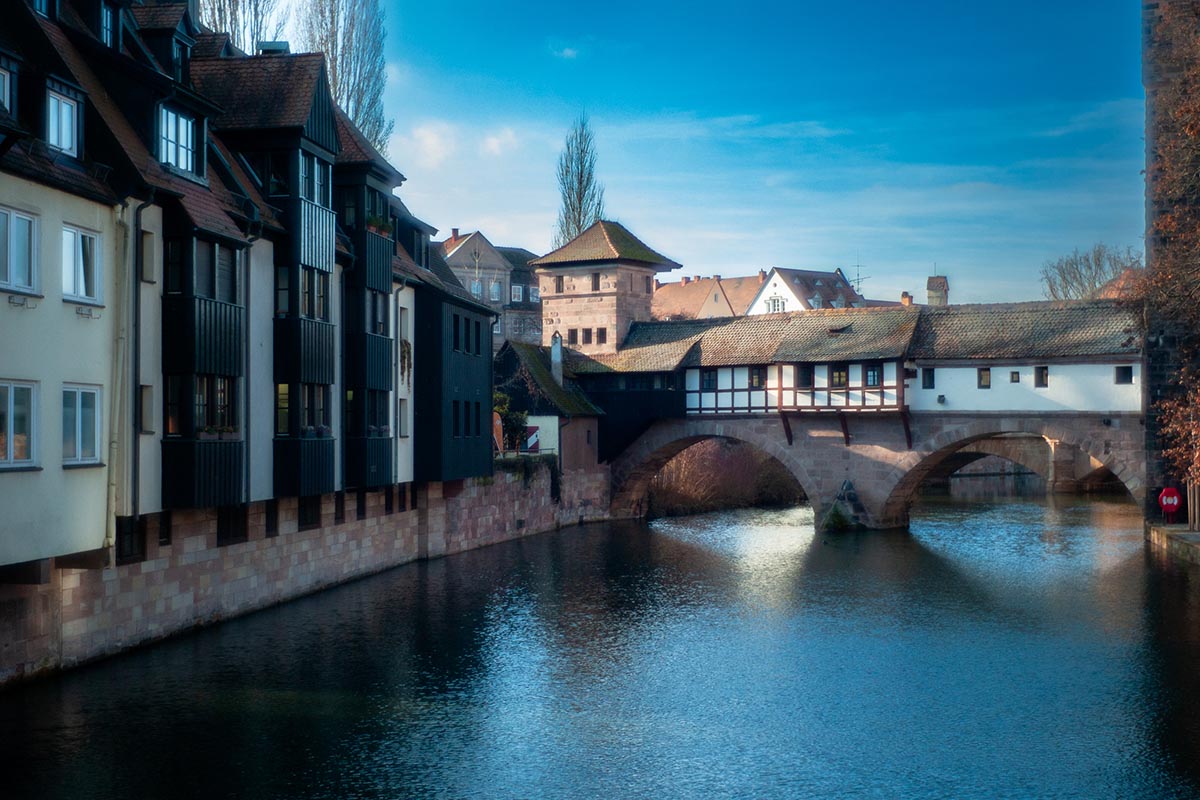
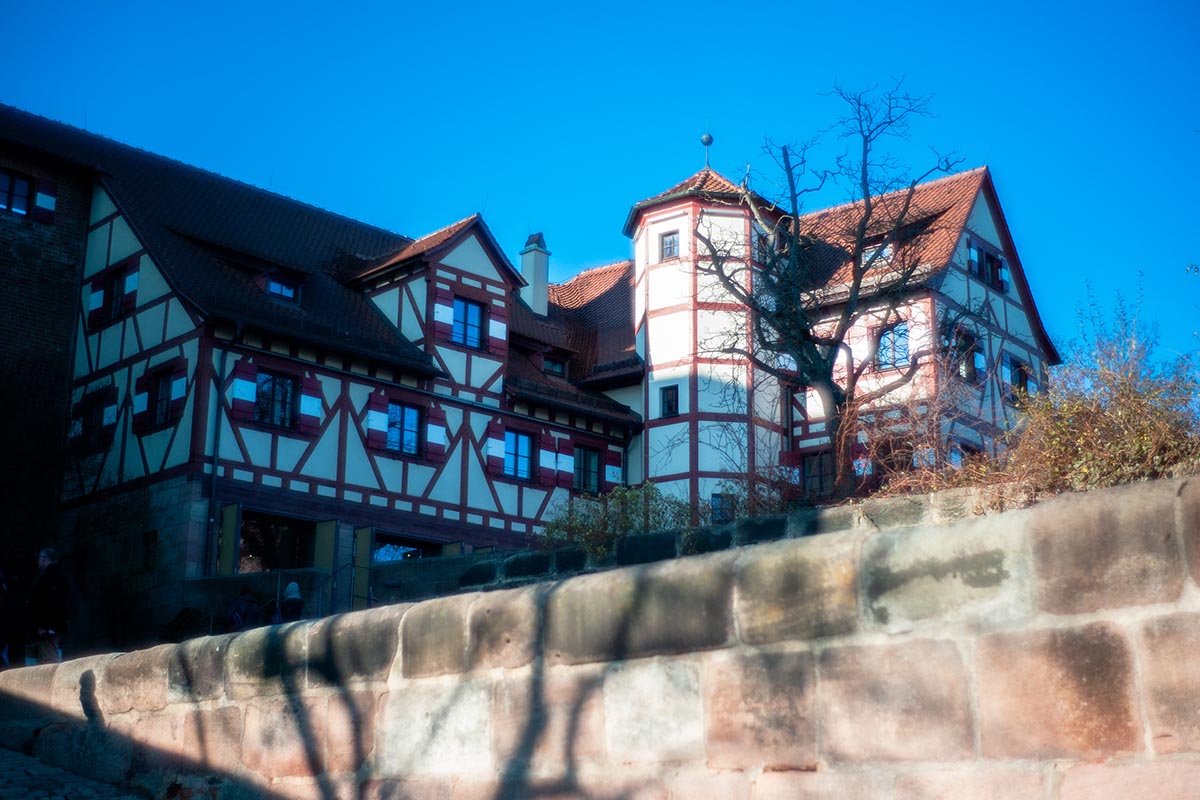
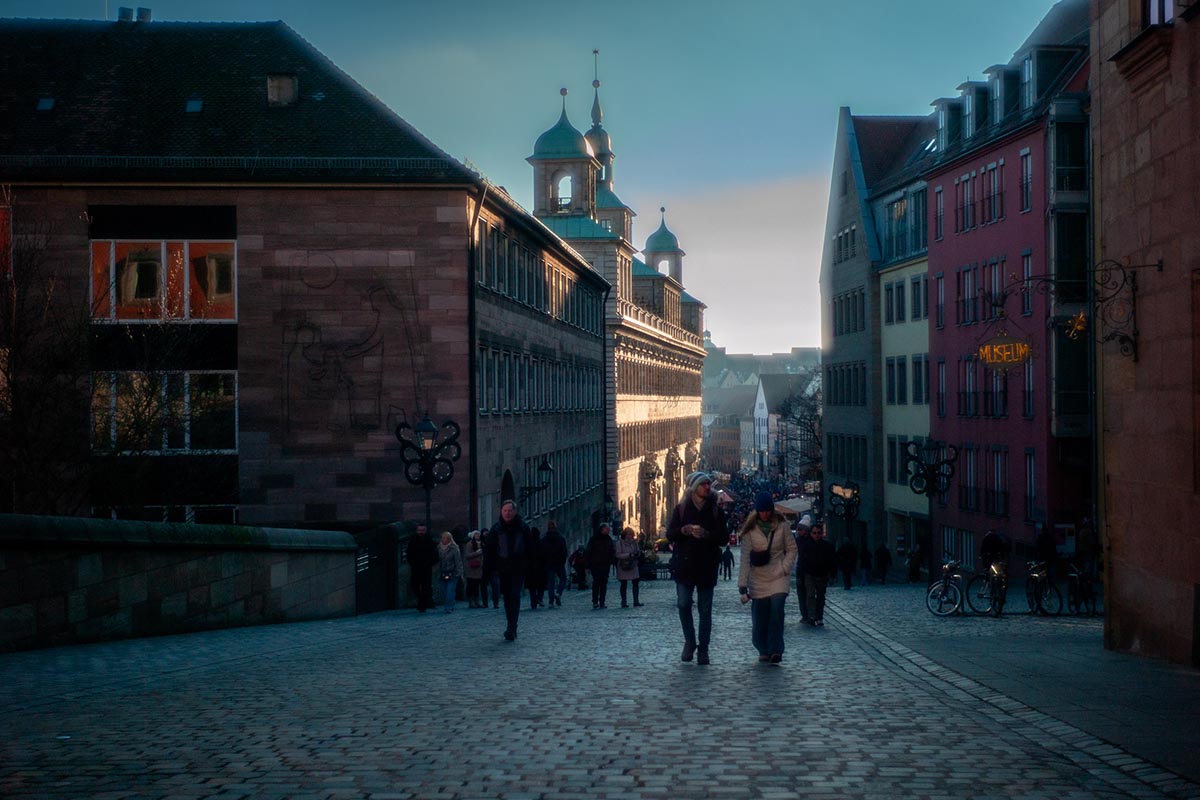
Nuremberg, or Nürnberg in German, is a historic city in Bavaria known for its medieval architecture, cobblestone streets, and rich cultural heritage.
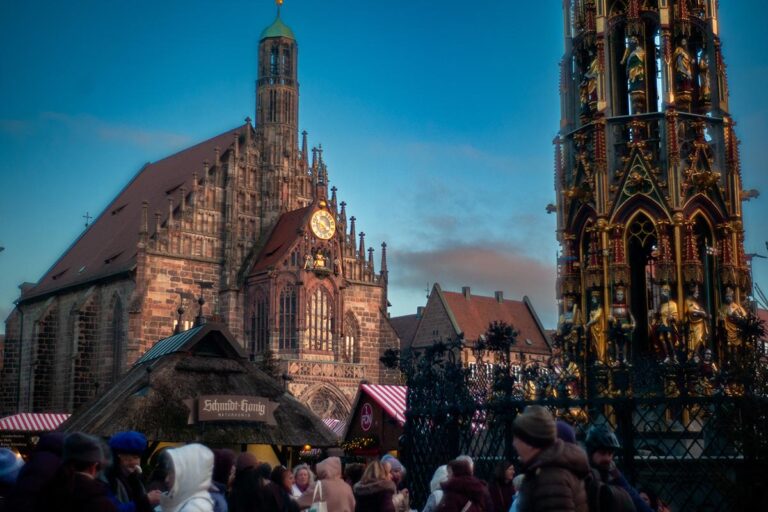
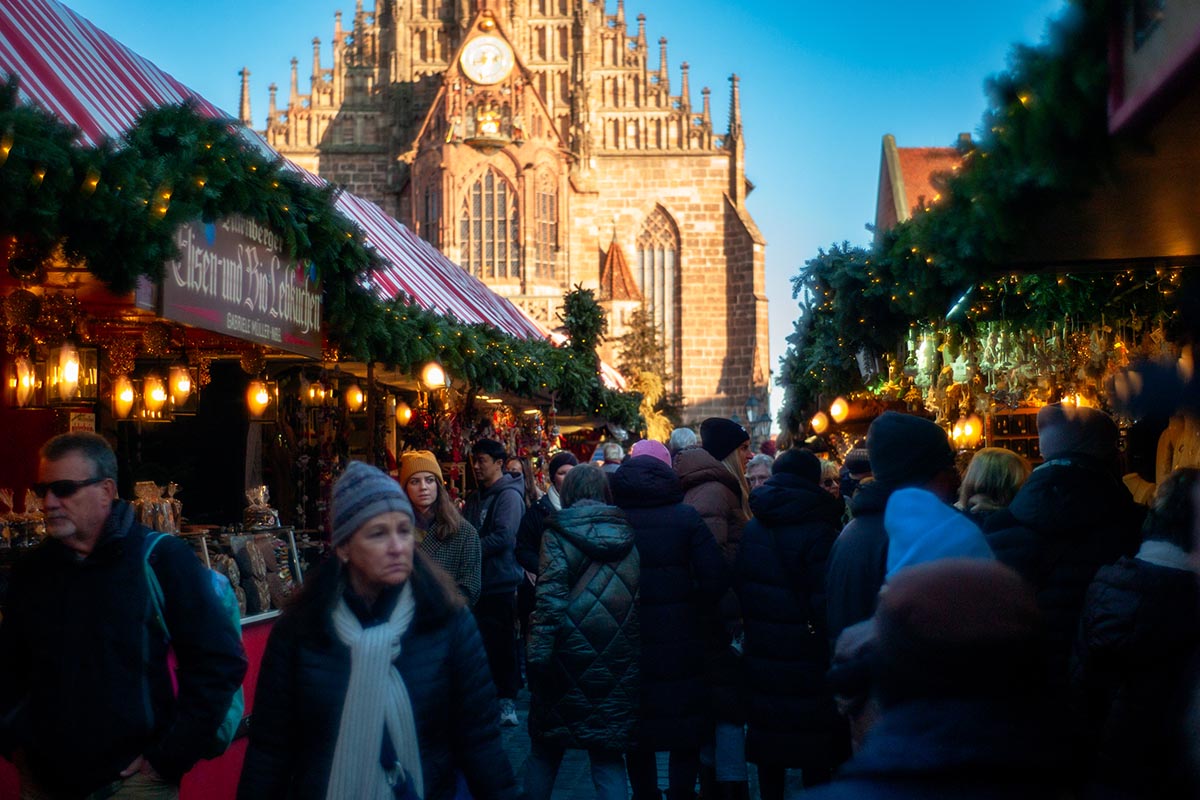
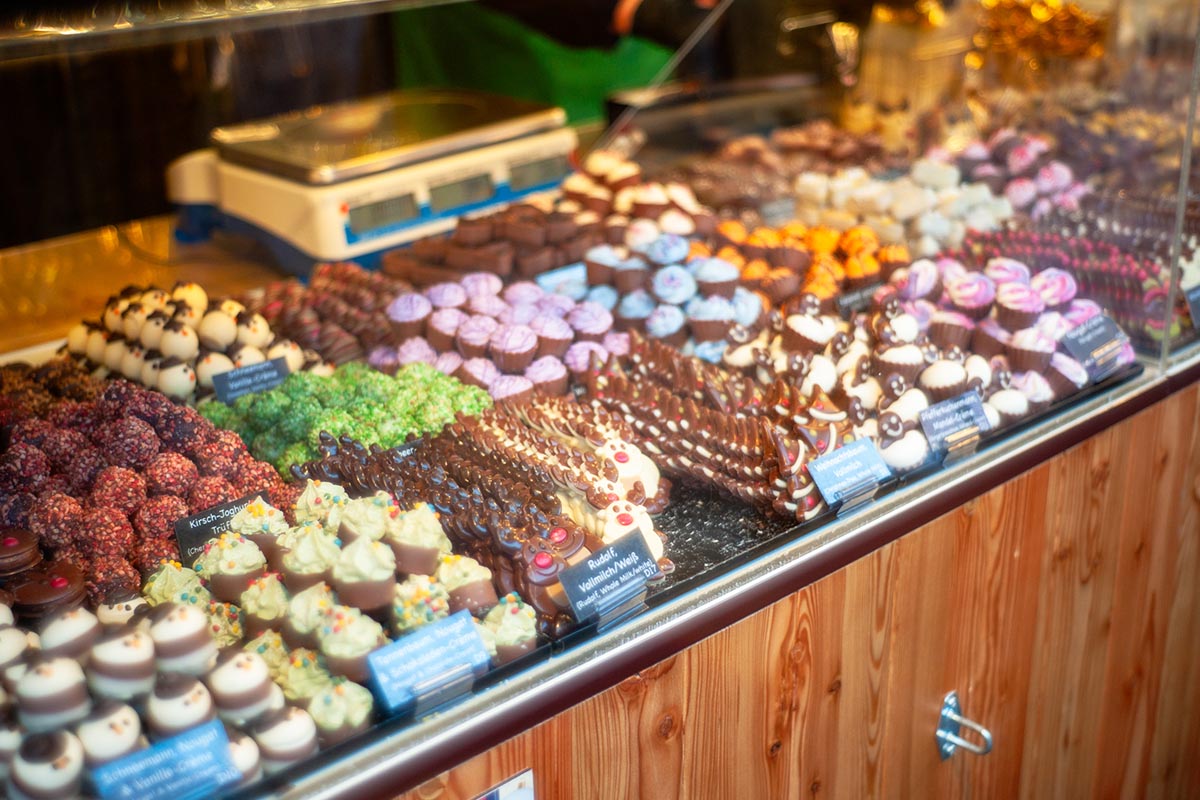
During the holiday season, it transforms into one of Germany’s most famous Christmas destinations, home to the world-renowned Nuremberg Christkindlesmarkt. With its iconic red-and-white stalls, festive decorations, and traditional foods like Nuremberg sausages and gingerbread, the city offers an unforgettable blend of history, holiday spirit, and local charm.
For a complete breakdown of visiting Nuremberg, including food and tips, visit my Nuremberg Christmas Market Guide 2025.
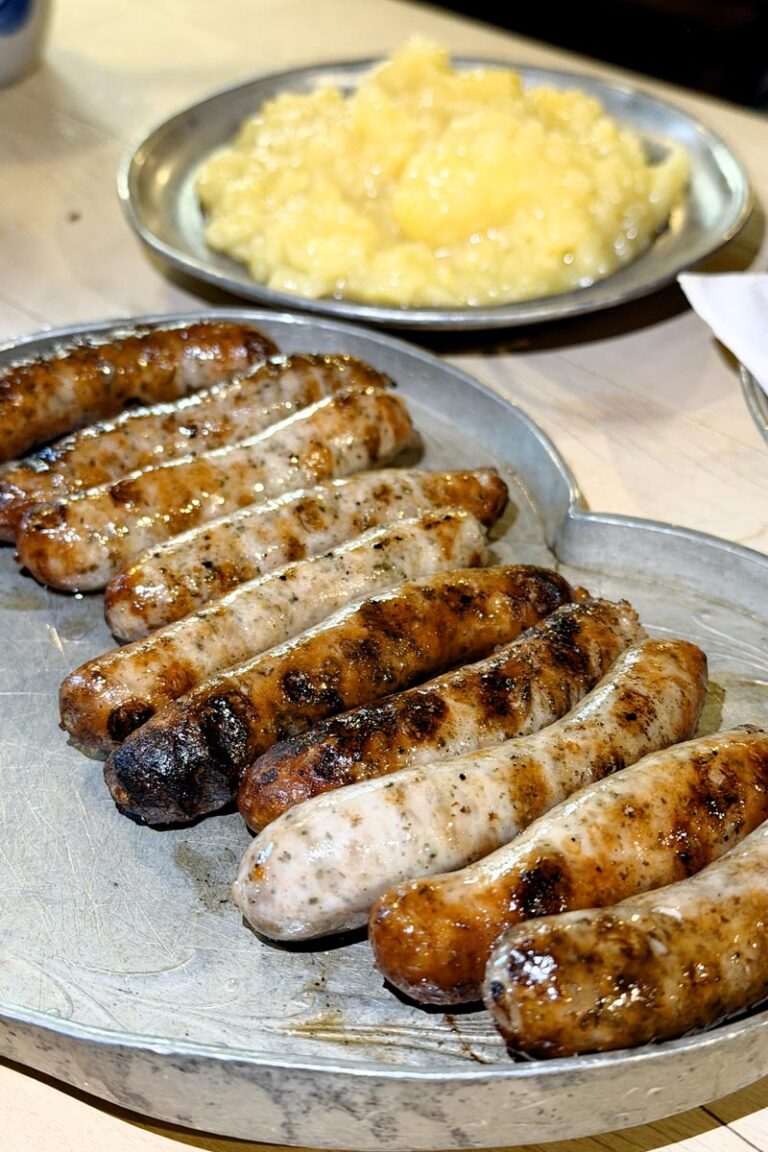
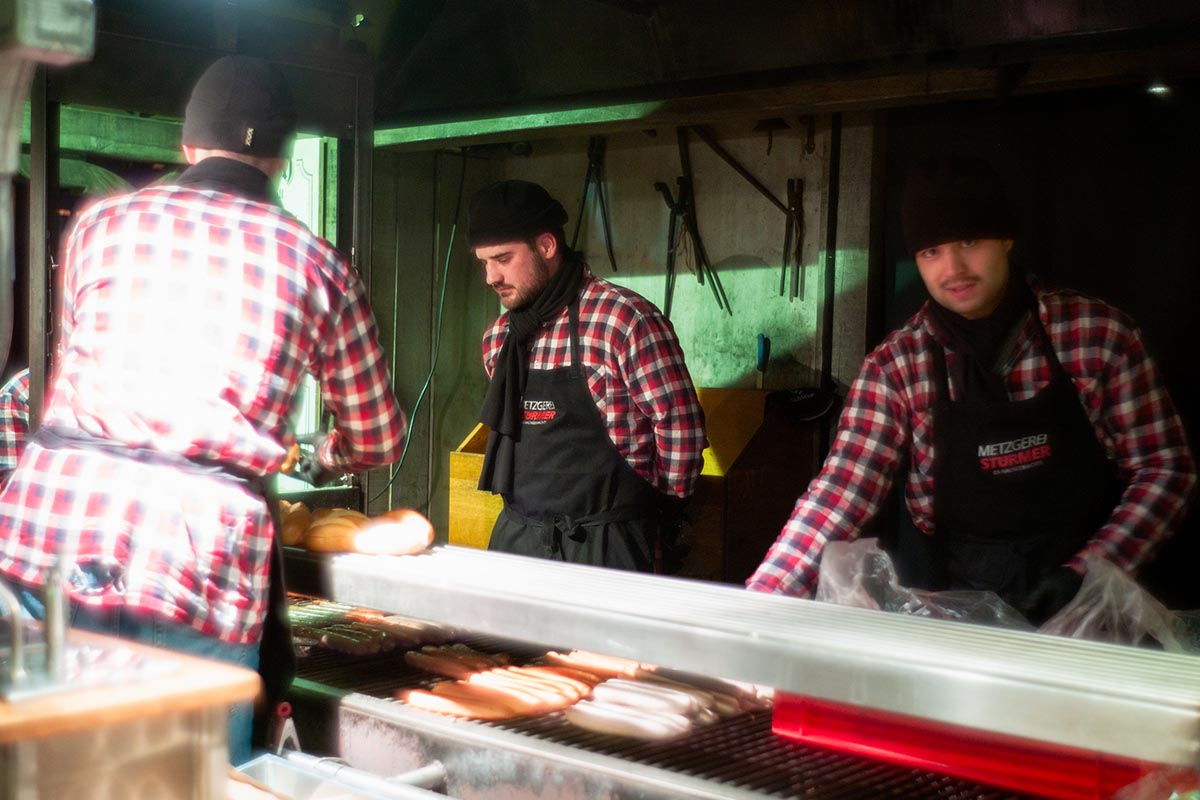
While in Nuremberg, don’t miss Bratwursthäusle, the city’s oldest restaurant and a must eat spot for authentic Nürnberger bratwurst (small sausages grilled over beechwood on open fire).
Markets and Highlights
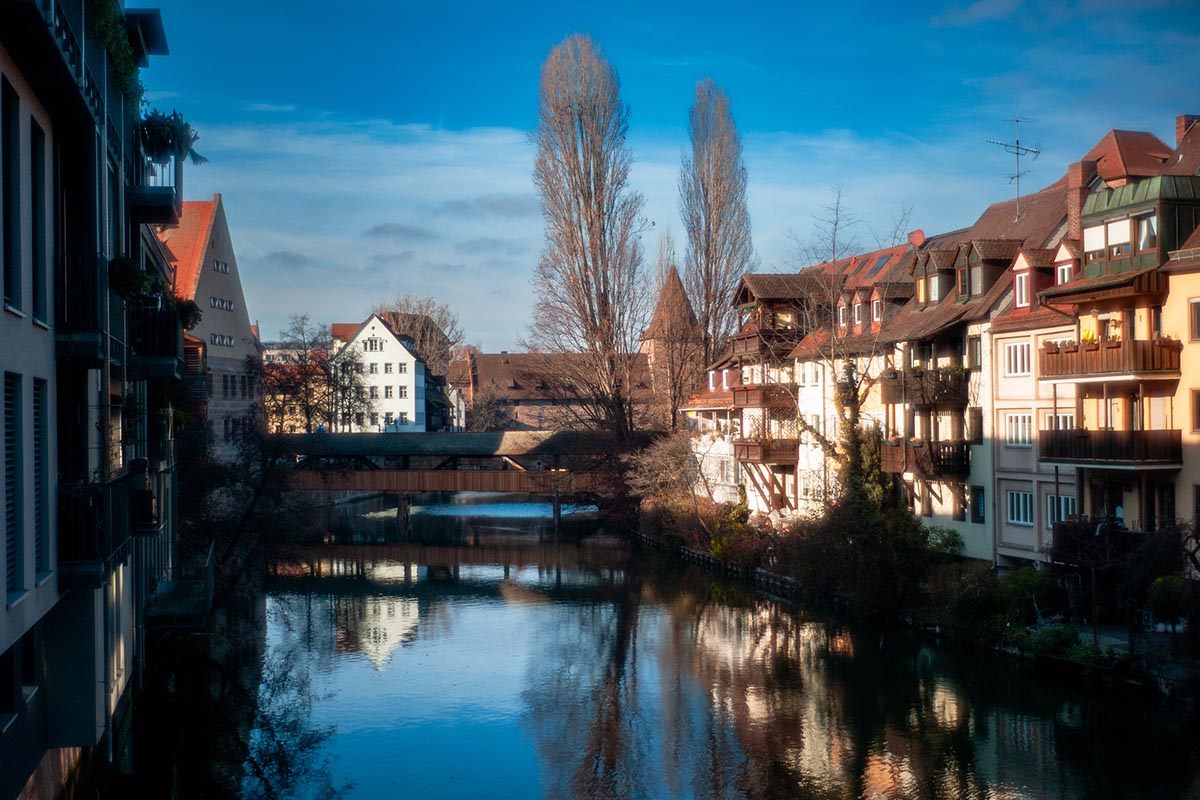
Nuremberg is a large city, divided into the north and south by the Pegnitz River. The main Christmas market, the Christkindlesmarkt, is located in the northern part of the city. As you arrive Nürnberg Hauptbahnhof (Hbf), you will begin to see Christmas stalls along the way, leading you all the way to the main market.
- Nuremberg Christkindlesmarkt (Hauptmarkt) – The most famous market, located in the city’s central square. Known for its traditional red-and-white stalls, handcrafted gifts, gingerbread (Lebkuchen), and festive atmosphere.
- Children’s Christmas Market (Kinderweihnacht) – Located near the main market, this market is designed for kids, with rides, a carousel, and interactive activities.
- Handwerkerhof Market – A small medieval-style market tucked behind Nuremberg’s city walls, just right in front of the main train station. This is the first Christmas market you will encounter as you arrive.
- Hans-Sachs-Platz Market – A smaller, local market offering festive food, drinks, and a cozy, neighborhood feel.
- Weihnachtsmarkt St. Sebald – Set around St. Sebald Church, this market is quieter and more traditional, perfect for a calm stroll.
Getting There
Nuremberg is a bit farther from Frankfurt, and taking the high-speed ICE train from Frankfurt takes about 2 hours, making it one of the longer day trips.
You will arrive at Nuremberg Central Station (Nürnberg Hauptbahnhof), which is the city’s main and only major station for long-distance trains. Once you arrive, head north, follow the crowds, and you will eventually reach the famous Nürnberger Christkindlesmarkt.
Vibe and Atmosphere
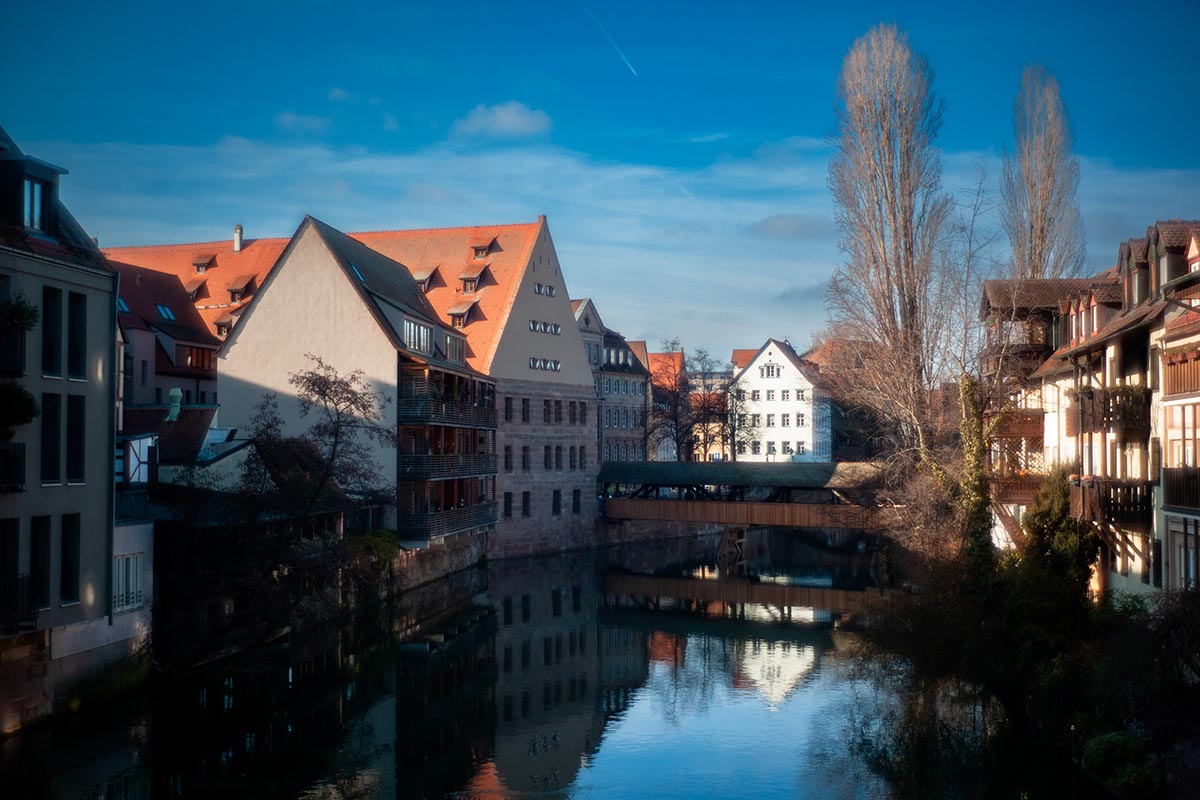
Nuremberg’s streets are wide and its buildings grander and more luxurious compared to smaller towns. Being in Nuremberg gives you a sense of what a large, historic city feels like. Unlike the tightly packed medieval buildings of smaller towns, most of Nuremberg’s architecture is constructed from concrete and brick, with Christmas decorations and festive stalls woven throughout the city.
The main Christmas market, Nürnberger Christkindlesmarkt, located in the heart of the city, is impressively large, lively, and bustling. There are endless options for food, drinks, and shopping, along with a stage for live performances and activities to keep visitors entertained.




3. Cologne
Cologne has arguably the best and largest Christmas market in Germany. It is often compared to Dresden as a top contender for the best Christmas market in the world, and I can absolutely attest to that. Cologne ended up being my favorite Christmas market, not just because of its size, but also because of the overall vibe and the quality of each individual market. Once you have experienced Cologne, many other Christmas markets may start to feel like they are missing something.
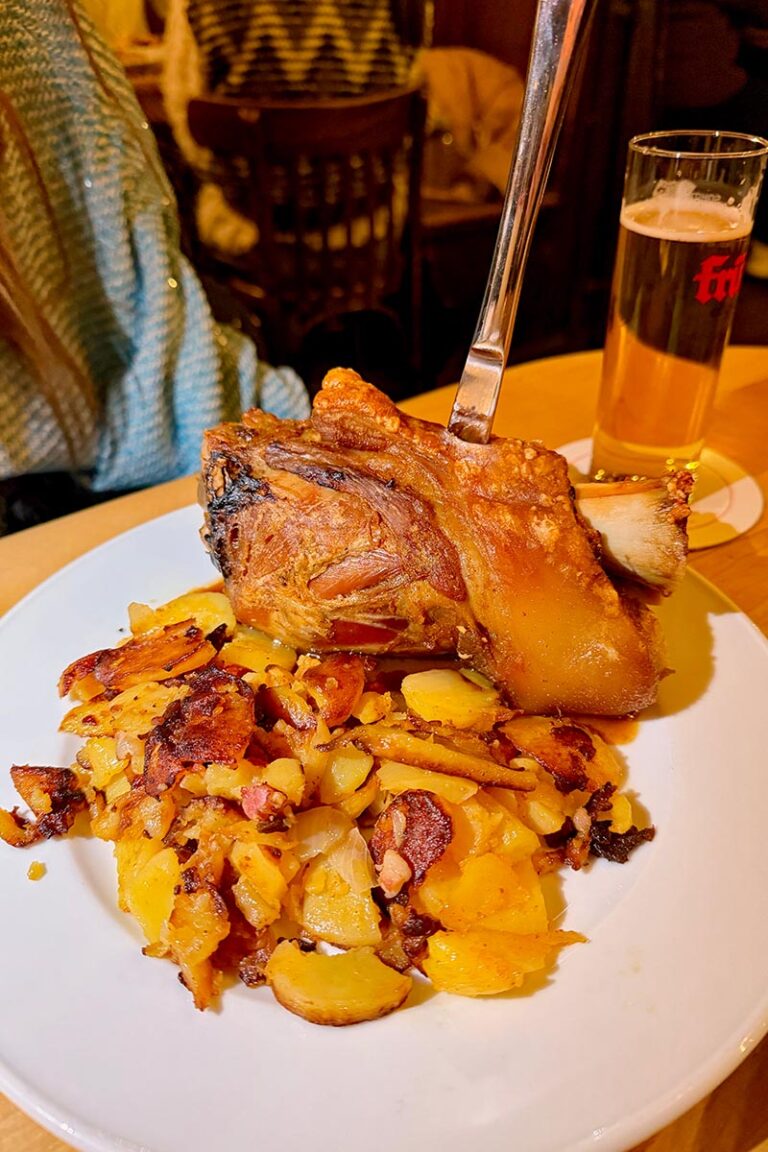
While in Cologne, don’t miss Brauhaus FRÜH am Dom, an iconic beer hall and a must-visit spot for authentic Kölsch and hearty Rhineland classics.

Markets and Highlights
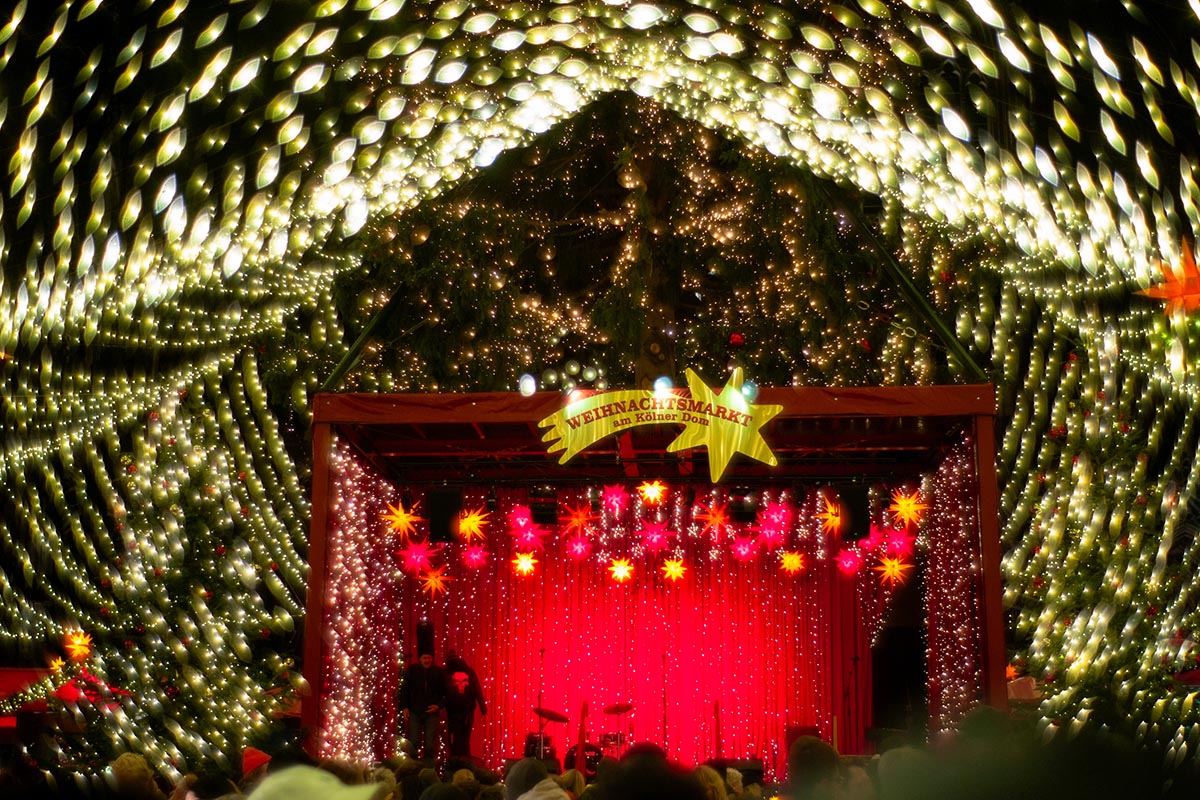
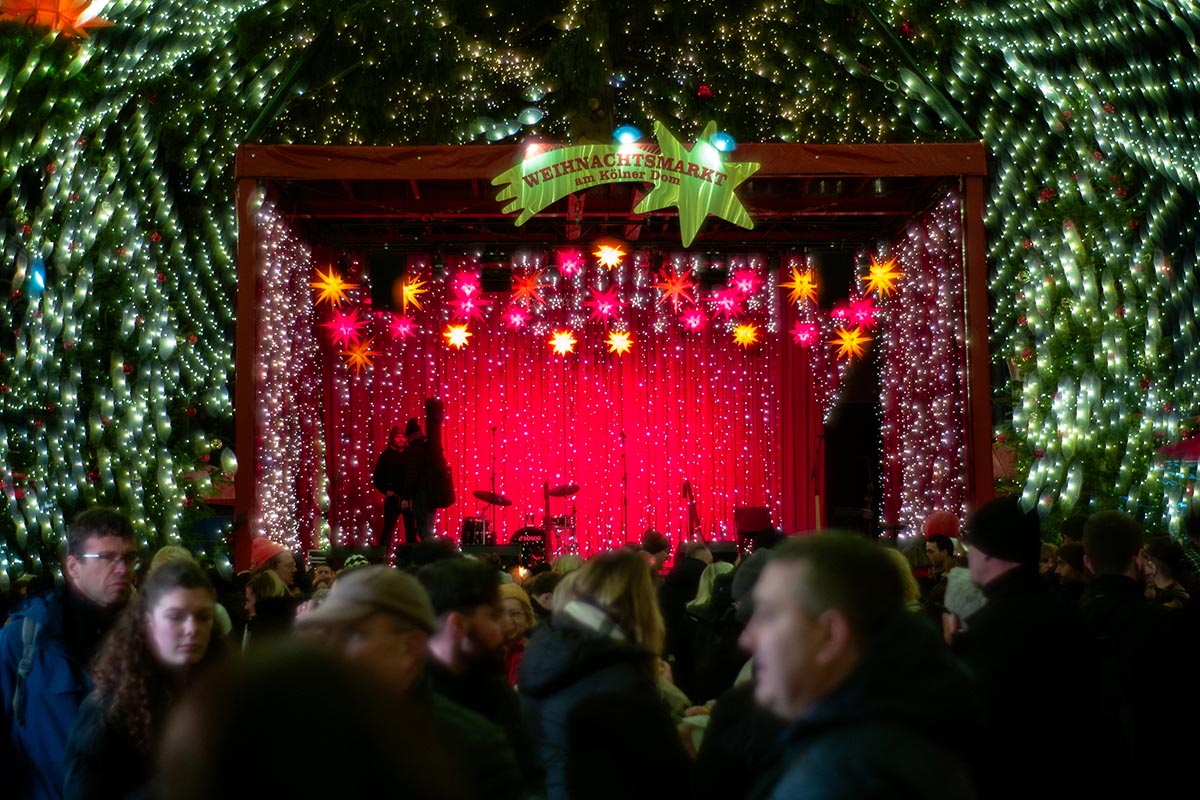
- Cologne Cathedral Christmas Market (Weihnachtsmarkt am Dom) – The largest and most famous market, set right in front of Cologne Cathedral with a huge Christmas tree and classic stalls. This is the most iconic market in Cologne.
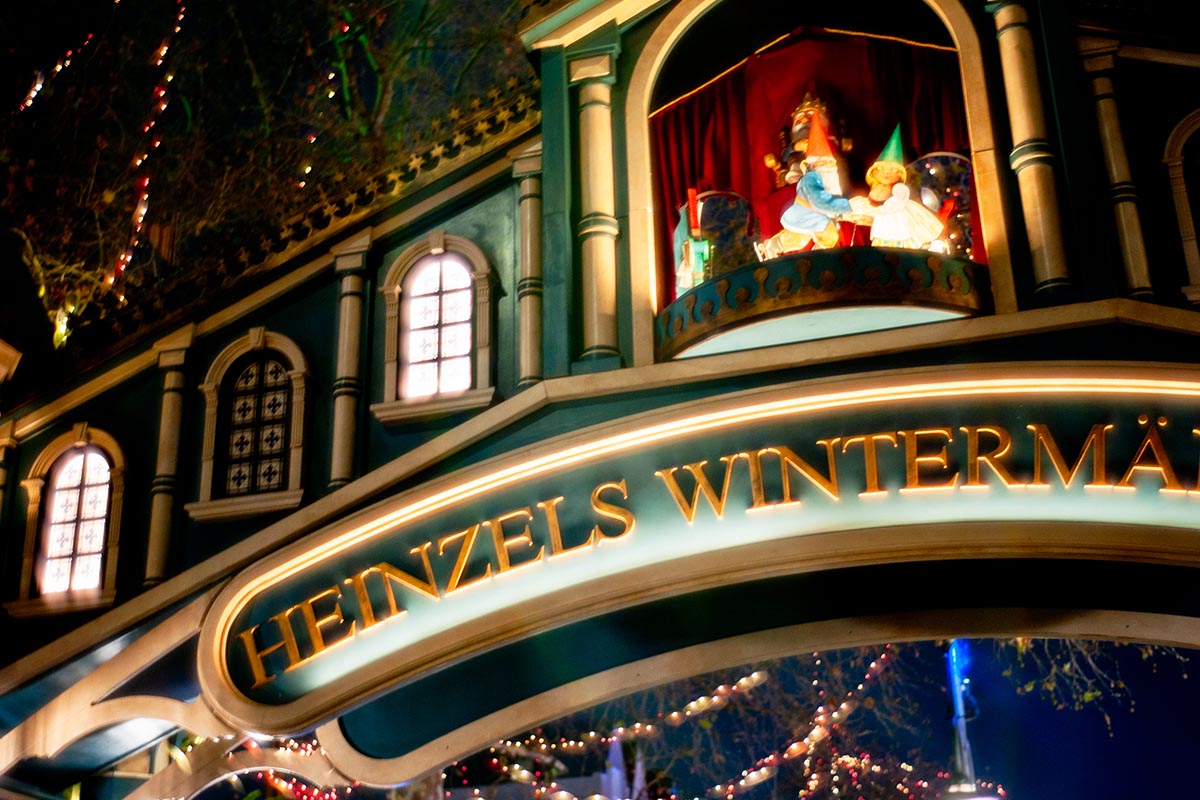
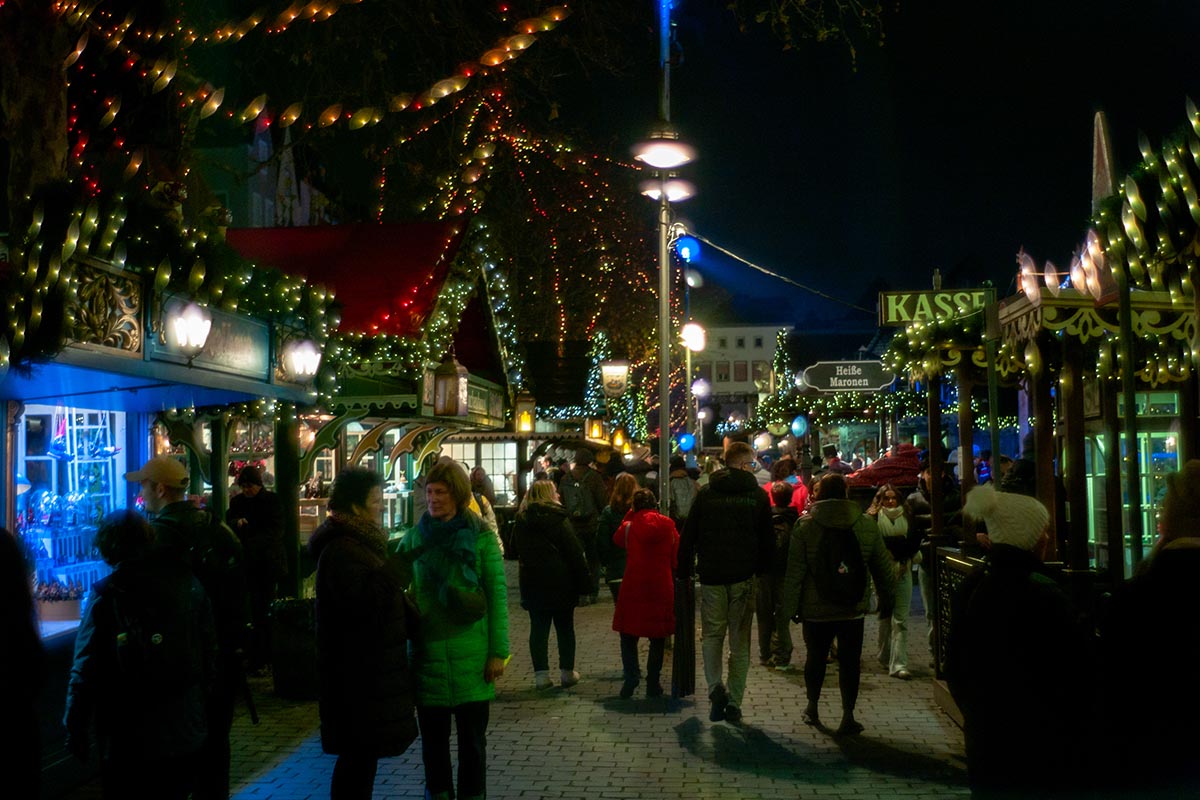
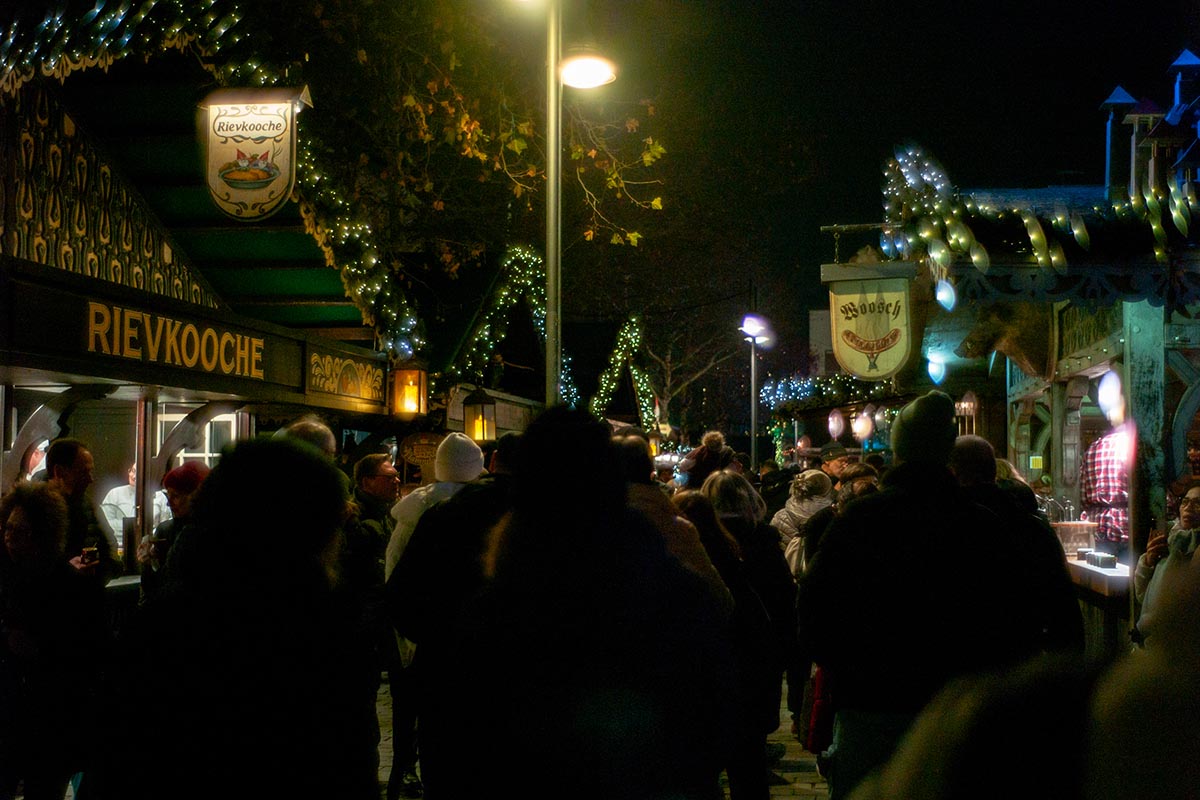
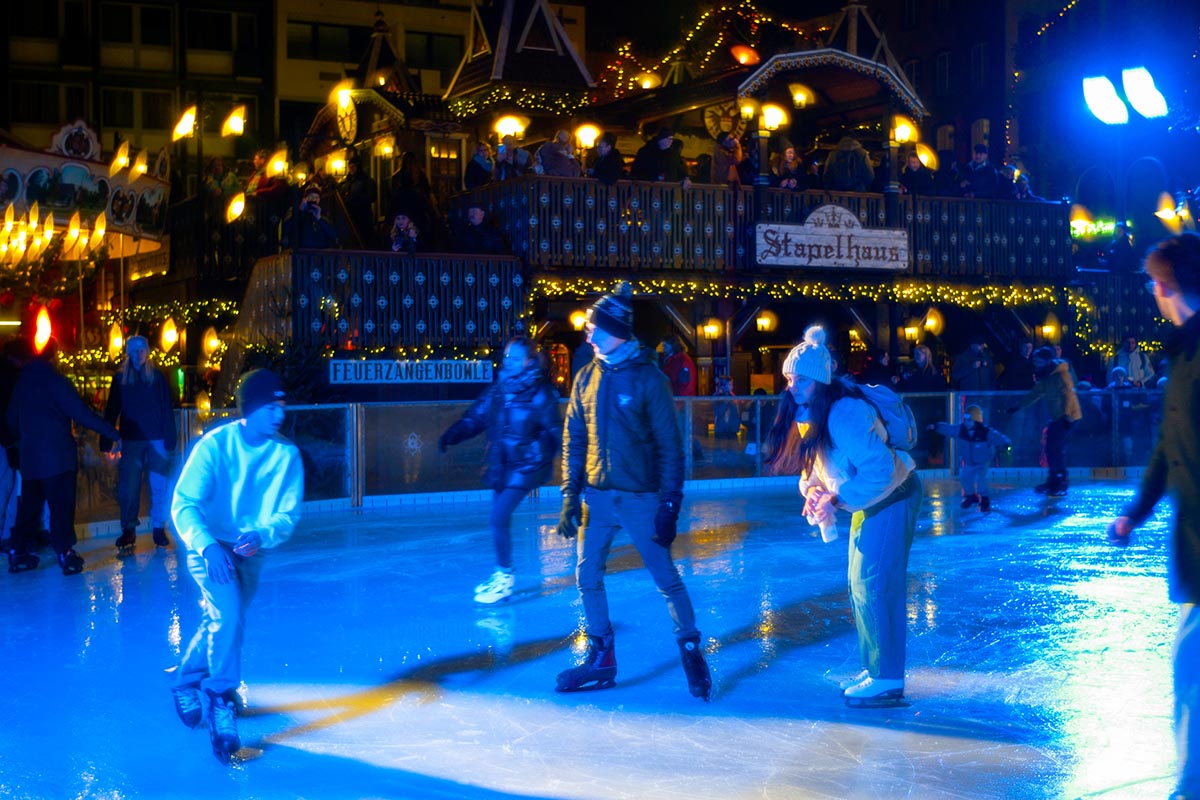
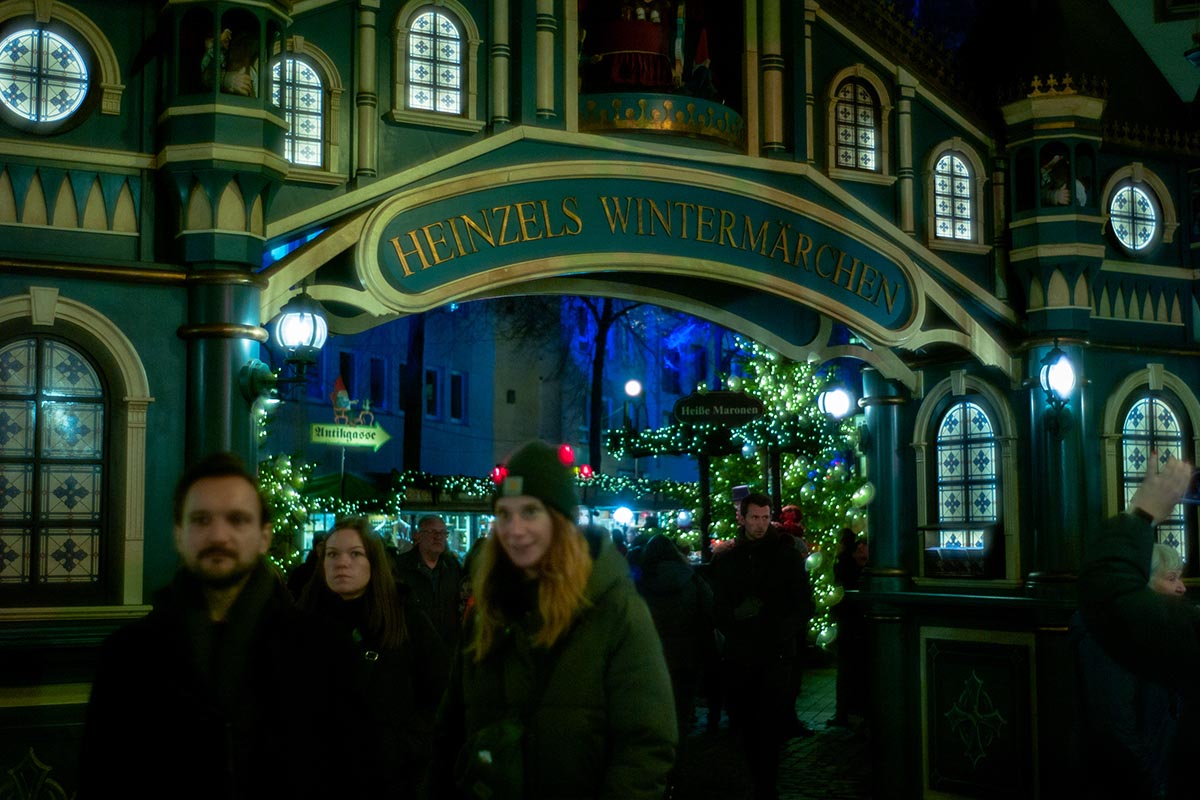
- Heinzels Wintermärchen (Old Town Christmas Market) – Located around Alter Markt and Heumarkt, themed around Cologne’s gnomes with a fairytale atmosphere and an ice skating rink.
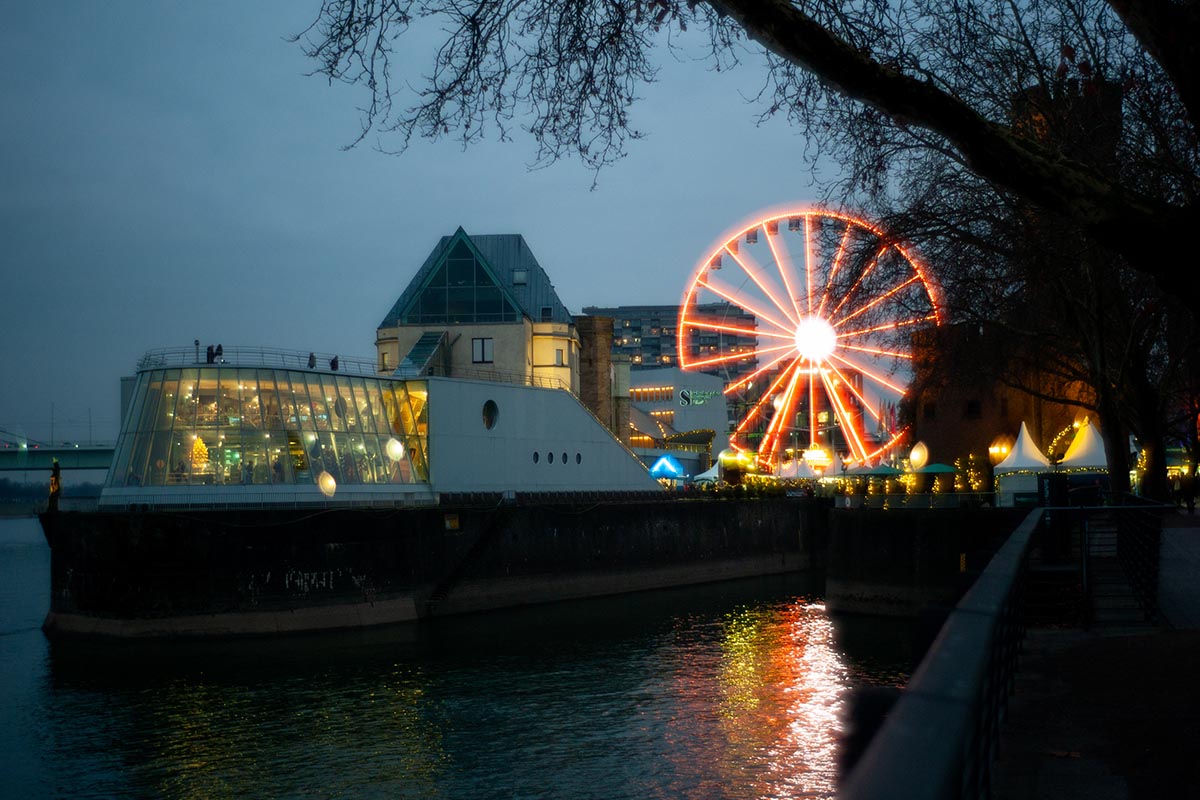
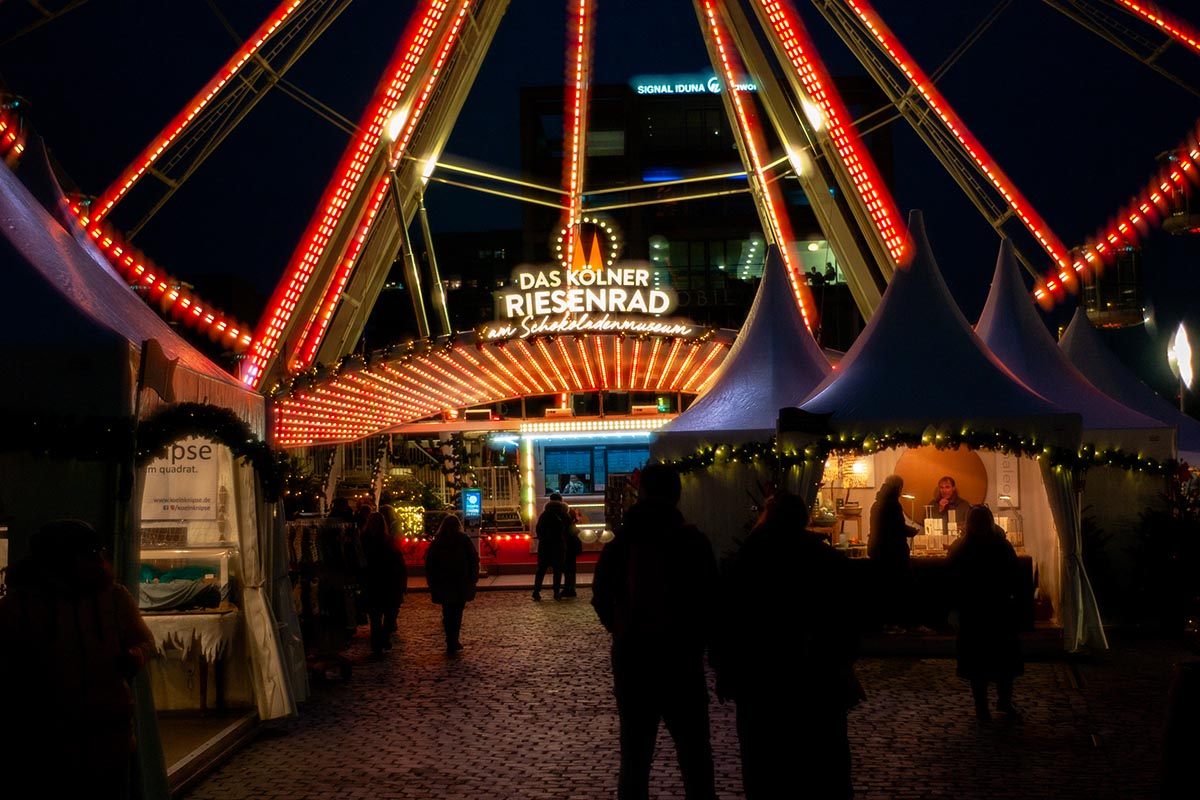
- Harbor Christmas Market (Weihnachtsmarkt am Hafen) – A maritime themed market at Chocolate Museum Pier with wooden ships, sailor decorations, and a more relaxed vibe. This market is a bit far out from old town so prepare to walk a bit more to reach it.
- Angel’s Christmas Market (Engelsmarkt) – Near Neumarkt, known for its white themed stalls, angel decorations, and elegant atmosphere. This market is surprisingly beautiful, with white, angel themed and stunning Christmas mug that you should definitely bring home.
- Stadtgarten Christmas Market (Christmas Market in the Park) – A cozy, local feeling market set in a park with live music and a laid back crowd.
- Rudolfplatz Christmas Market (Village of St. Nicholas) – A family friendly market with traditional decorations and a classic village feel.
Getting There
Cologne has two main train stations, so it is worth paying attention when booking your tickets.
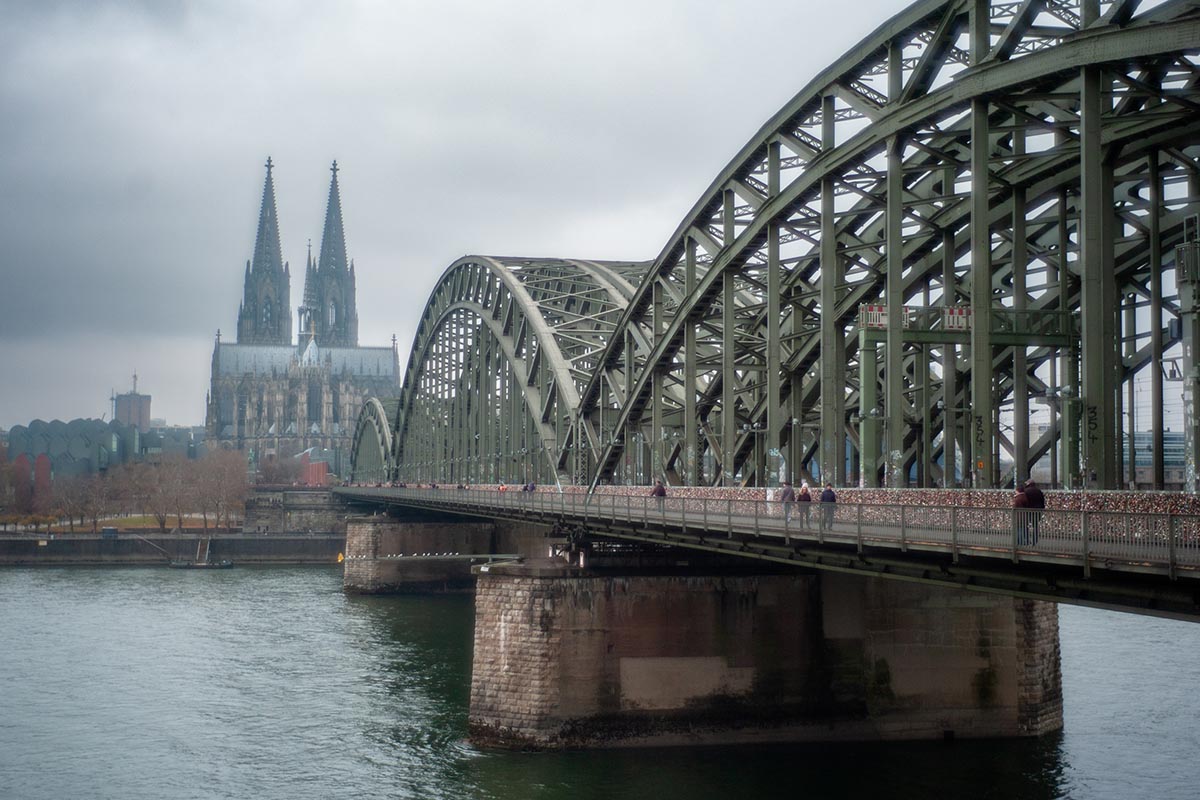
Köln Hbf, or Cologne Main Station, is located right next to Cologne Cathedral and is by far the most convenient option. The second station is Köln Messe Deutz, which sits just across the Hohenzollern Bridge on the eastern side of the old town. If you arrive at Köln Messe Deutz, expect about a 20 minute walk to the cathedral. That said, it is actually a scenic and relaxing walk, especially if the weather is nice.
Both stations will get you into Cologne without any issues, so you can comfortably book trains to either one depending on timing and price.
In my case, I arrived at Köln Messe Deutz because the train I wanted stopped there, and I departed from Köln Hbf when leaving the city.
Vibe and Atmosphere
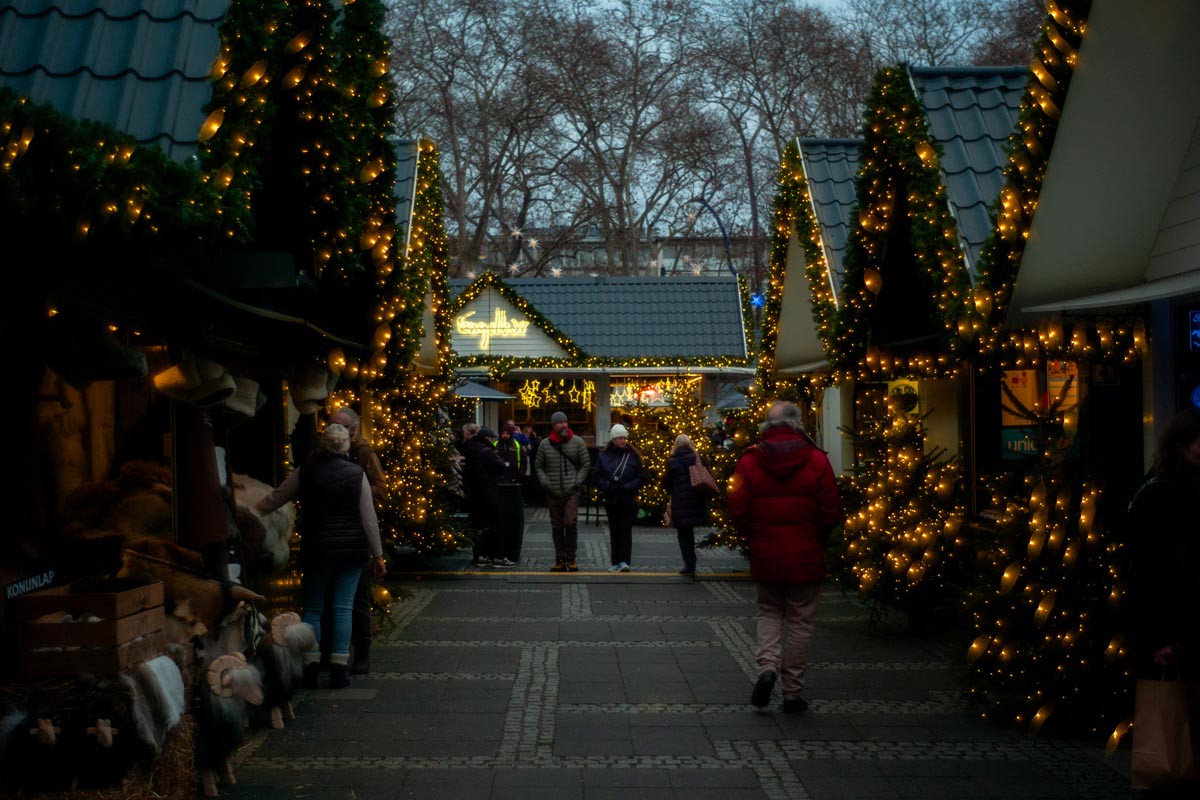
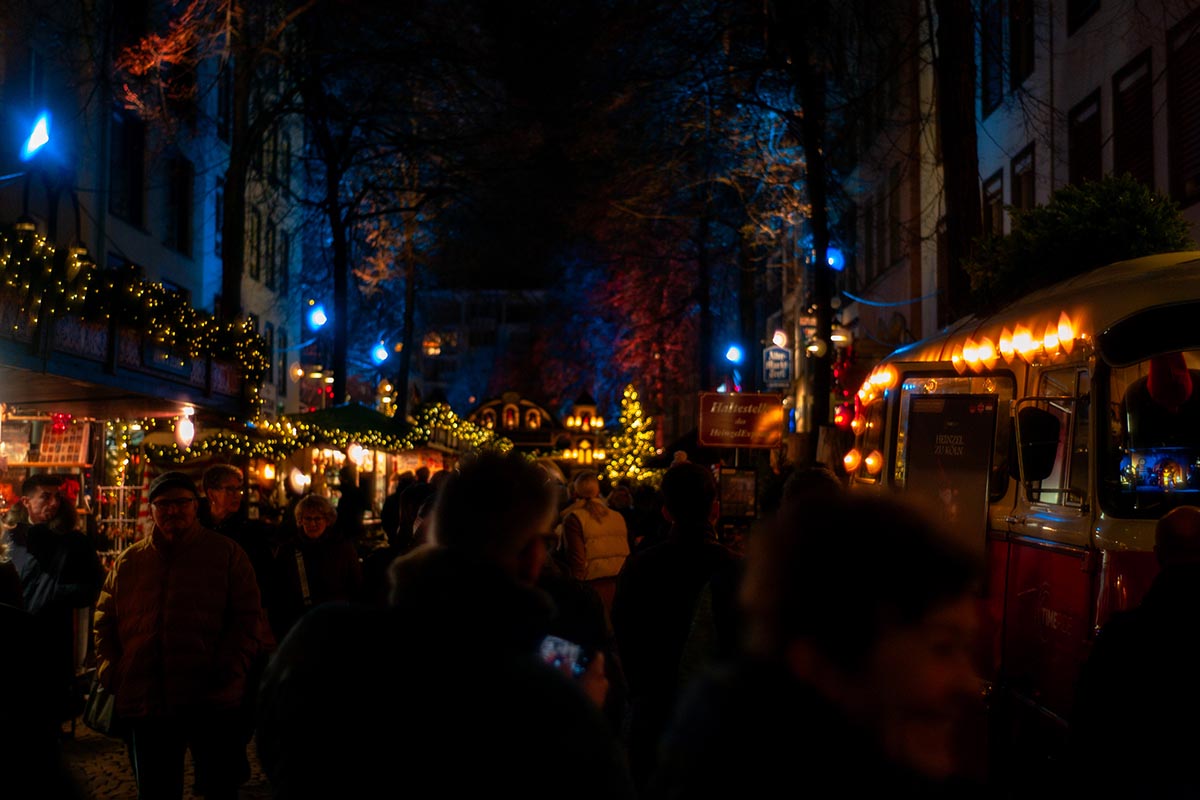
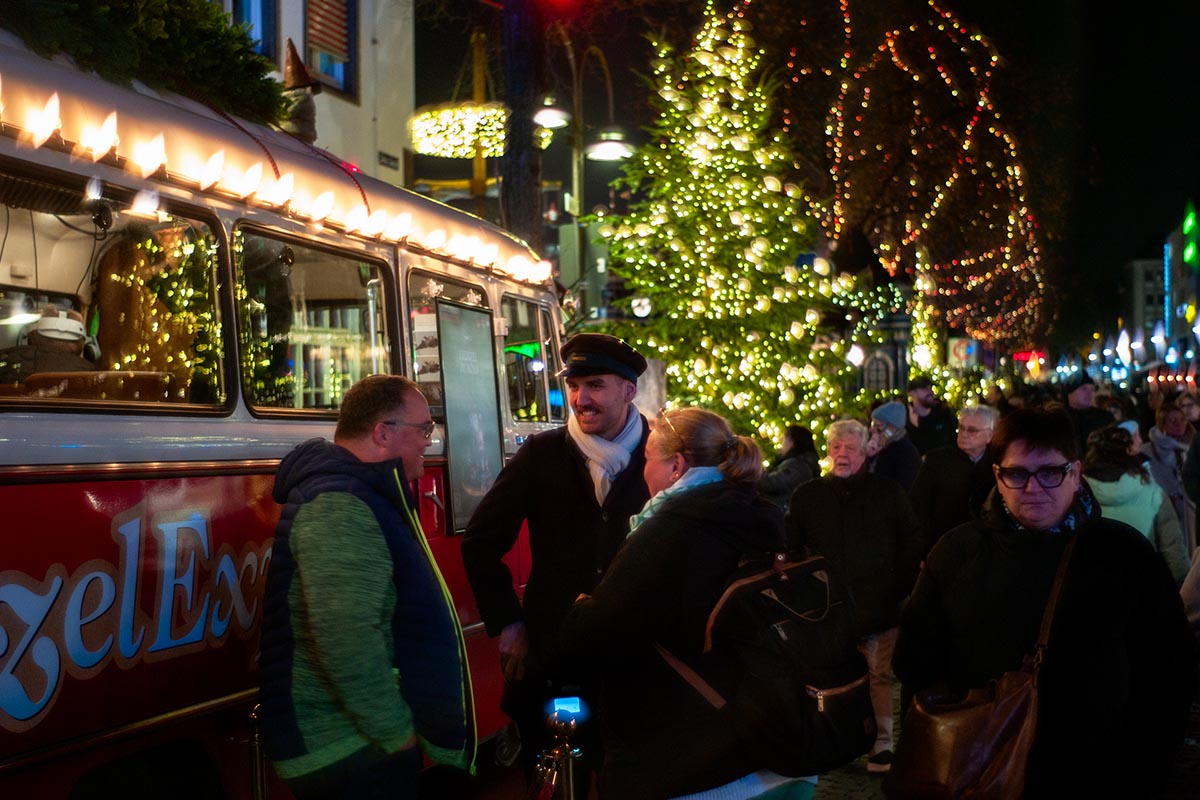
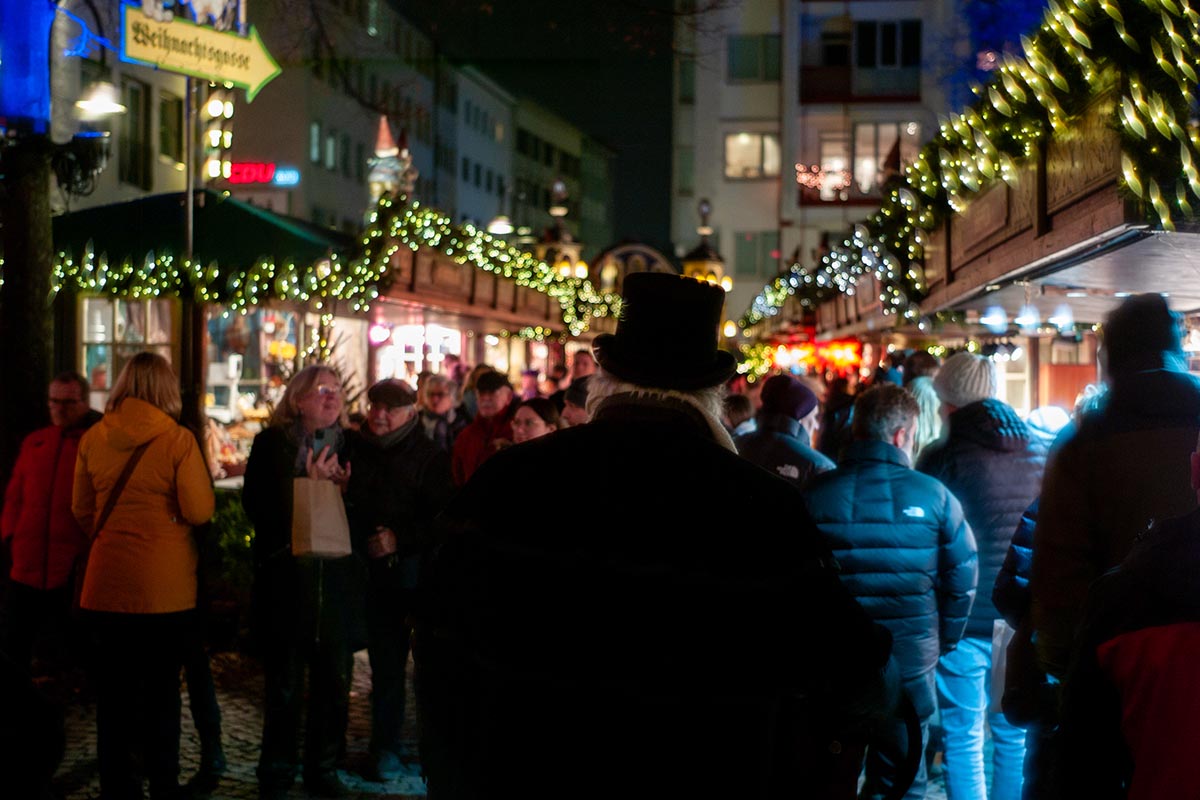
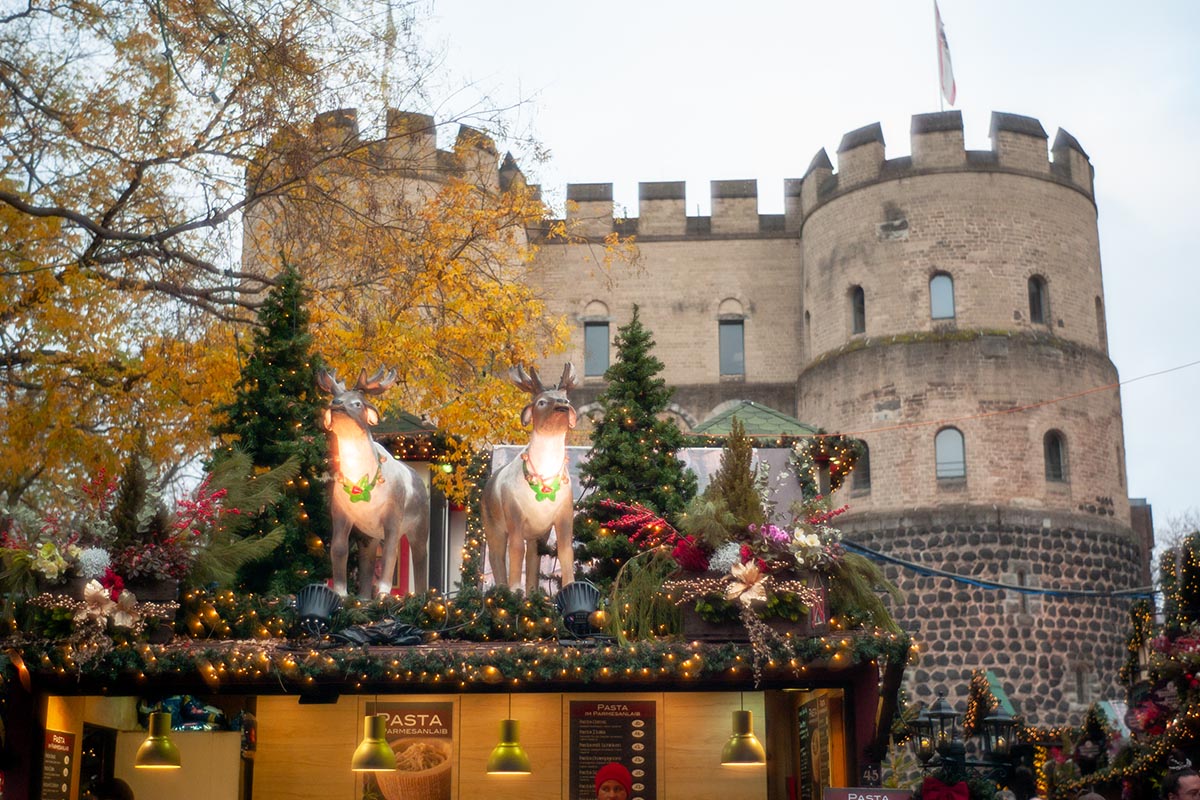
Cologne’s Christmas markets are beautifully decorated, with each stall thoughtfully designed and built with incredible attention to detail. This level of craftsmanship gives the markets a more authentic and immersive feel. What makes Cologne especially unique is that the Christmas markets are spread out across the city, and each one has its own distinct vibe. This is the real beauty of visiting Cologne during the Christmas season you can experience several very different markets all in a single day.
Angel’s Christmas Market (Engelsmarkt) is my personal favorite in Cologne. The angel theme and white toned decorations give it a softer, more feminine atmosphere that stands out from the more traditional German Christmas markets. It feels elegant and refined, while still keeping all the classic elements that make a German Christmas market special.
Heinzels Wintermärchen is another standout. It is impressively long, and the moment you step in, it genuinely makes your jaw drop. The market stretches on and on, in the best possible way, and feels almost never ending.






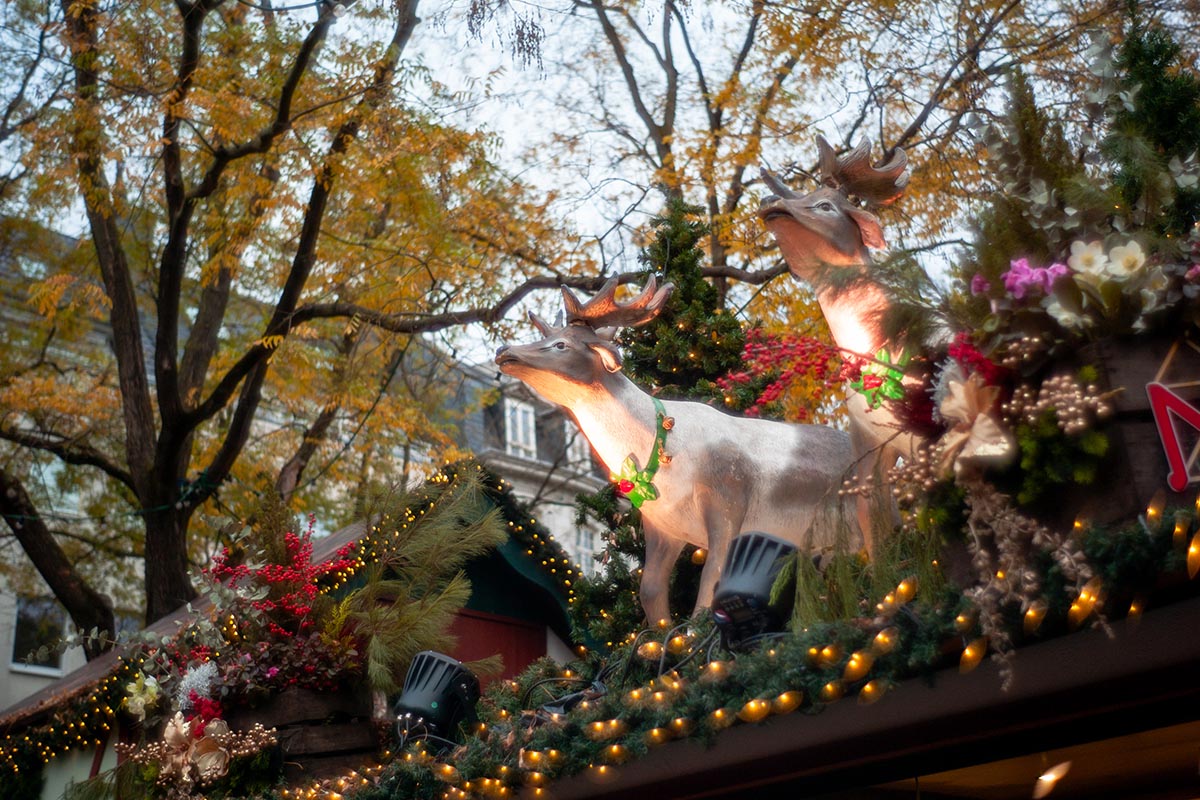
4. Heidelberg
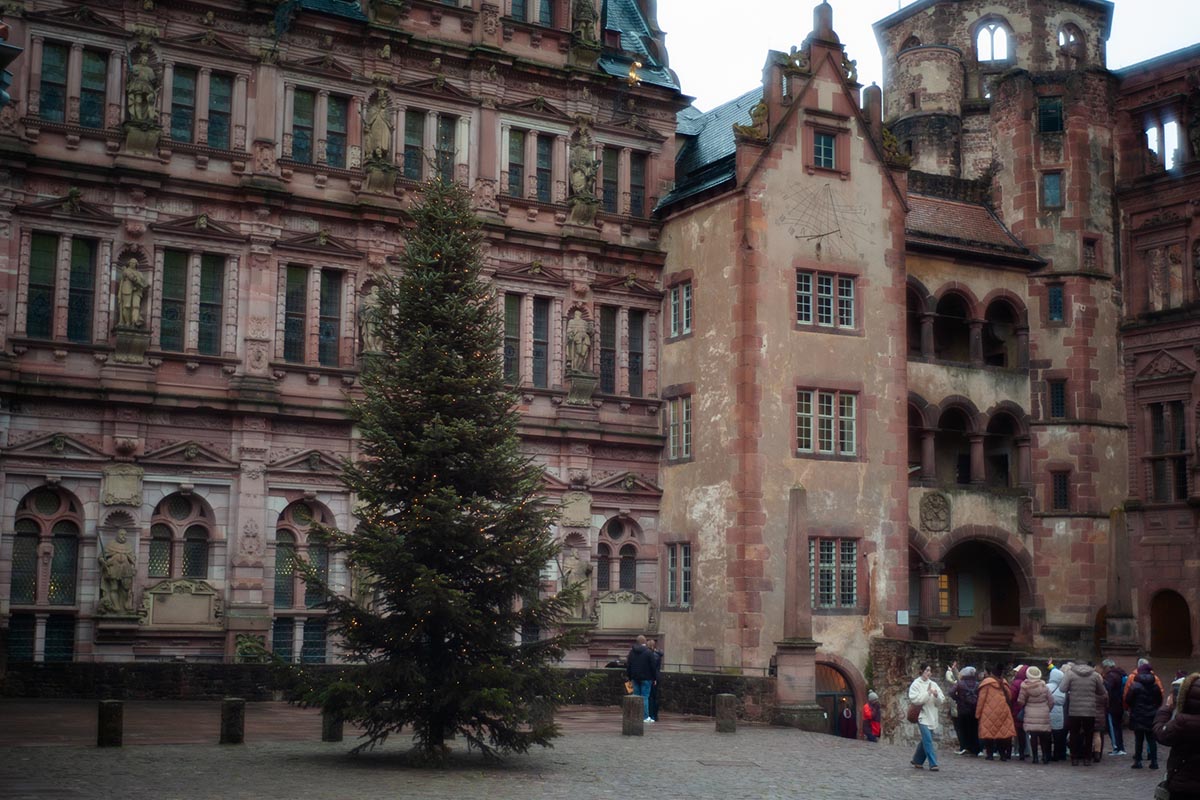
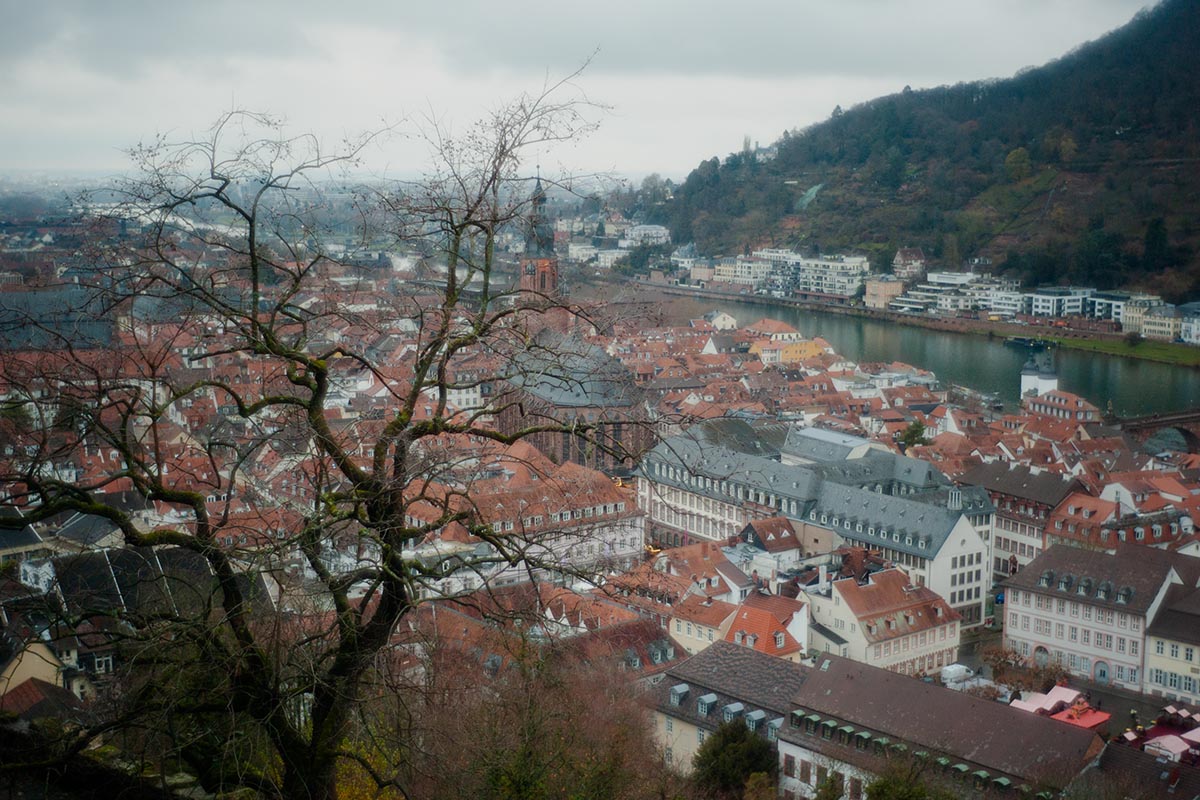
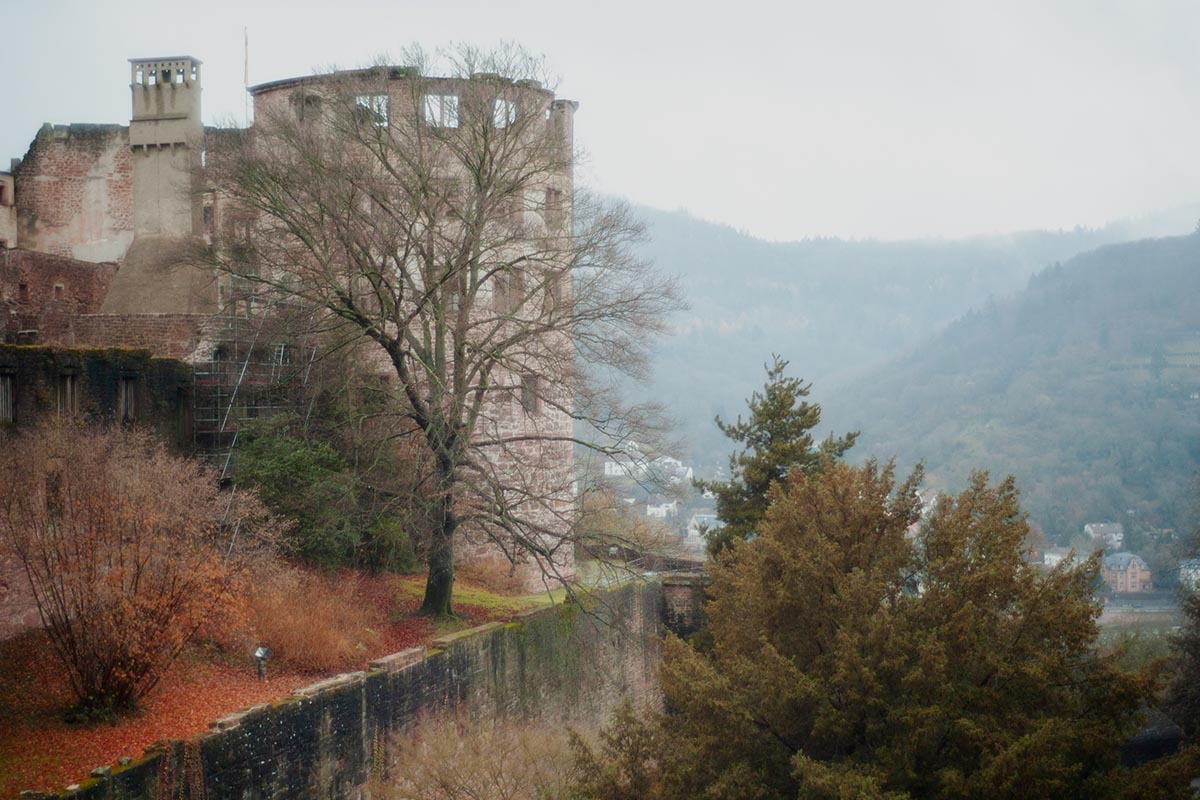
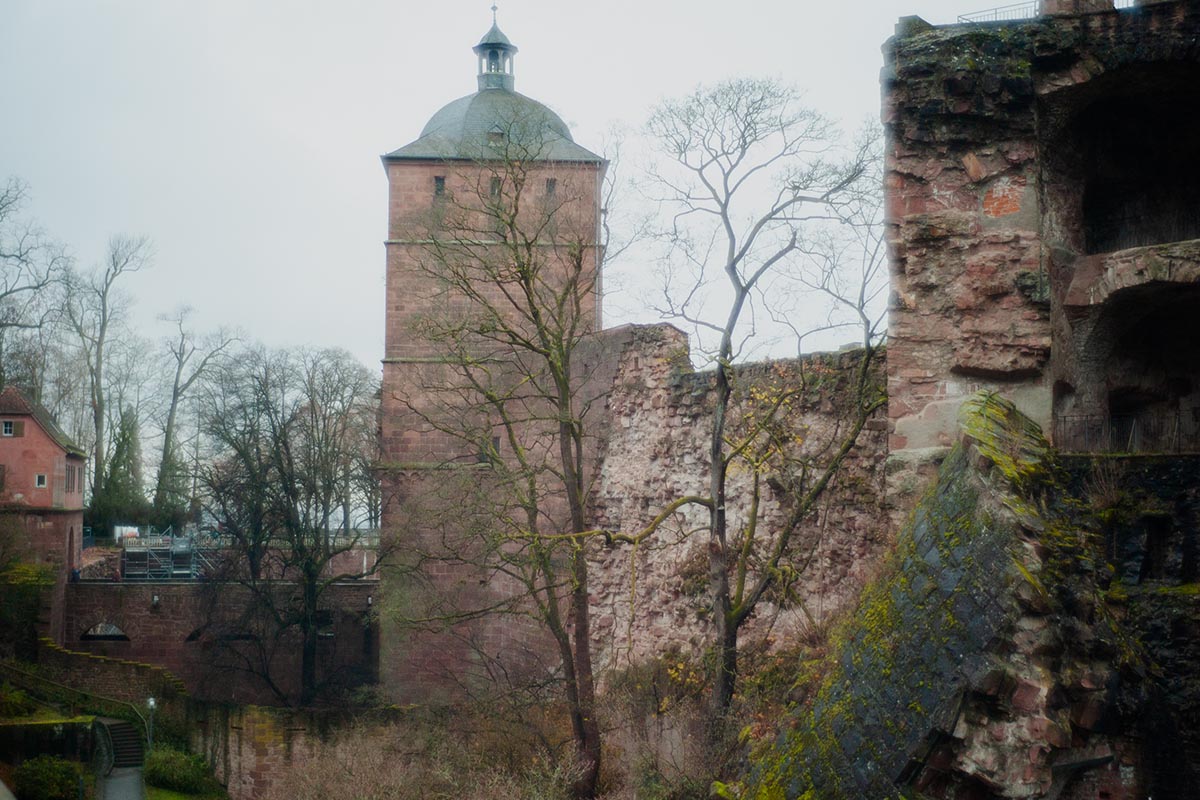
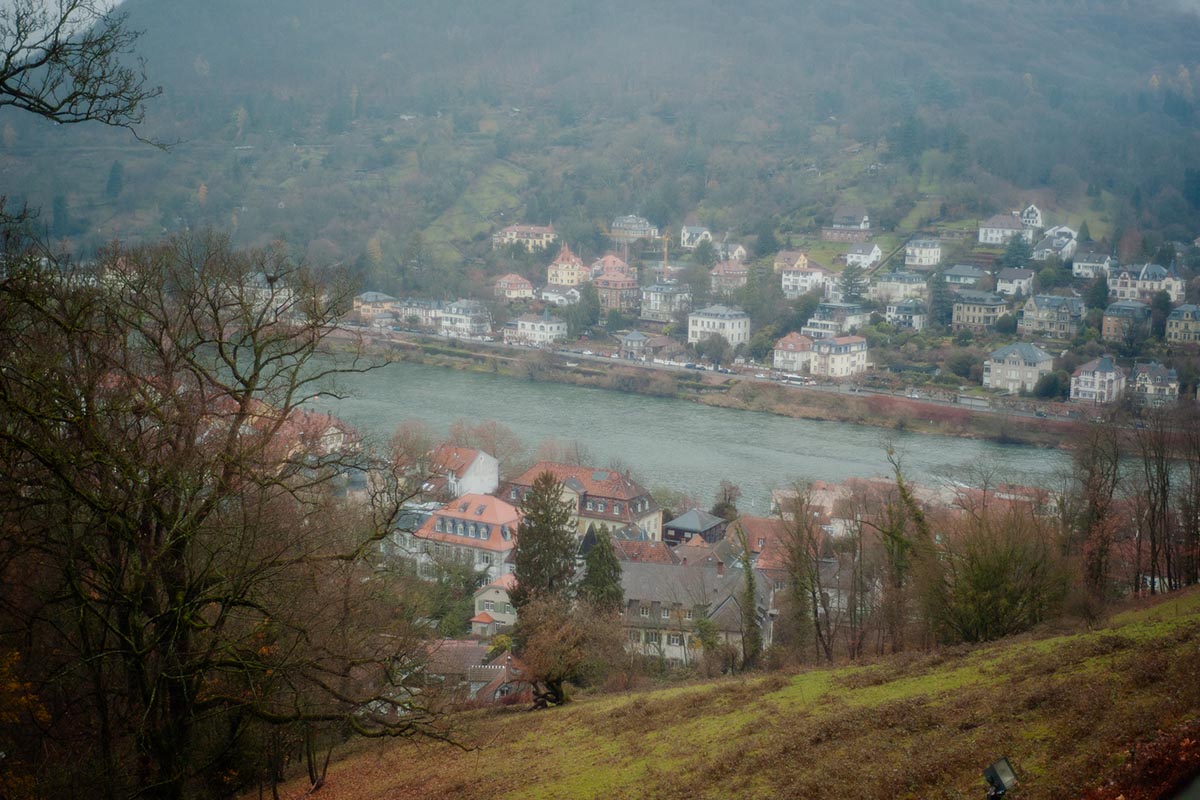
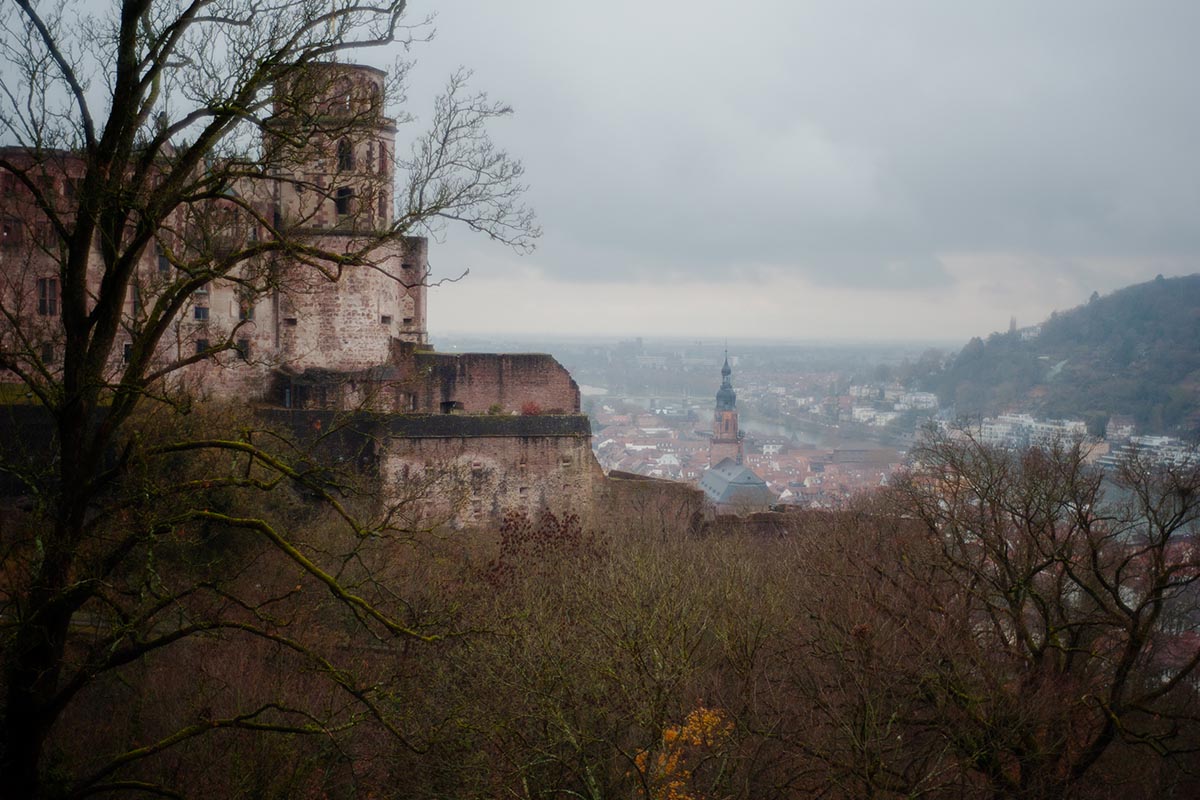
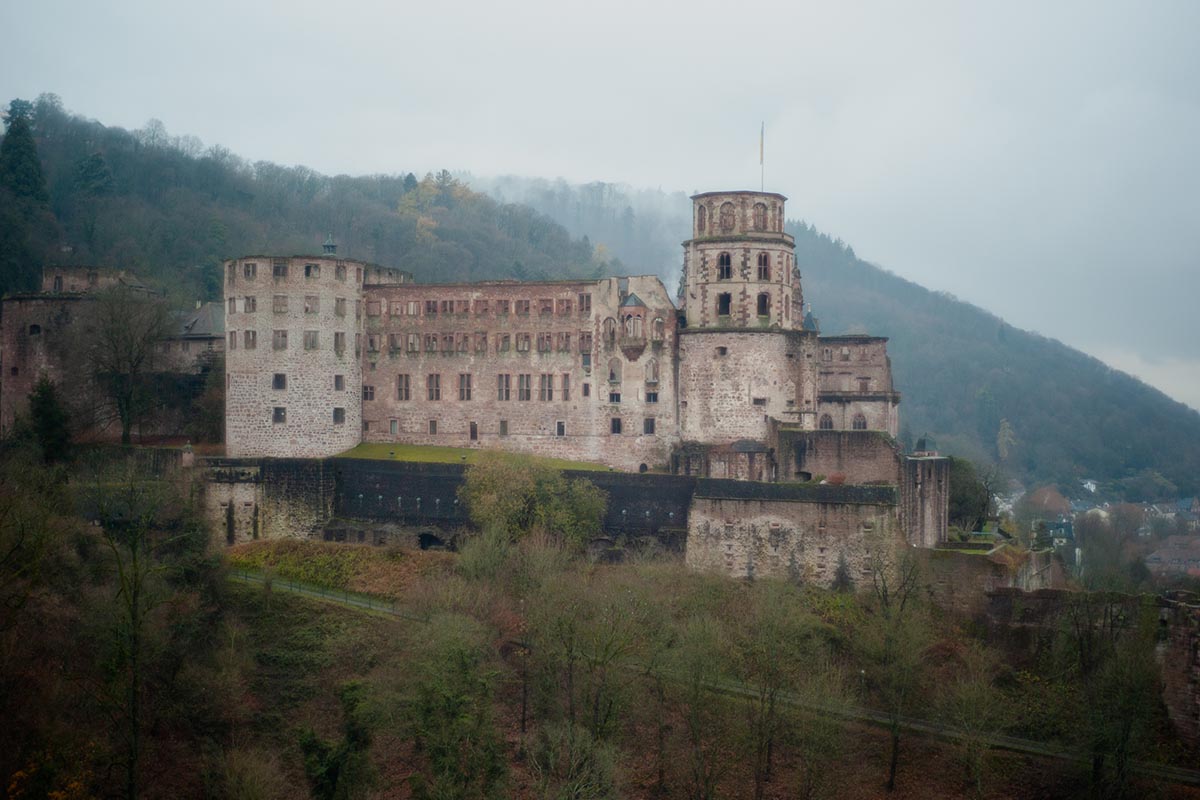
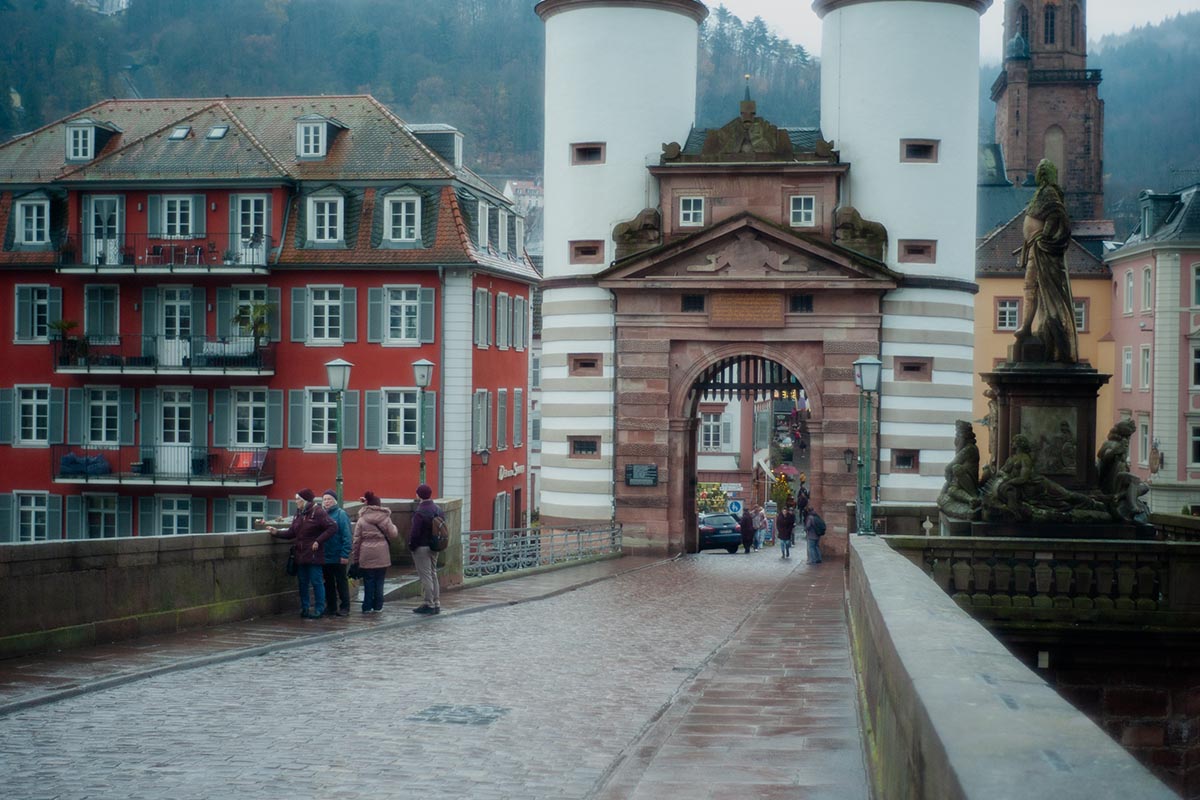
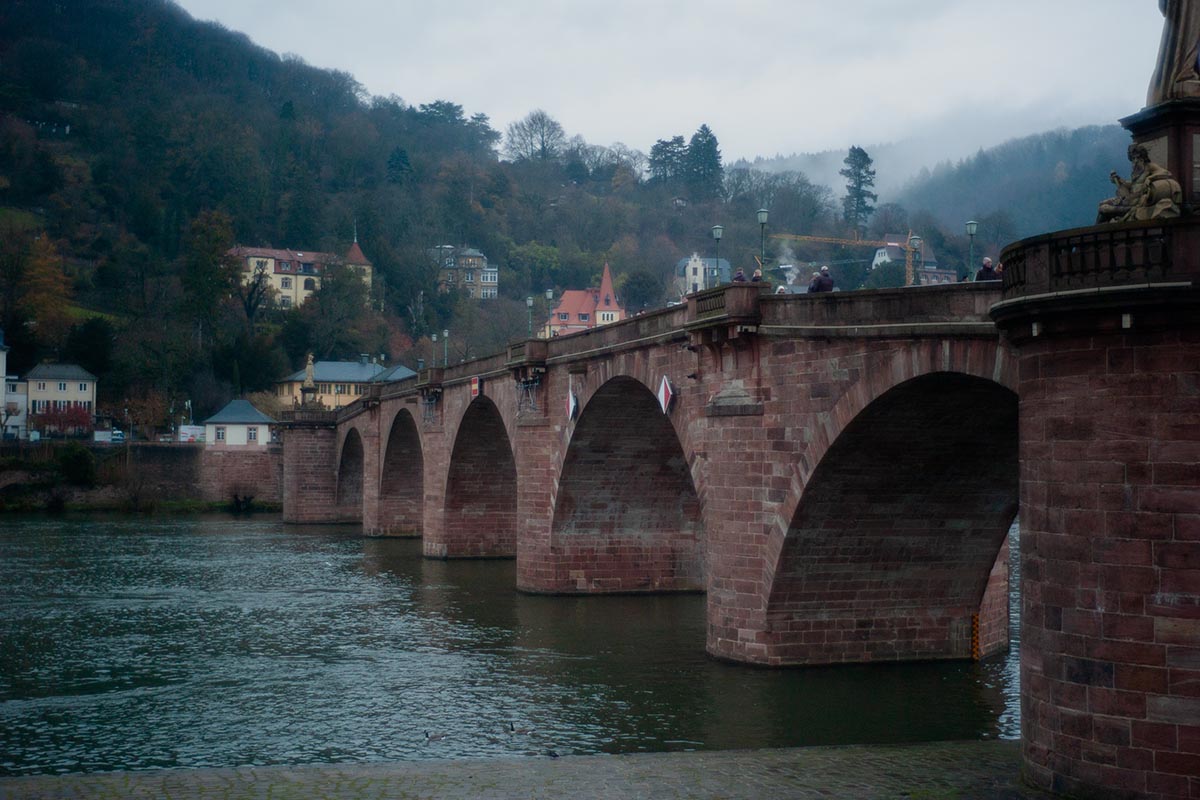
Heidelberg is another favorite of mine and a must visit during the holiday season. Beyond its charming Christmas markets, the city is known for its stunning hillside castle and lively college town atmosphere, with streets full of shops.
In my opinion, Heidelberg is the perfect size. It is not so big that exploring feels exhausting, yet not so small that there is little to do. I spent a full day in Heidelberg and felt the time was perfectly filled with enjoyable activities.
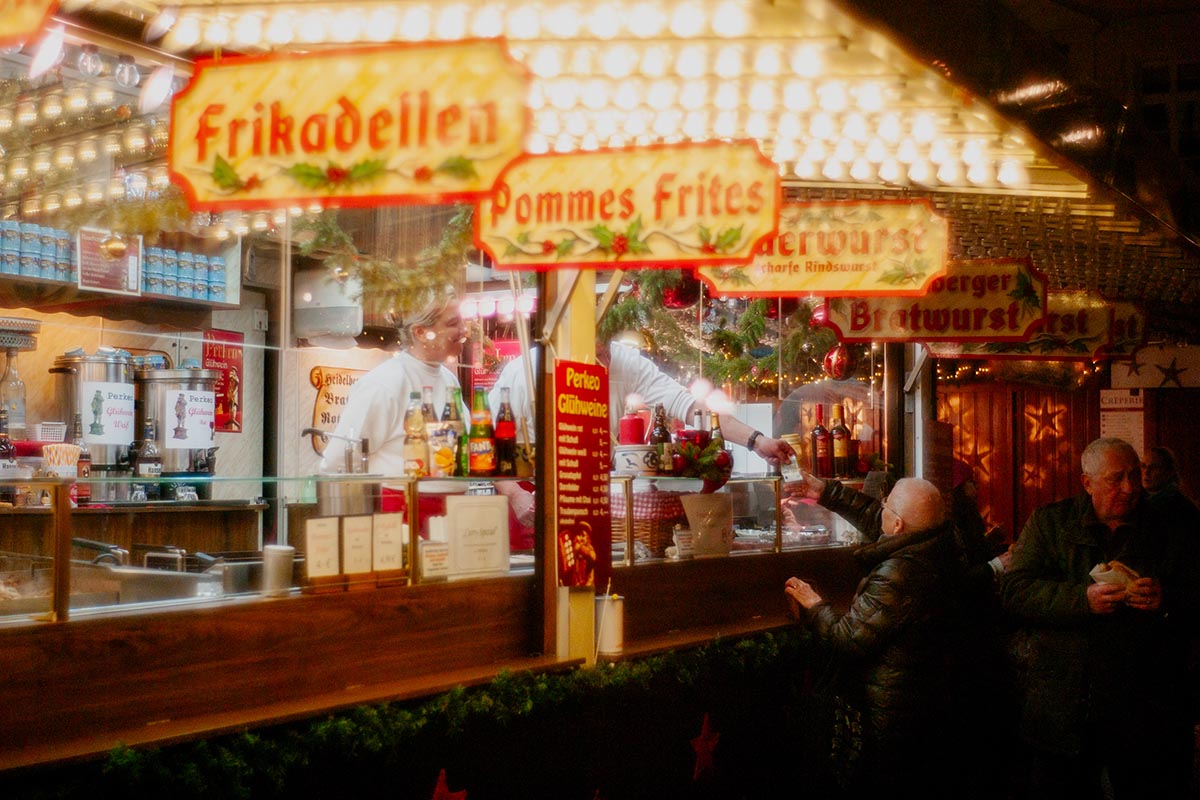
Markets and Highlights
- Bismarckplatz Christmas Market – Located at the western entrance of the Old Town and close to public transport. A lively spot with lots of food stalls and a local feel. I recommend starting from this market and make your way east towards Marktplatz, the main Christmas market in Heidelberg.
- Anatomiegarten Christmas Market – Set in a small square near the university, this market feels cozy and traditional, surrounded by historic buildings.
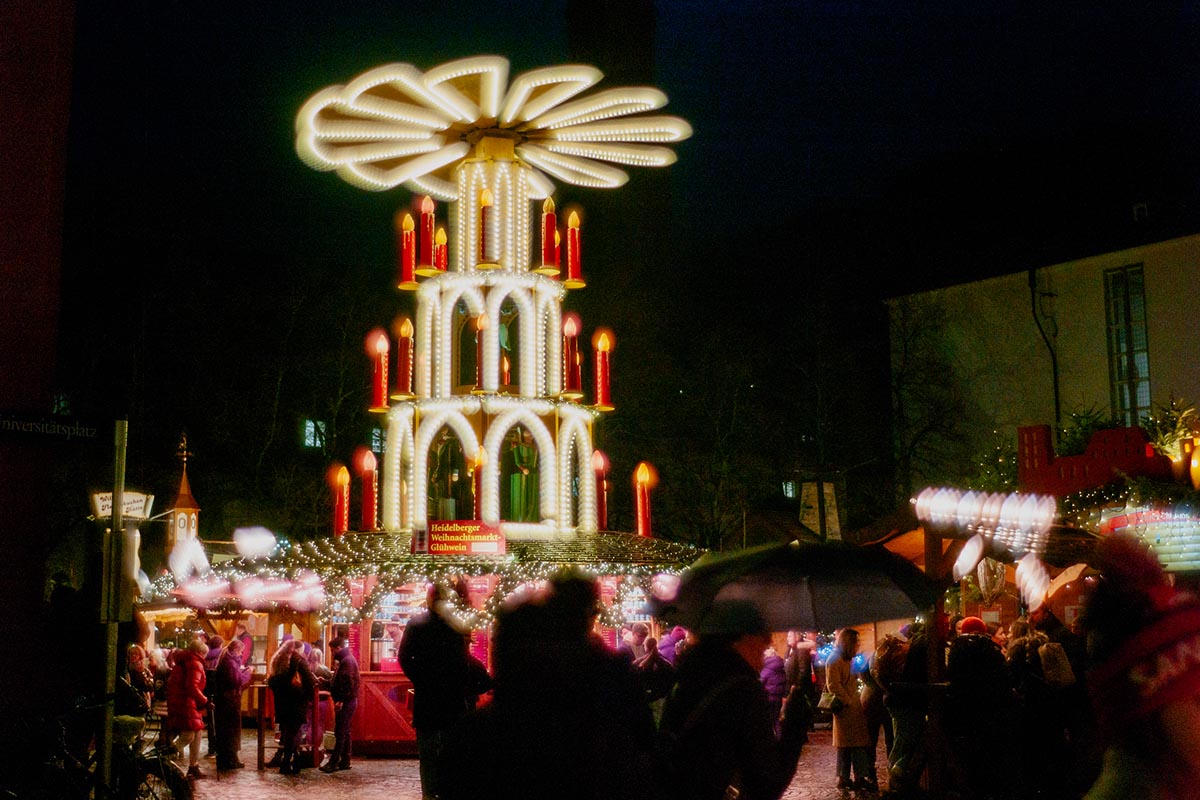
- Universitätsplatz Christmas Market – One of the central markets in Heidelberg, right in the heart of the Old Town. Busy, festive, and a great place to soak in the holiday atmosphere.
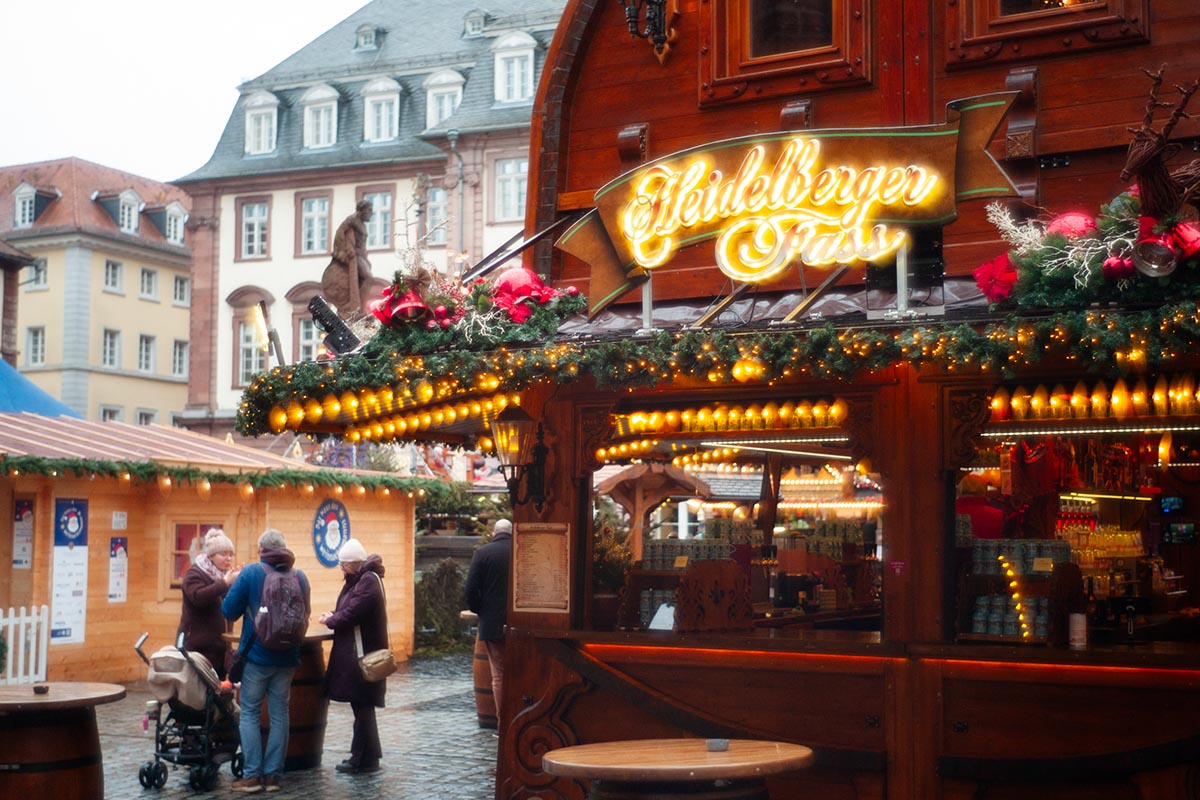
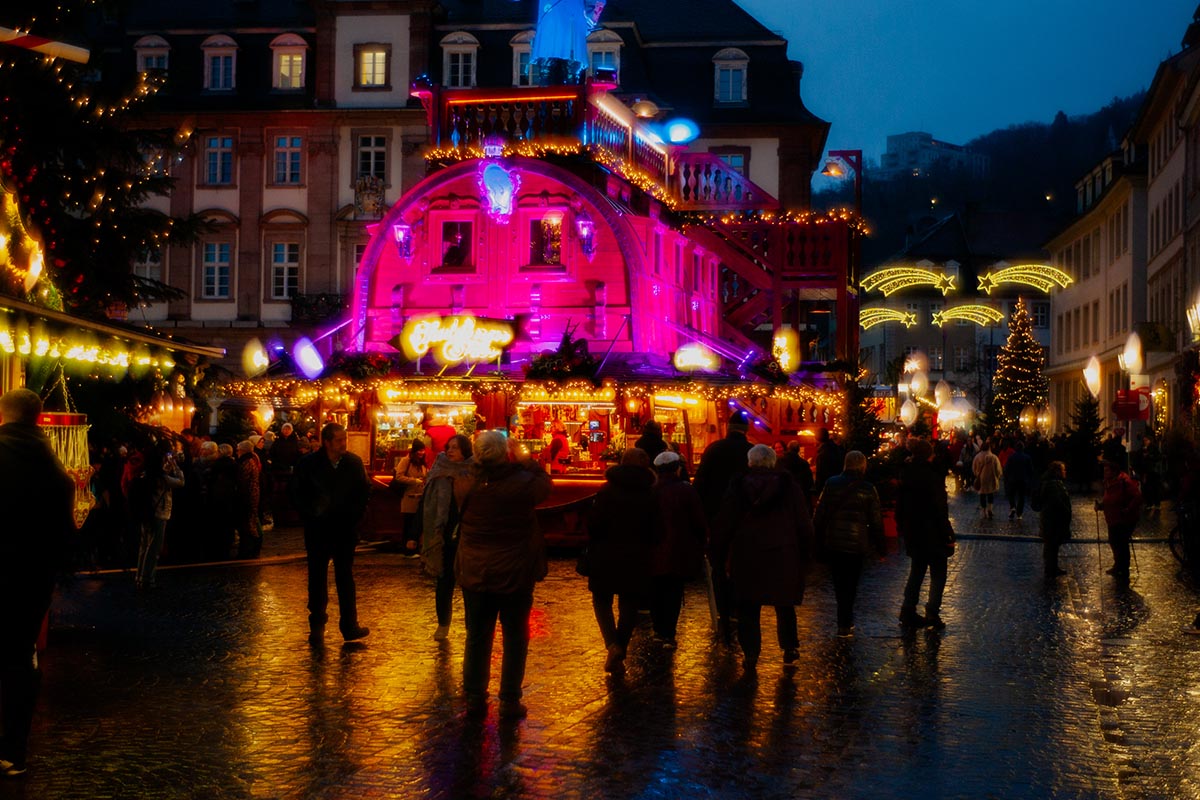
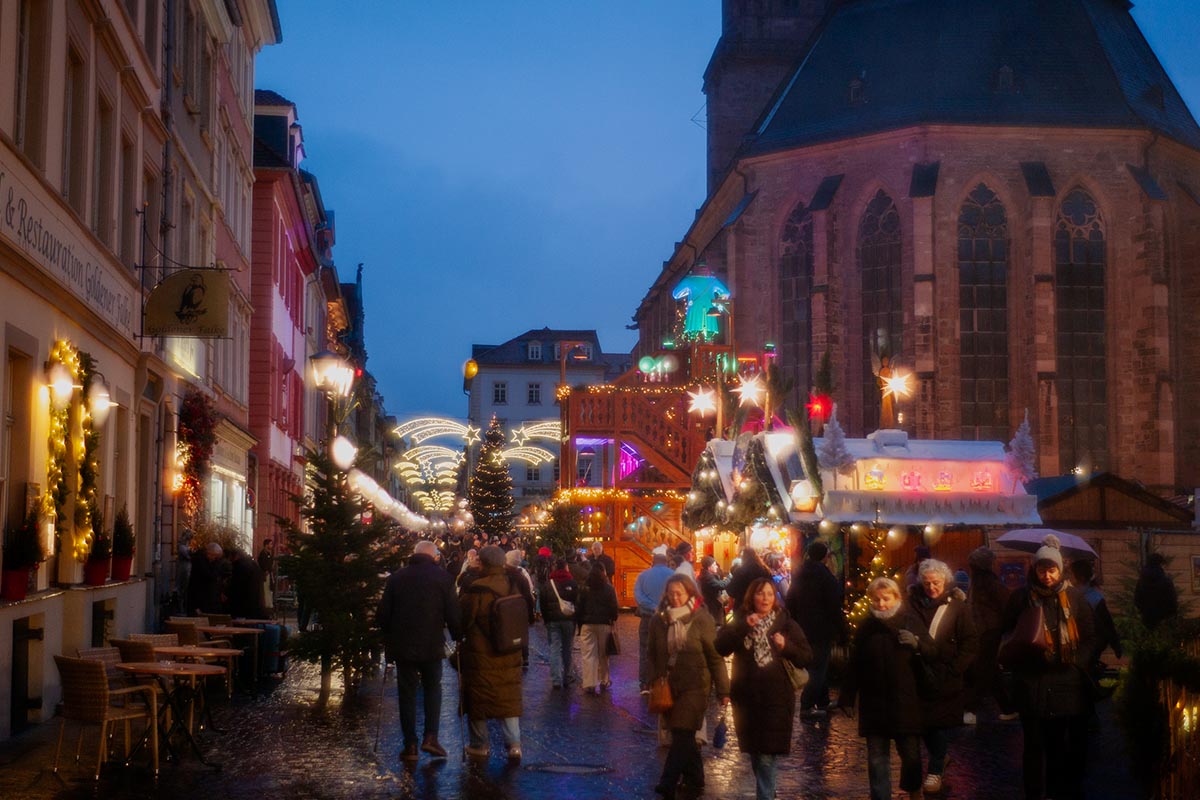
- Marktplatz Christmas Market – The most iconic Christmas market in Heidelberg, set in front of the Church of the Holy Spirit. This is also where you will find the ice skating rink, with the castle views in the background.
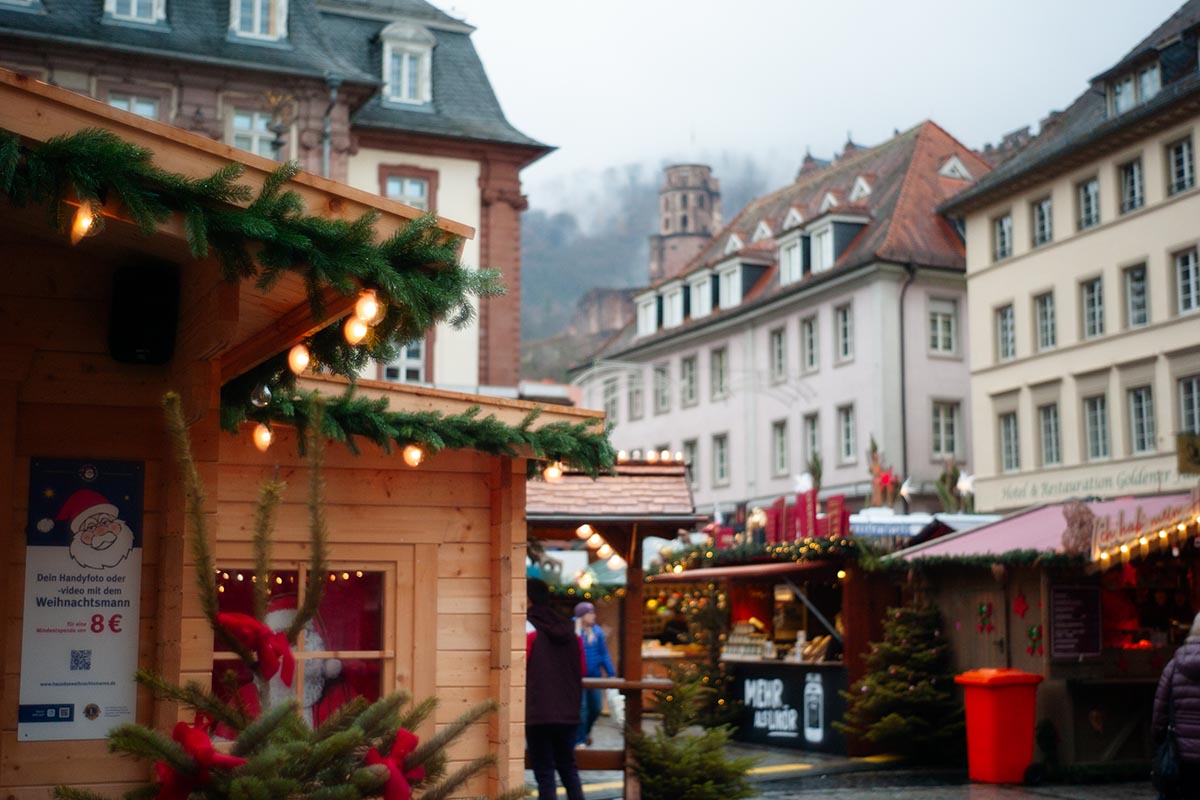
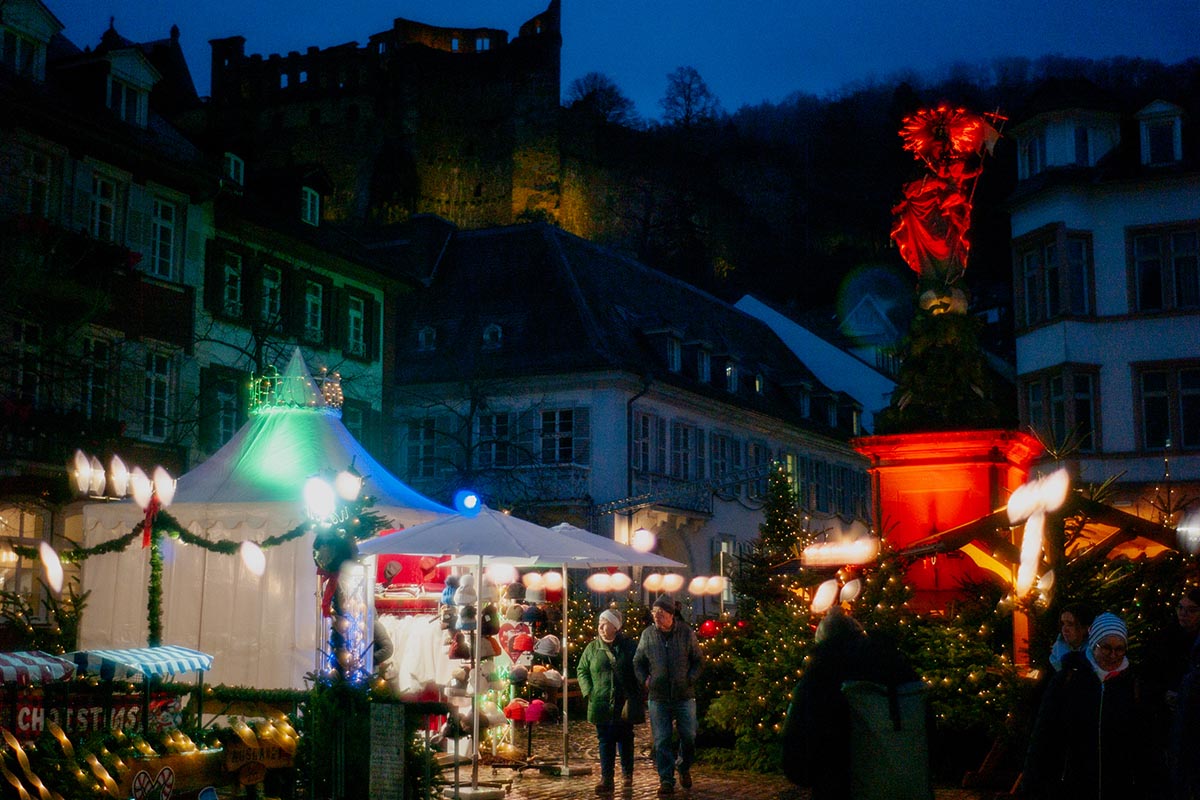
- Kornmarkt Christmas Market – A smaller and quieter market with a romantic setting and beautiful views up toward Heidelberg Castle, especially charming in the evening.
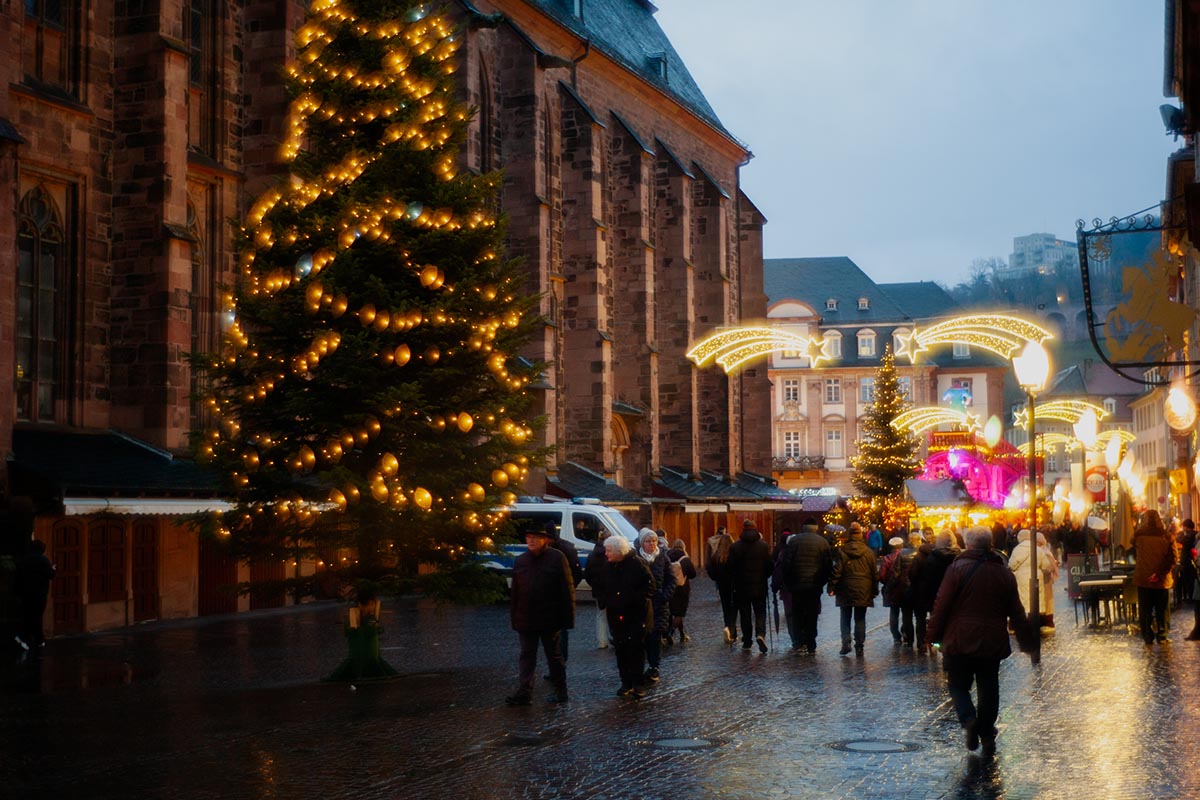
Getting There
Heidelberg Central Station (Heidelberg Hauptbahnhof) is about 1 hour and 40 minutes from Frankfurt, making it an easy and popular day trip if you are based there.
After arriving at Heidelberg Hauptbahnhof, it is best to take a local bus or tram to Bismarckplatz, as the train station is a bit far from the Christmas markets. There is not much to see if you choose to walk this stretch, so hopping on public transport will save you time and energy.
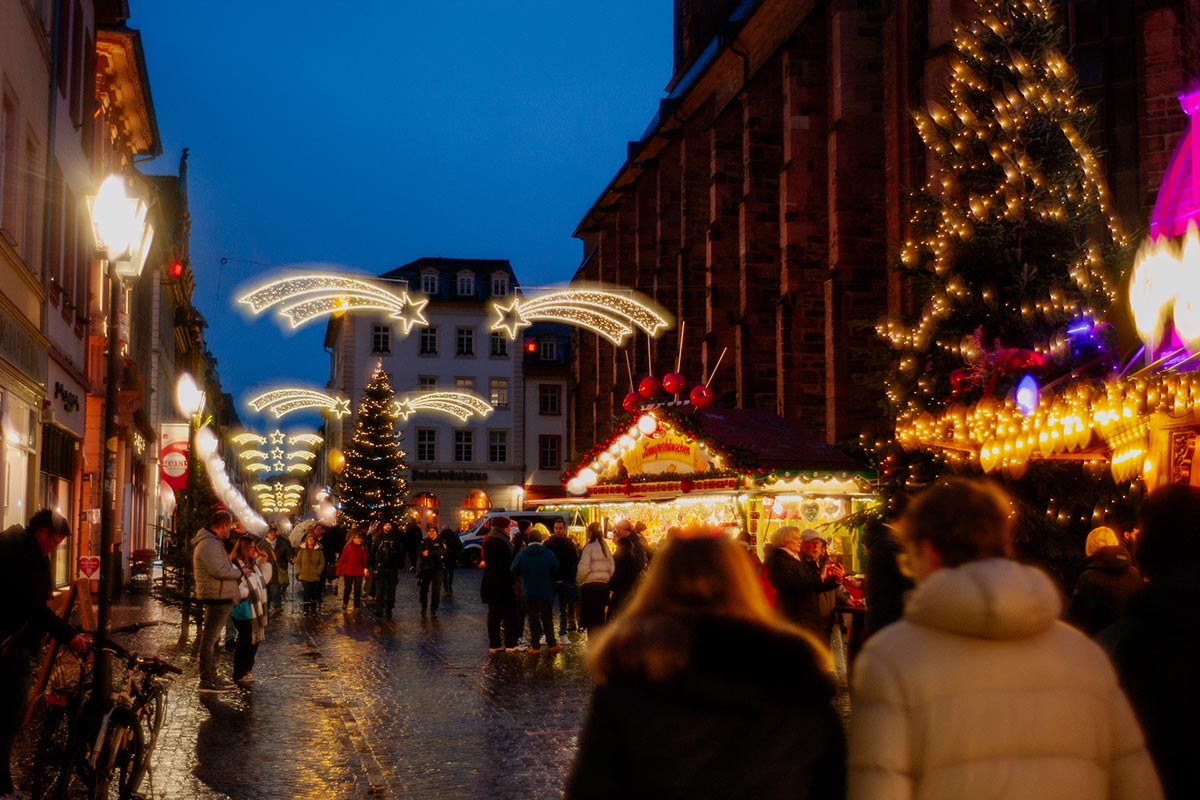
Once you arrive at Bismarckplatz, the Christmas markets start appearing one after another. Simply follow the main street, Hauptstraße, browse the shops along the way, sip on some Glühwein, and take in the charm of the city.
Vibe and Atmosphere
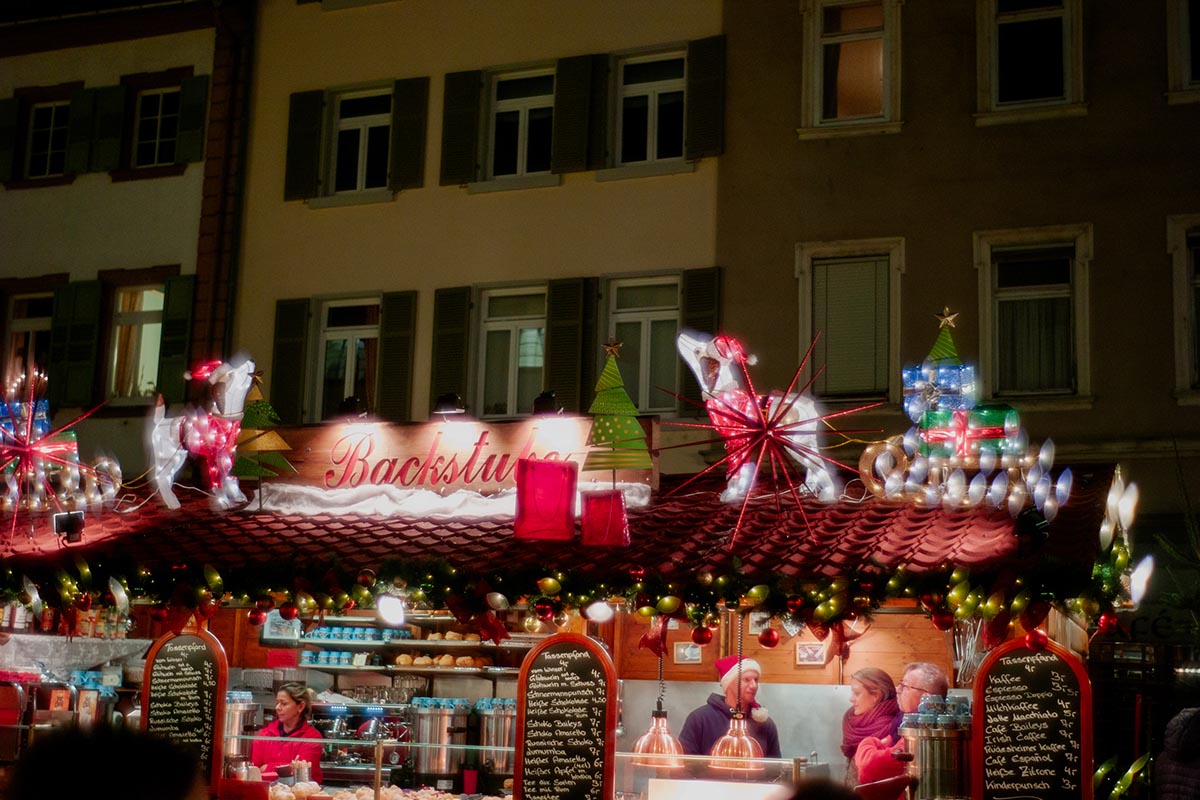
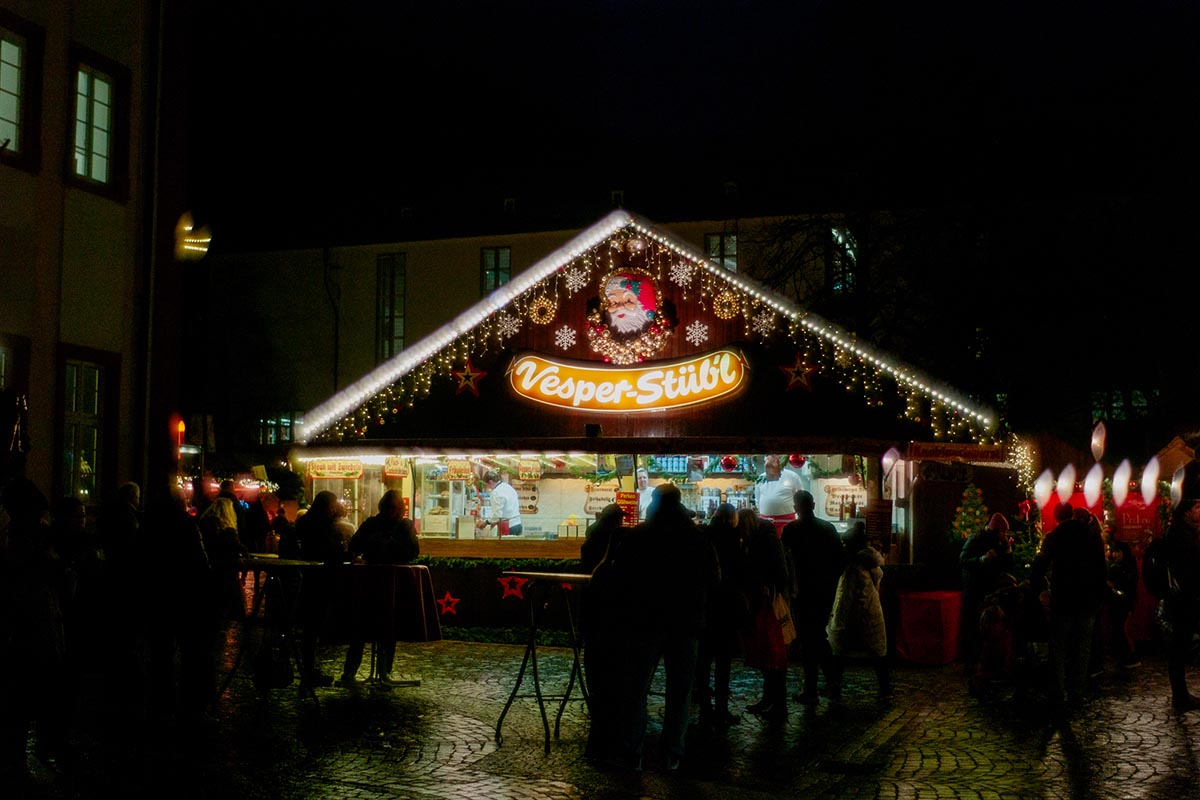
Heidelberg is a charming college town. Alongside its historic buildings and old world architecture, you will also find plenty of modern shops and restaurants, including brands like KIKO Cosmetics and Five Guys, which adds to the city’s lively and youthful energy.
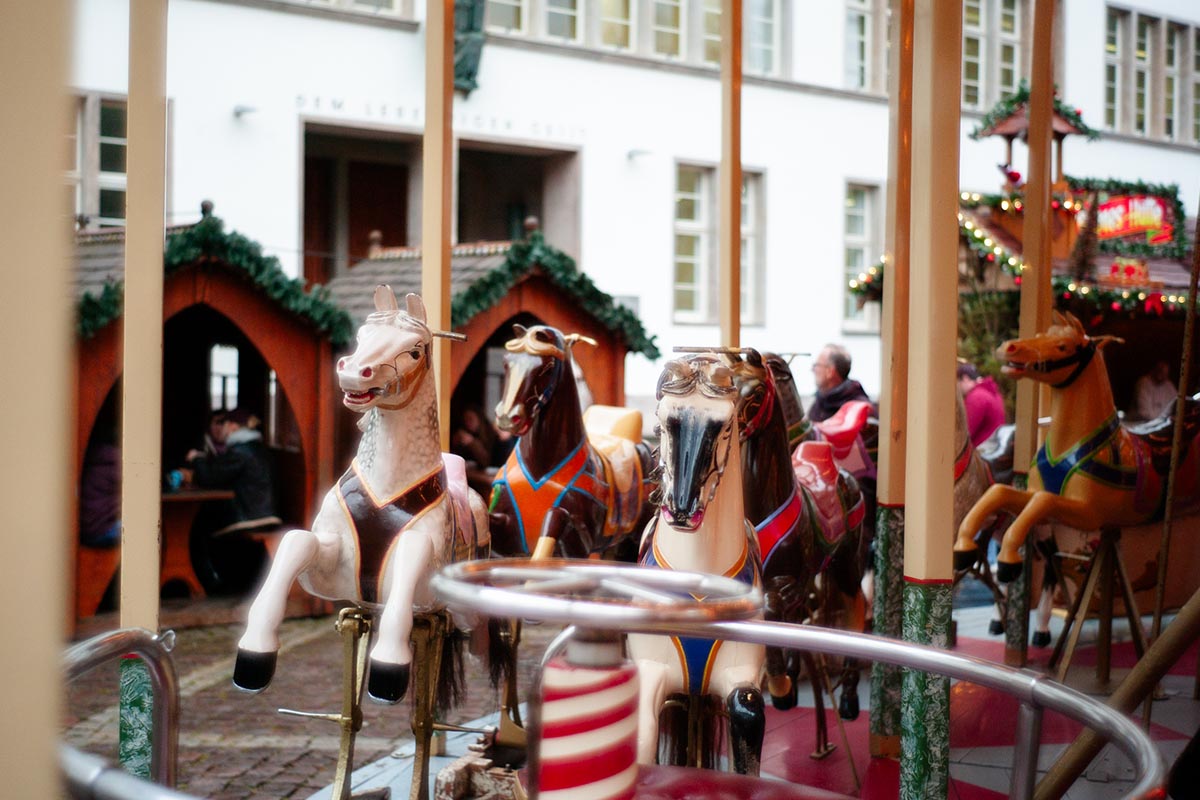
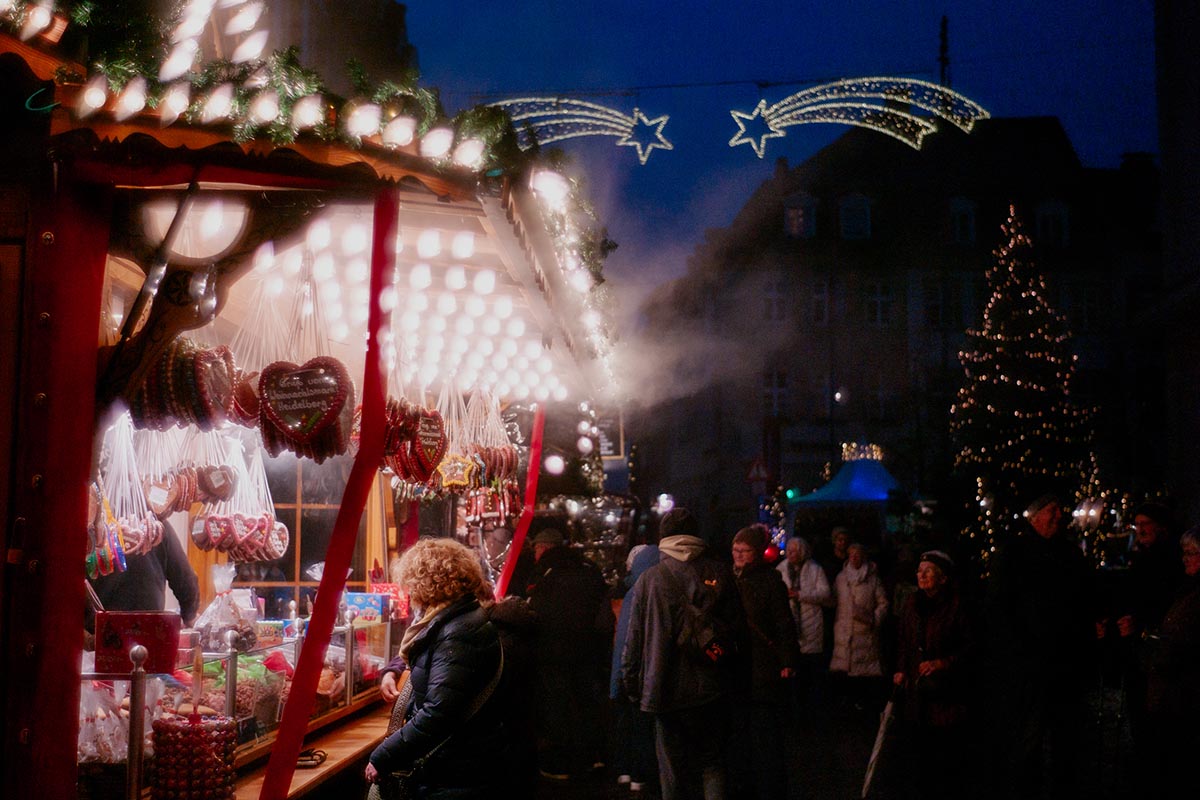
Compared to major cities, Heidelberg’s Christmas markets are relatively small, but their placement throughout the city makes them especially charming. Each market blends naturally into its surroundings, creating a calm and peaceful atmosphere that is easy to enjoy at a relaxed pace.
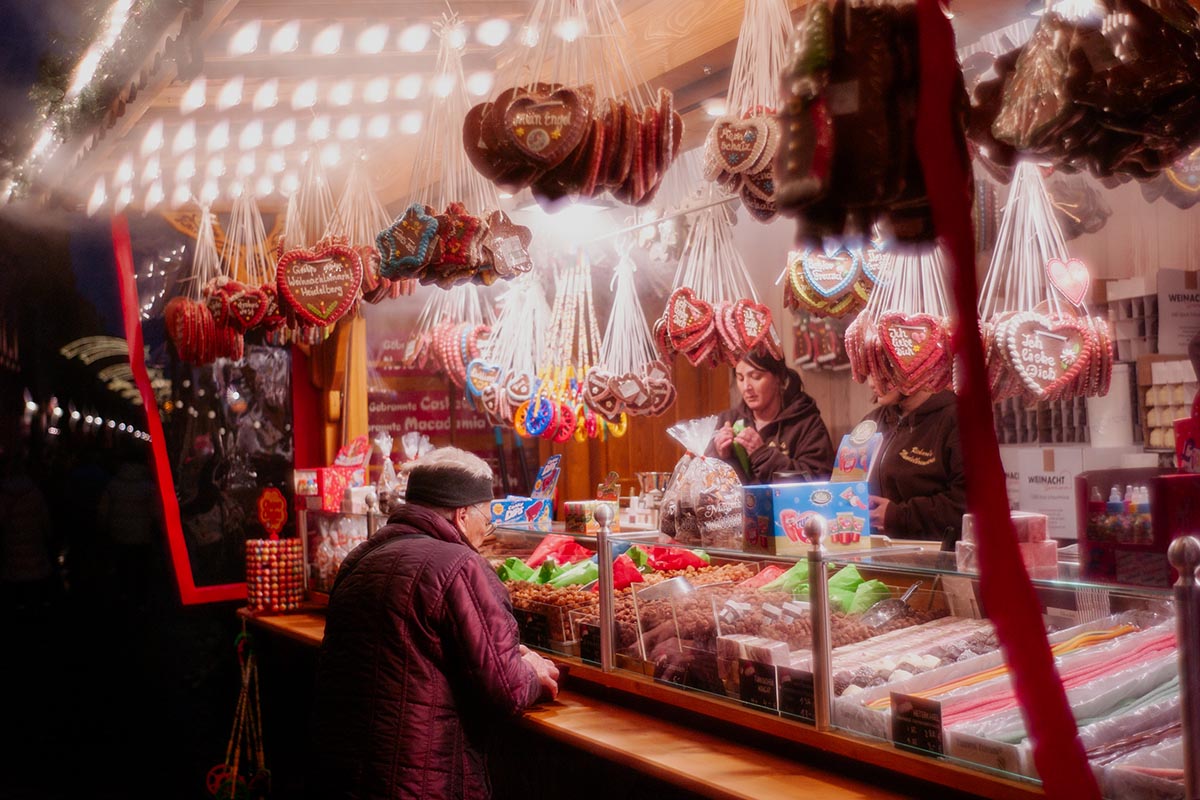
The ceramic Glühwein mug from Heidelberg is one of the most beautiful I have seen anywhere in Europe, and I highly recommend taking one home as a souvenir. Simply order a Glühwein of your choice at any stall. A deposit will be collected with your drink, and you can keep the mug by not returning it.
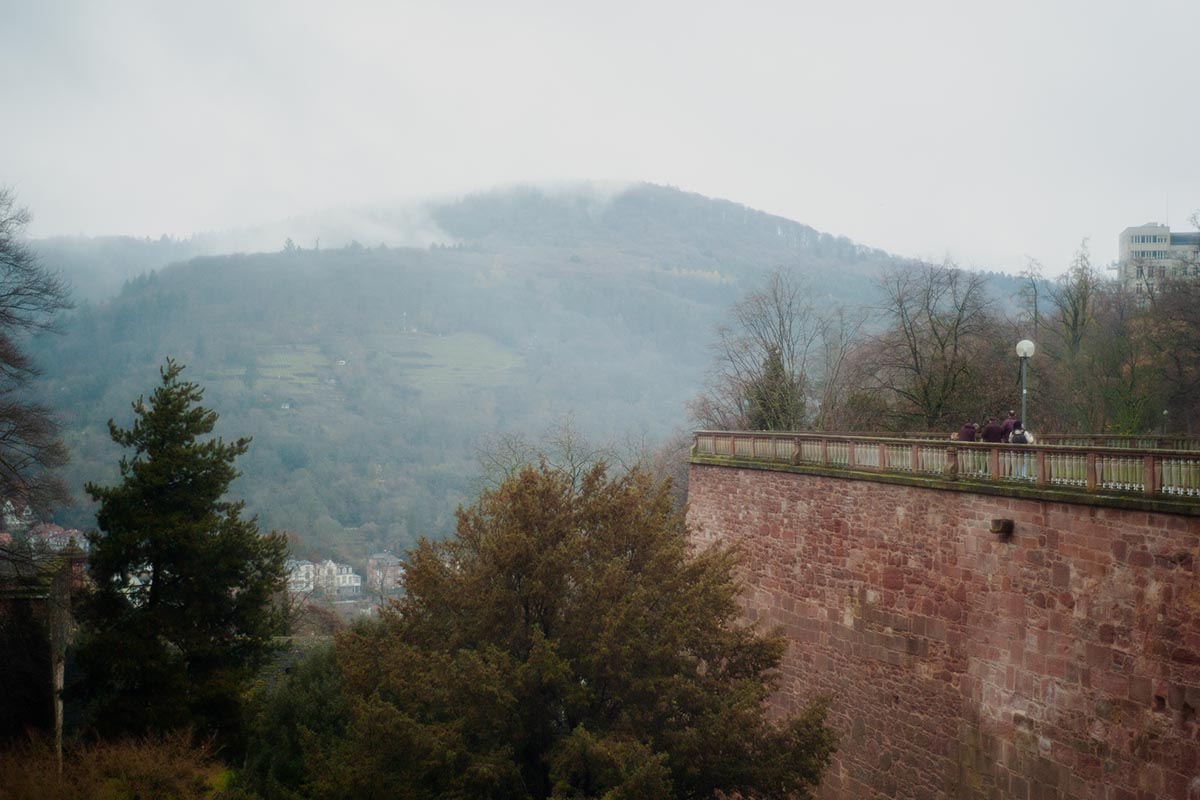
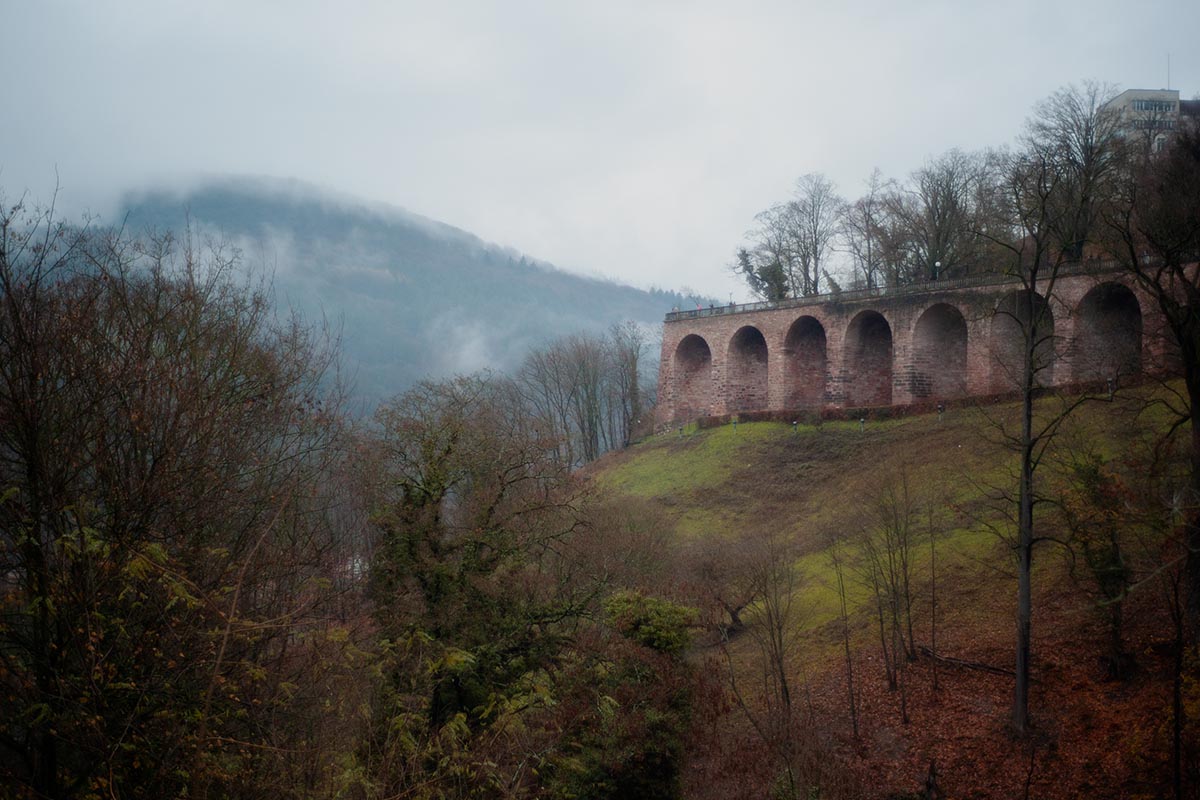
Another bonus is that Heidelberg is not overly crowded, allowing you to enjoy more of the city without feeling rushed. Be sure to set aside at least an hour to visit Heidelberg Castle, which can be reached by taking the funicular near the main Heidelberger Weihnachtsmarkt.

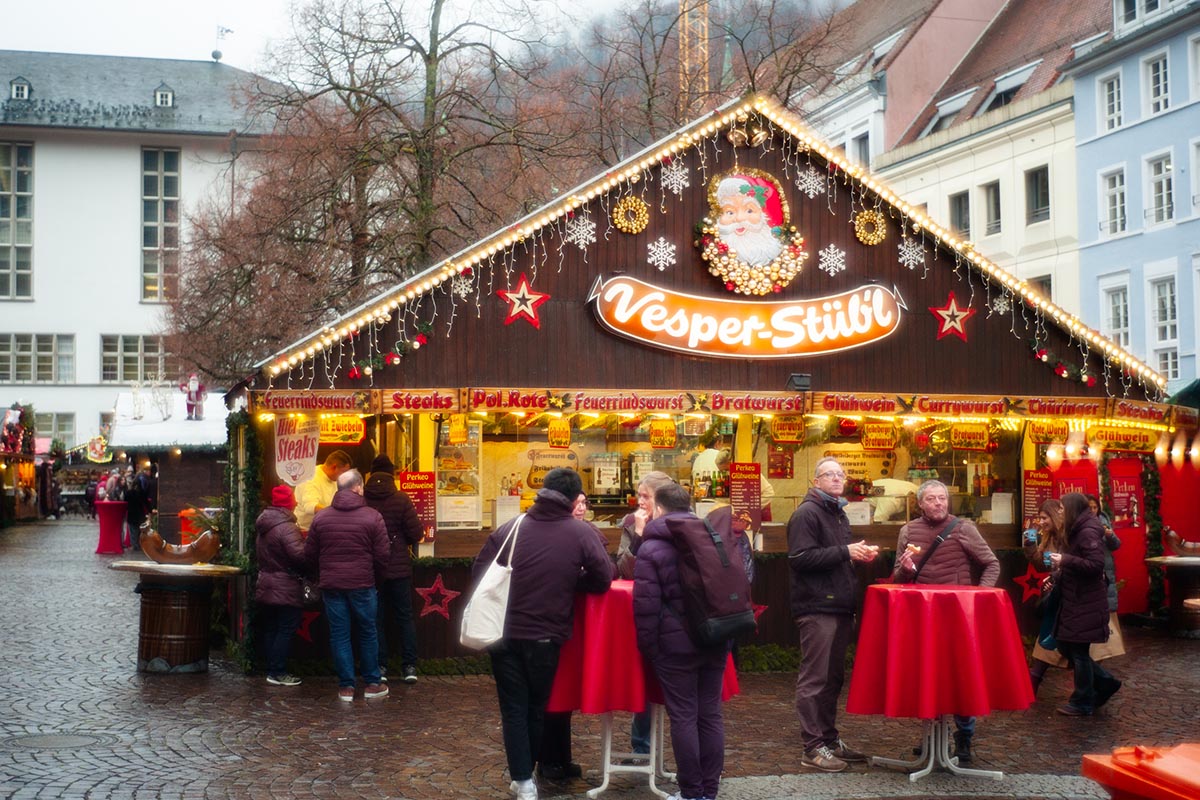




5. Rüdesheim am Rhein
Rüdesheim am Rhein, or simply called Rüdesheim, is a small town along the Rhine River best known for its vineyards and picturesque riverside views. Though small in size, it is full of charm, and its Christmas market is one of my favorites in Europe. The hilly streets, traditional buildings, and peaceful small town atmosphere give the market an authentic feel, making Rüdesheim a must visit during the holiday season.
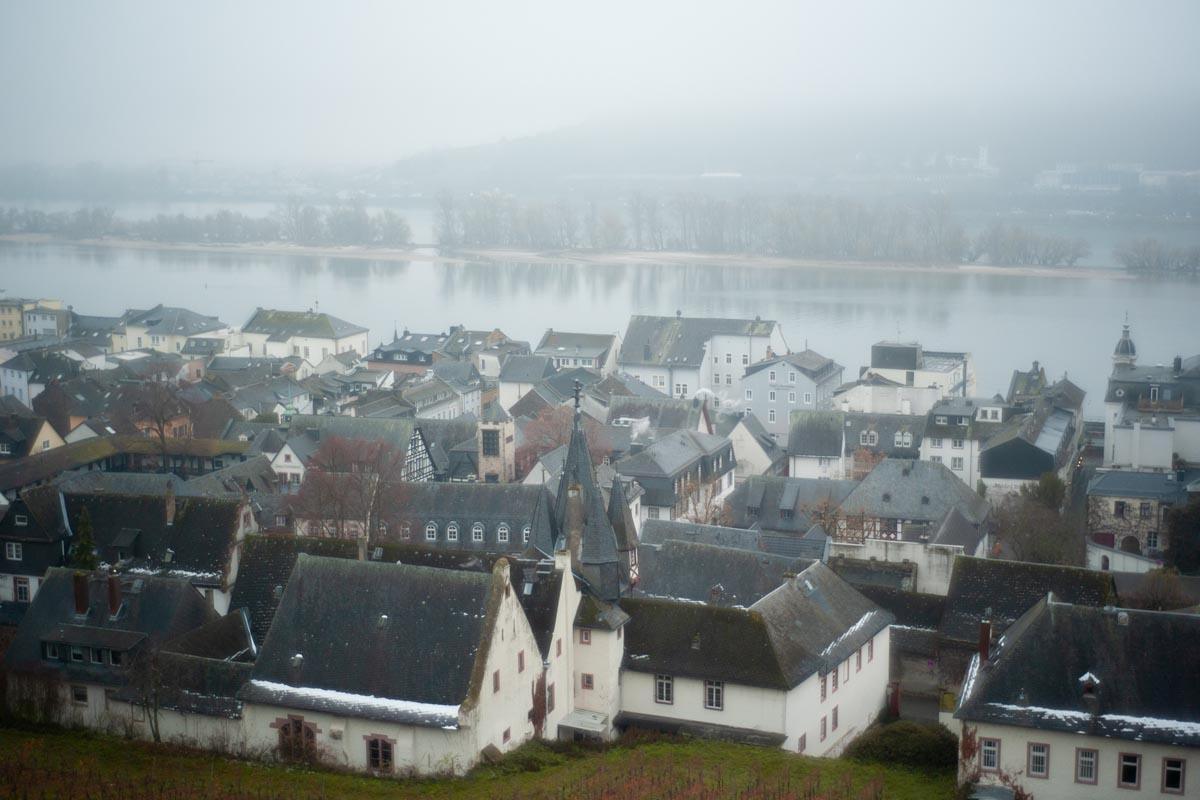
I was initially debating whether to include Rüdesheim as one of my 11 cities, as I had seen many people online describe the town as boring. I ended up feeling the complete opposite. Rüdesheim is not boring at all. I would describe as a mini Hallstatt of Germany as they give me the same feel when you’re there.
Rüdesheim is a place meant for slow walks, breathing in the crisp winter air, enjoying views of the Rhine River, and experiencing the quiet rhythm of small town life that people have lived for centuries. This adds to the massive diversity of days spent Christmas market hopping in Europe.
Rüdesheim is unique in a way that makes you lose track of time, fully embrace small town life, and forget the busy, crowded markets of larger cities.
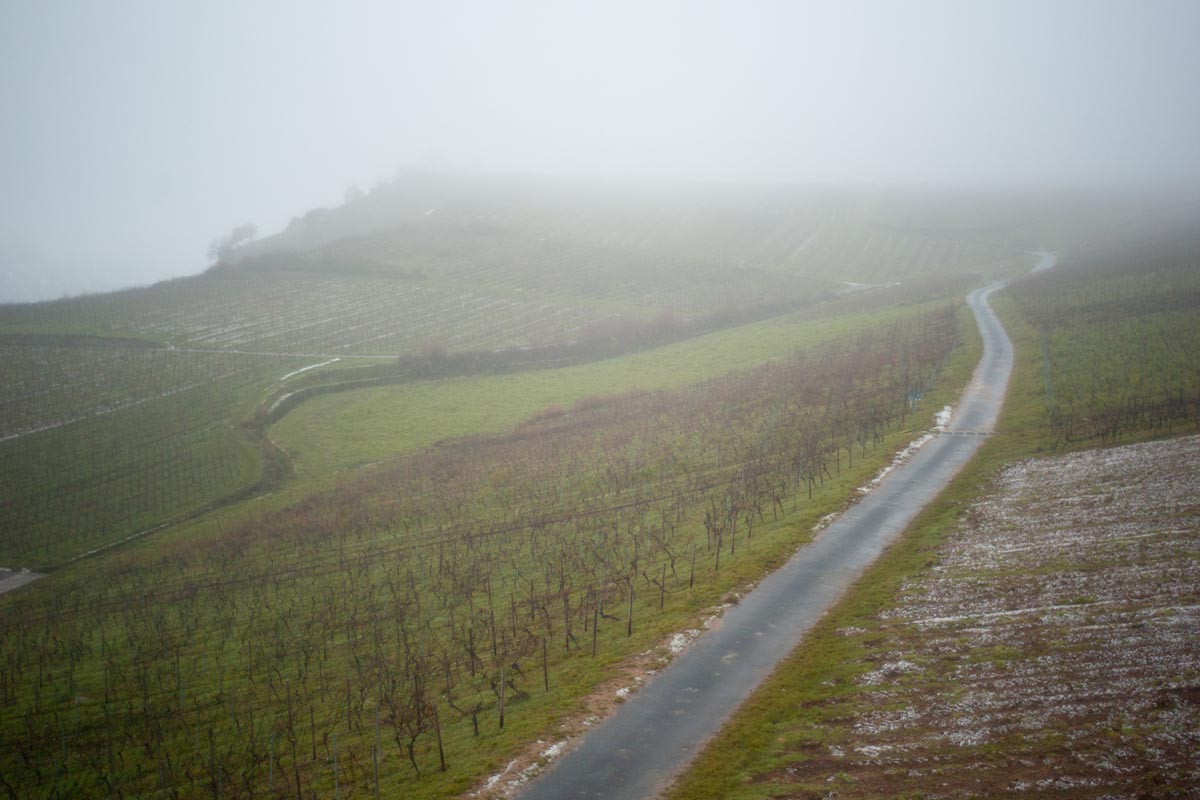
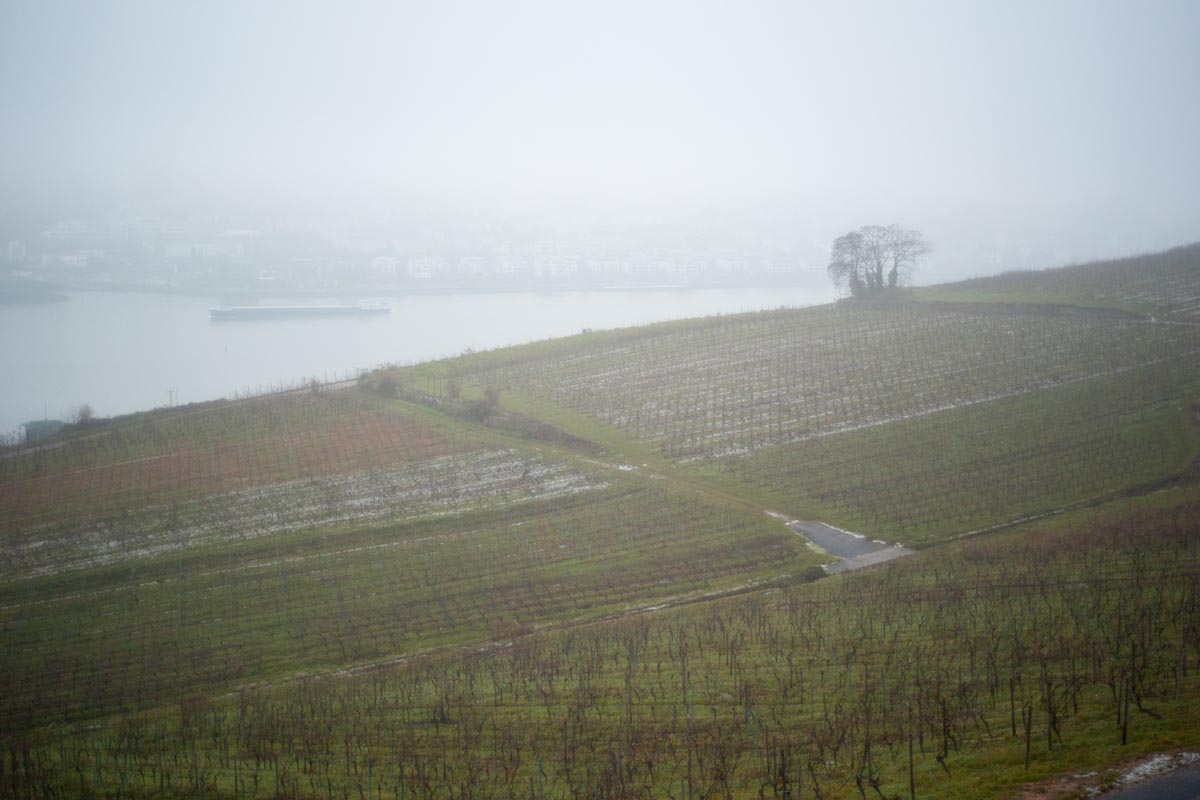
As a bonus, take the Seilbahn Rüdesheim cable car up to the Niederwald Monument for a leisurely walk or an easy hike along the hilltops above Rüdesheim. The day I visited was foggy and cold, but the misty atmosphere was so beautiful that the memory still lingers. On a sunny day, the view is spectacular, with rolling vineyards along the hills and the Rhine River stretching out in the background. This experience is definitely a must-do when visiting Rüdesheim.
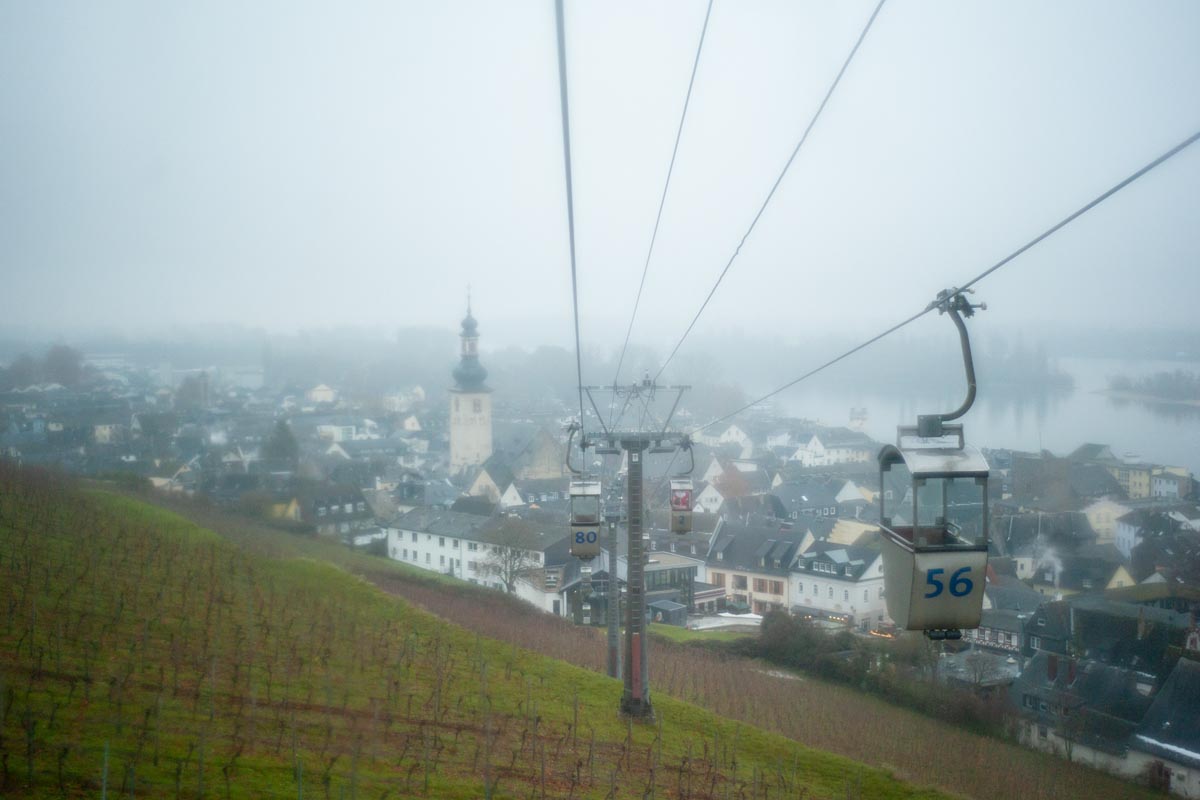
If you’re planning a trip to Rüdesheim, keep in mind that it likely won’t take a full day to explore. It’s best to pair your visit with another nearby stop on the same day, such as Mainz, Idstein, Limburg, or Wiesbaden, to make the most of your time in the region.
Markets and Highlights
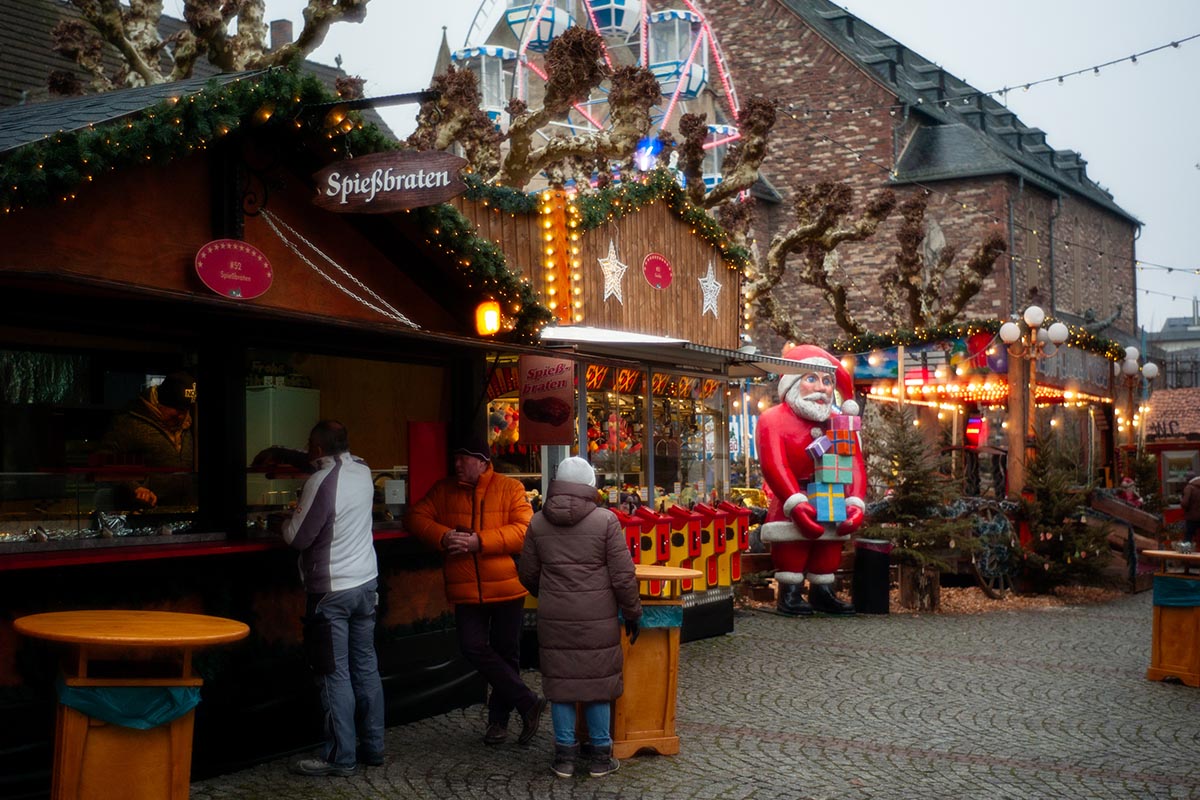
Rüdesheim is small, so you won’t miss any of its Christmas markets if you simply take a casual walk through town.
- Rüdesheim Christmas Market of Nations (Weihnachtsmarkt der Nationen) – The central market in the old town, featuring stalls from different countries, traditional crafts, and international foods.
- Drosselgasse Christmas Market – A small market along the famous Drosselgasse alley, known for its cozy atmosphere, wine taverns, and festive decorations.
- Rüdesheim Wine Village Market – Focused on local wines and regional specialties, perfect for tasting Rüdesheim’s renowned Rieslings while browsing festive stalls.
Getting There
Rüdesheim falls within the RMV (Rhein-Main-Verkehrsverbund) regional transport network, so you can easily purchase an RMV day pass—or a group RMV day pass for an even better deal if you’re traveling with others.
The RMV day ticket allows you to travel from Frankfurt to Rüdesheim on any RMV trains, which run very frequently throughout the day. With this ticket, you can also stop in other cities within the RMV network, such as Mainz, Wiesbaden, or even further north to Limburg, giving you the flexibility to explore multiple destinations in a single day.

Rüdesheim’s train station, called Rüdesheim (Rhein), is very small, with just one track and a modest building that can accommodate a small group of waiting passengers.
From the station, it takes less than 10 minutes to walk to the Christmas markets, making planning your arrival and departure simple and stress-free.
Vibe and Atmosphere
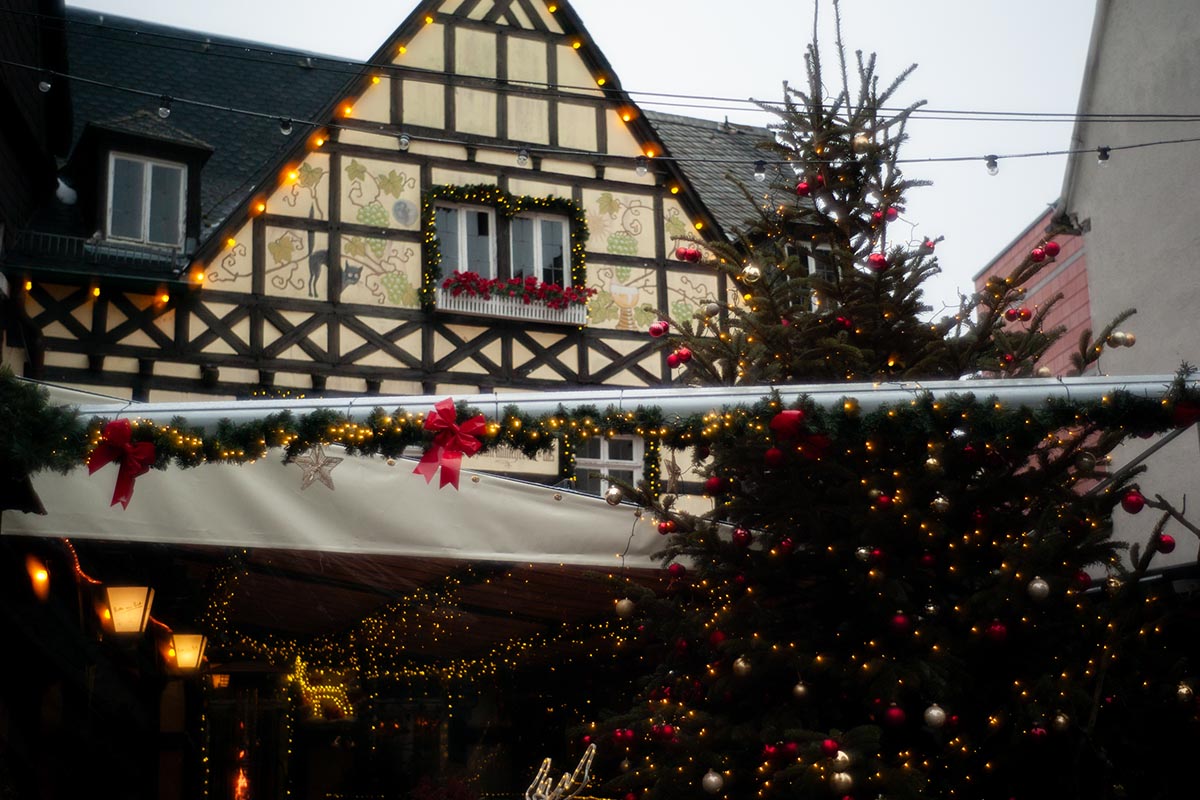
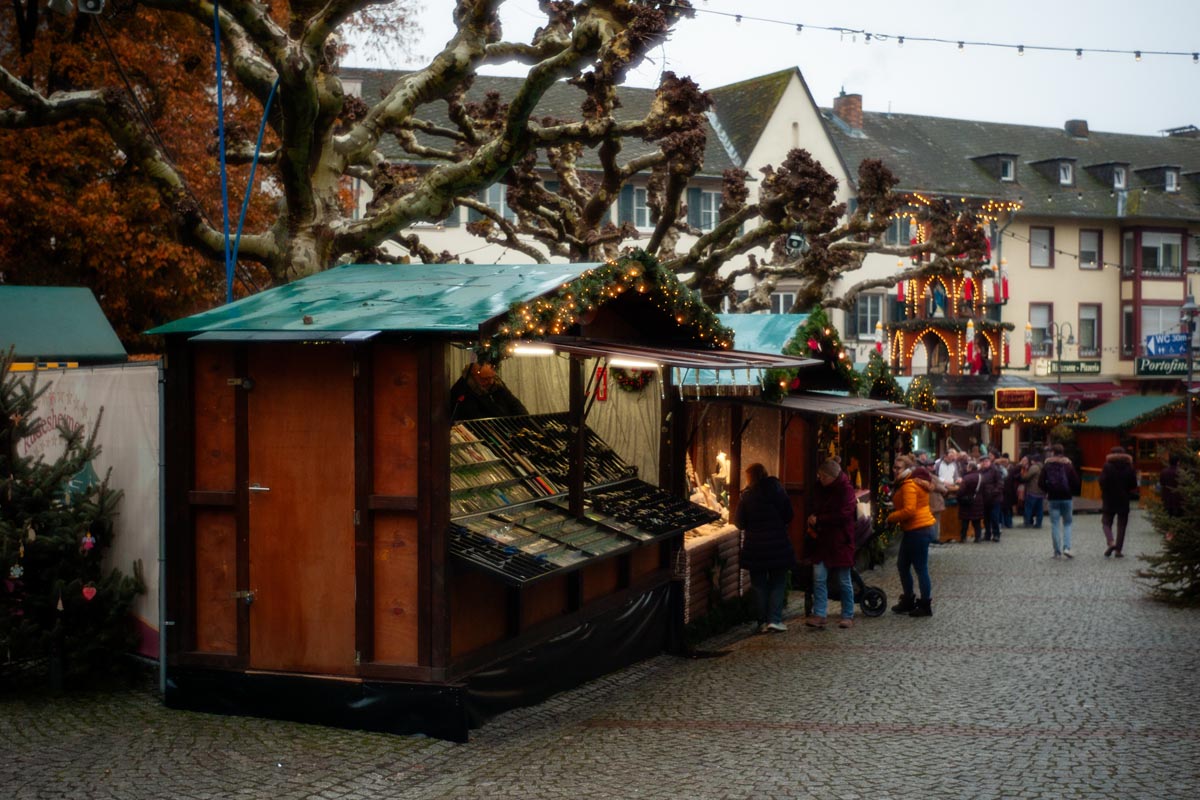
Rüdesheim’s Christmas market has a cozy and intimate charm that is quite different from the bustling markets of larger cities. The town’s narrow, hilly streets, historic half-timbered buildings, and riverside setting create a warm and picturesque backdrop for festive stalls and twinkling lights.
The markets here encourage a slower pace, letting you stroll through the streets, breathe in the crisp winter air, and soak up the small-town atmosphere. You can enjoy traditional foods, sip on Glühwein from beautifully designed ceramic mugs, and watch local musicians and performers add to the festive spirit.
What makes Rüdesheim truly special is its ability to make you forget time. Unlike crowded city markets, you can fully immerse yourself in the peaceful rhythm of this riverside town, making it a perfect spot to experience the authentic charm of a German Christmas.
6. Mainz
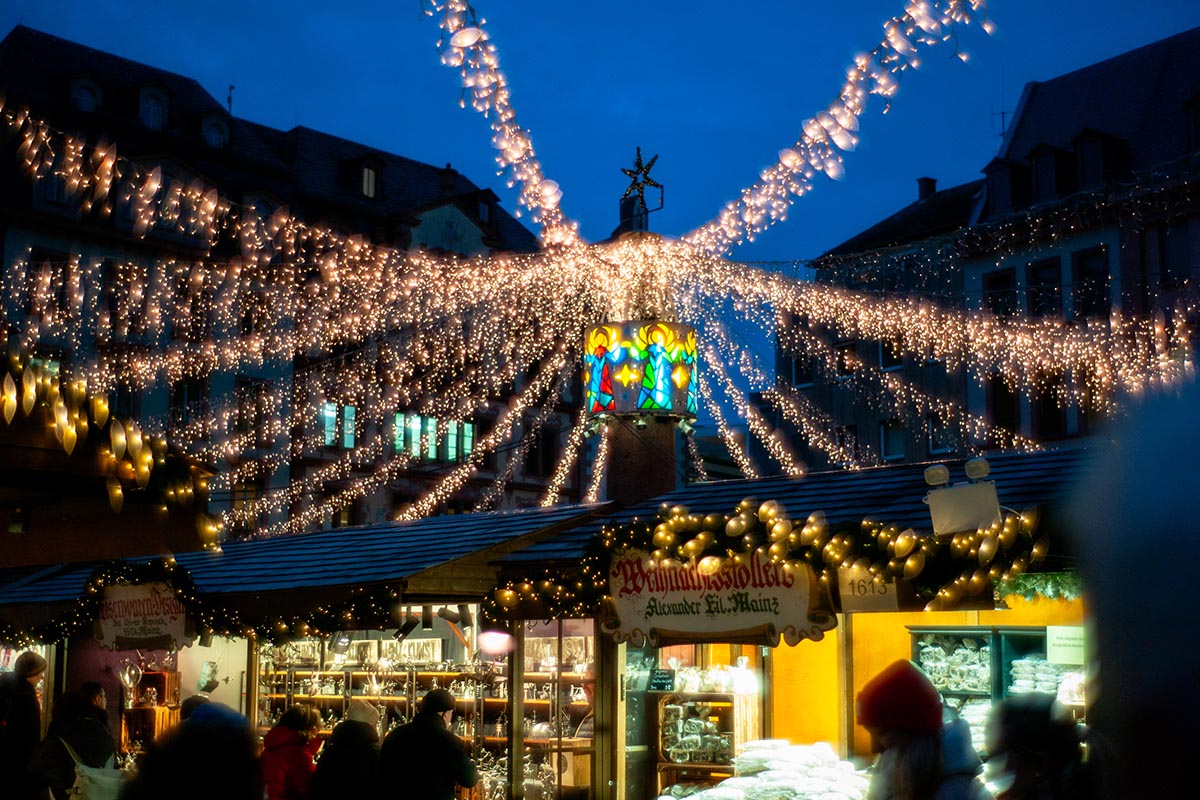
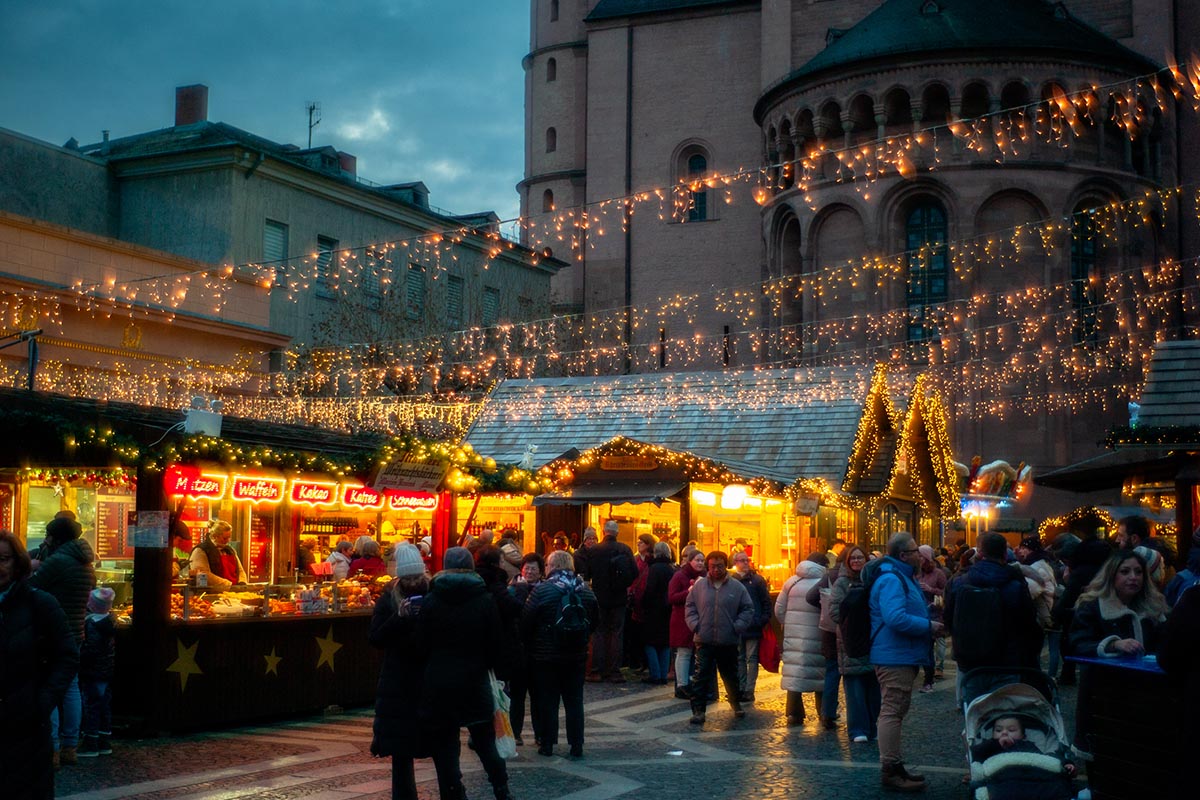
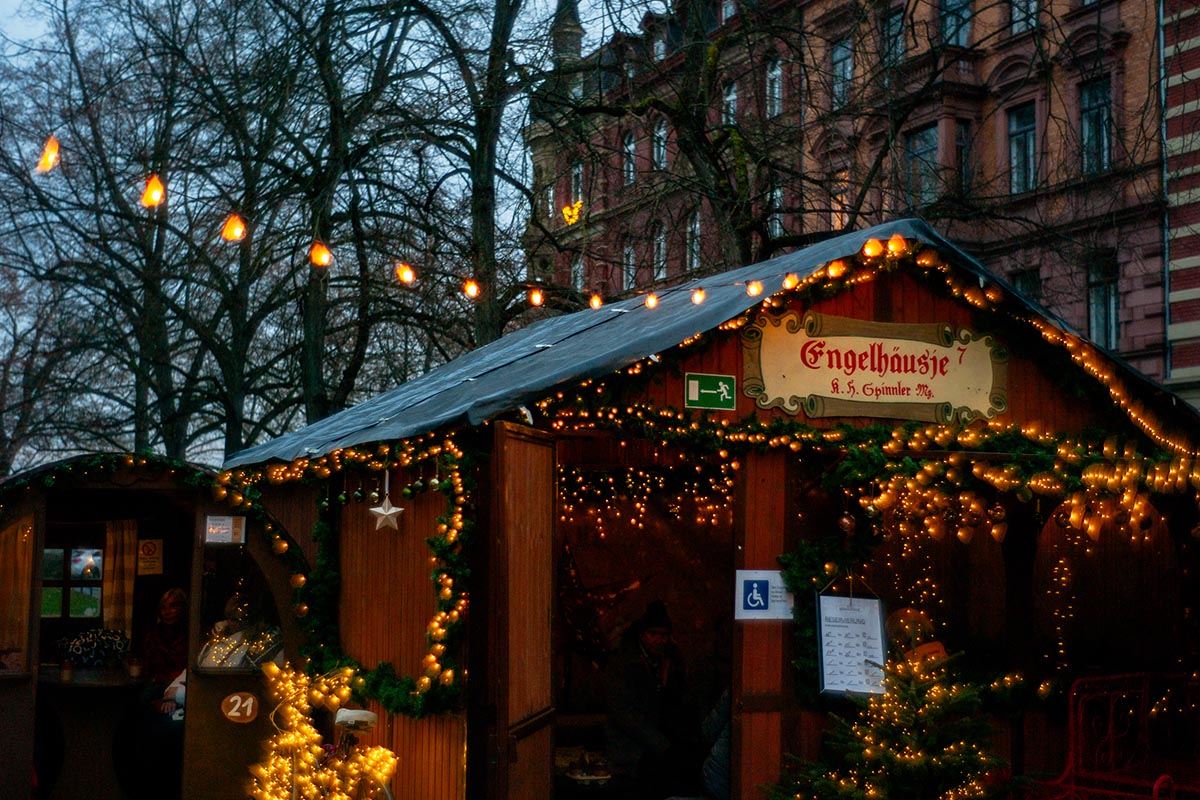
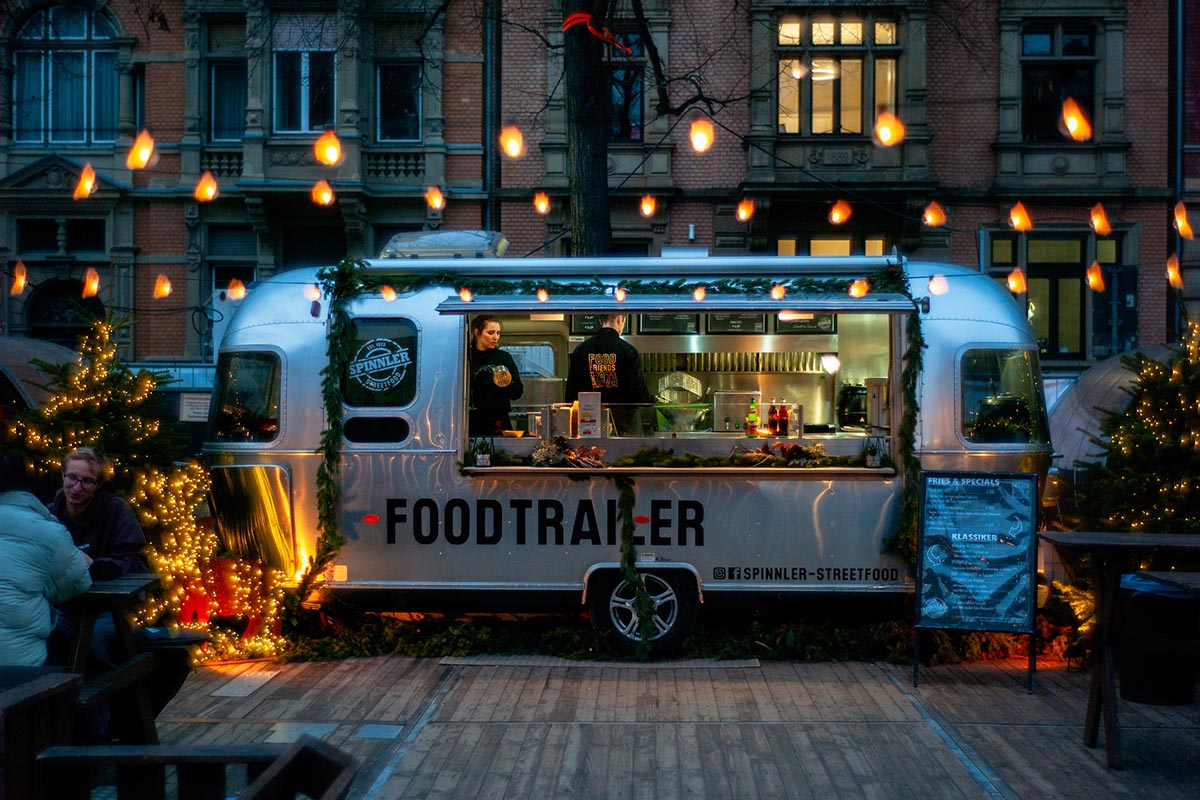
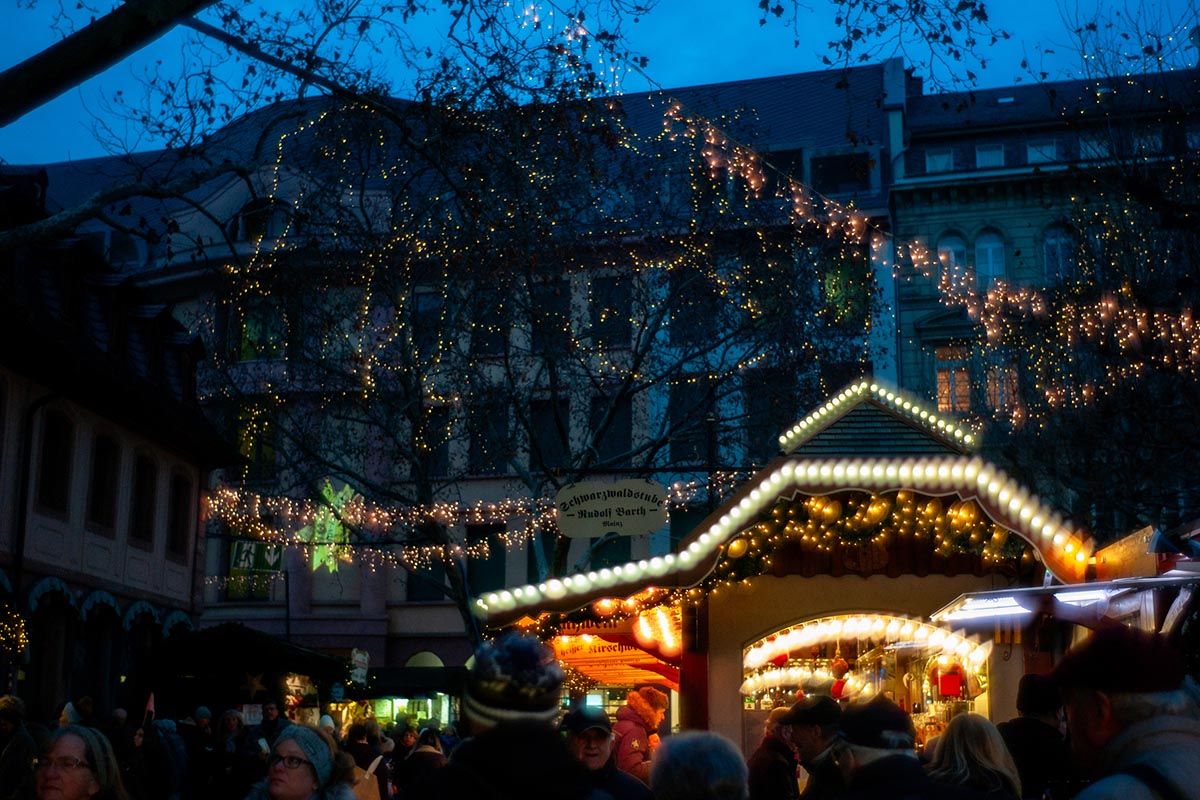
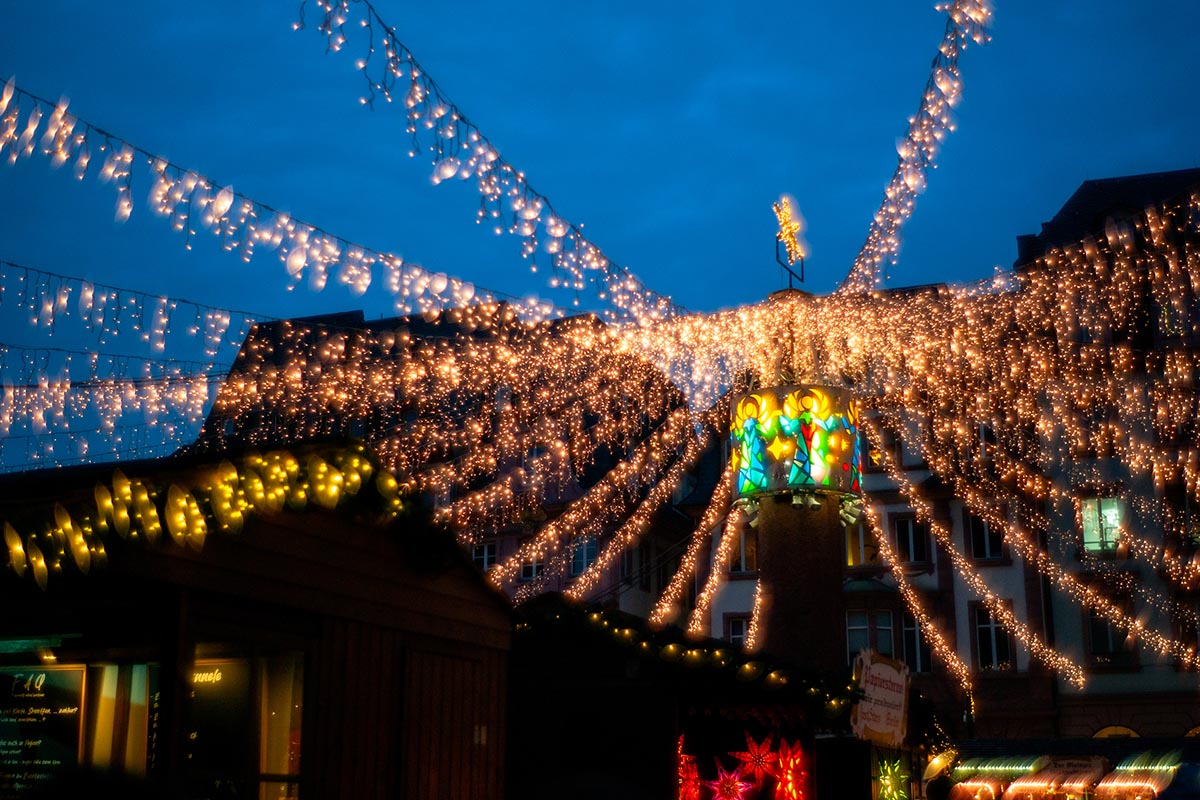
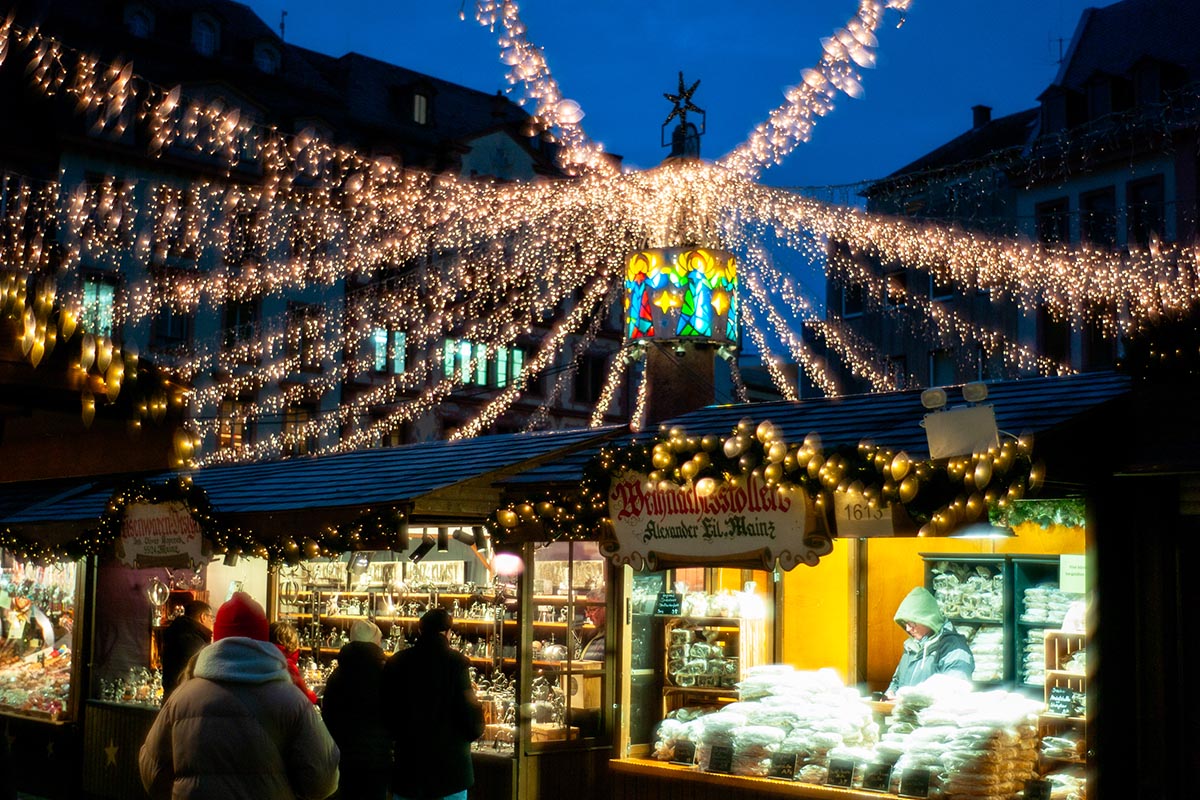
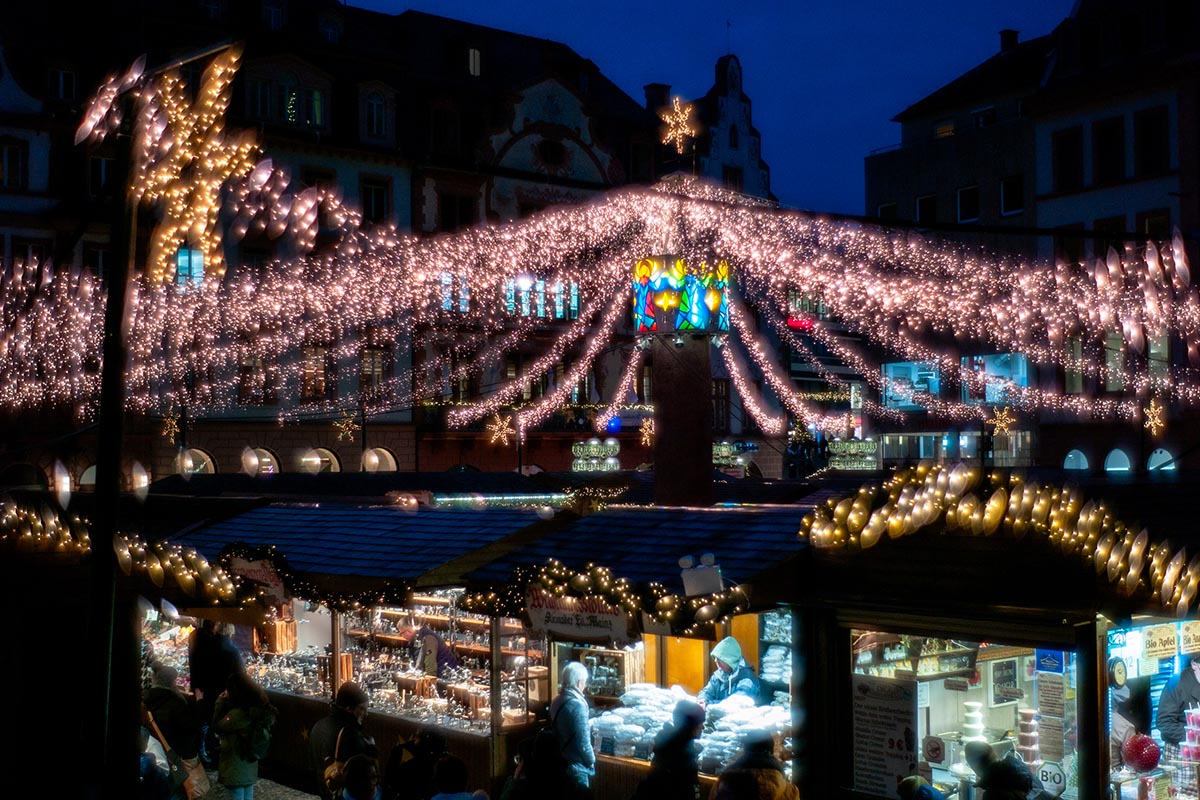
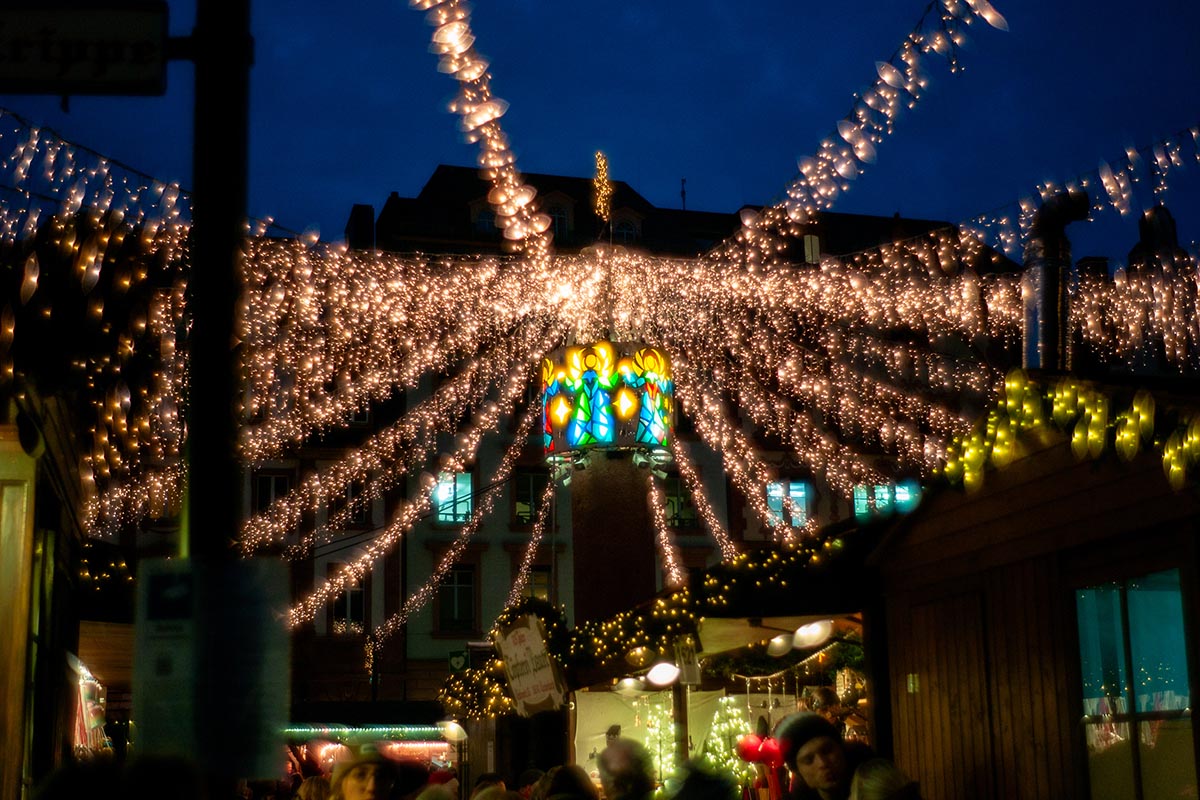
Mainz is a city just 45 minutes via train from Frankfurt, best known for its unique illuminated hanging lights at the Christmas market, shaped like glowing stars or lanterns suspended from tall posts. This distinctive style is unique to Mainz and makes the market instantly recognizable in photos.
While less touristy and less famous than some other German cities, Mainz’s Christmas market is still very popular, drawing visitors from outside the city during the holiday season.
Beyond the markets, Mainz feels like a city where people actually live. It has a very urban vibe, and as you walk through the streets, you’ll see locals going about their daily routines, which adds an authentic touch to your visit.
I recommend pairing Mainz with Wiesbaden as they are just 20 minutes away via train.
Markets and Highlights
- Mainzer Weihnachtsmarkt (Marktplatz) – The central and most famous Christmas market in Mainz, located in front of Mainz Cathedral. It features traditional stalls with festive foods, handcrafted gifts, and the city’s iconic illuminated hanging lights.
- Kurfürstliches Schloss Christmas Market – Set in the courtyard of the historic Electoral Palace (Kurfürstliches Schloss), this small market is a bit hidden and away from the main market.
- Schillerplatz Christmas Market – A smaller, cozier market focusing on local crafts and artisanal products.
- Kirschgarten Christmas Market – Known for its charming setting and family-friendly vibe, with small rides and entertainment.
Getting There
Mainz falls within the RMV (Rhein-Main-Verkehrsverbund) regional transport network, so you can easily purchase an RMV day pass—or a group RMV day pass for an even better deal if you’re traveling with others.
The RMV day ticket allows you to travel from Frankfurt to Mainz on any RMV trains, which run very frequently throughout the day. With this ticket, you can also stop in other cities within the RMV network, such as Rüdesheim, Wiesbaden, or even further north to Limburg, giving you the flexibility to explore multiple destinations in a single day.
As you arrive at Mainz Hauptbahnhof, you’ll already see a few Christmas stalls right outside the station. From there, it’s about a 15-minute walk east to reach the Mainzer Weihnachtsmarkt, the city’s main Christmas market.
Vibe and Atmosphere
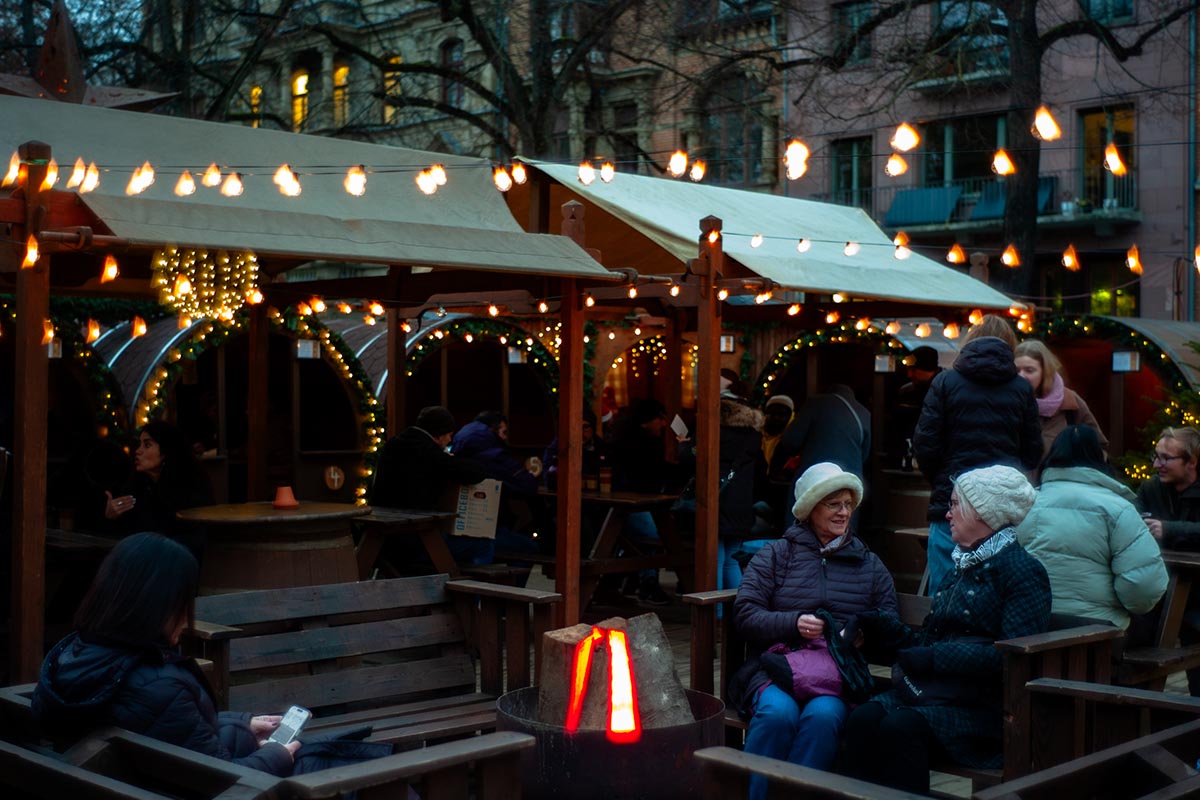
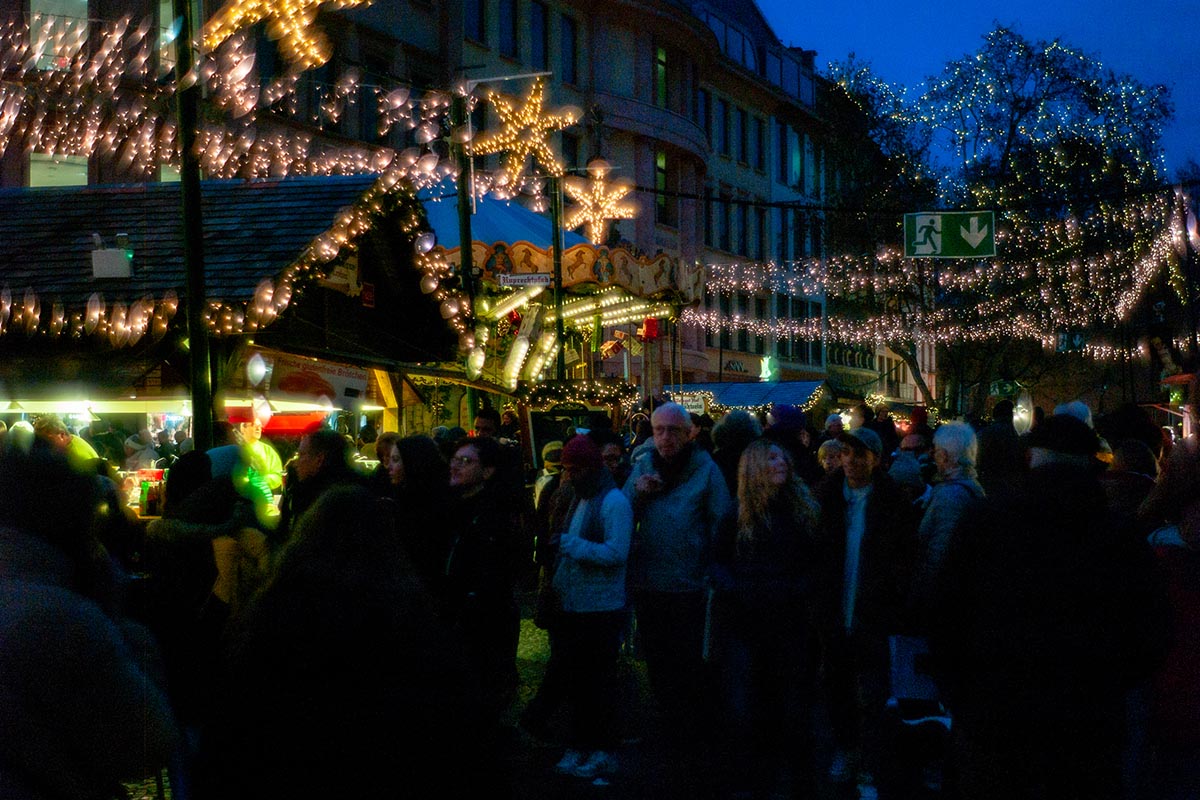
Mainz Christmas markets have a cozy and authentic charm, offering a festive experience without feeling overwhelmingly crowded. The city’s urban streets blend seamlessly with the markets, allowing you to stroll alongside locals going about their daily lives while enjoying the holiday decorations.
The illuminated hanging lights, shaped like glowing stars or lanterns, create a magical ambiance in the evenings, making the market feel warm and inviting. Stalls offer a mix of traditional foods, handcrafted gifts, and regional specialties, giving visitors a taste of Mainz’s local culture.
Overall, the atmosphere in Mainz feels relaxed and approachable, perfect for those who want to enjoy a festive market experience in a city that is lively yet still feels like a place where people live and work.




7. Wiesbaden
Wiesbaden is a city where many German families and professionals choose to live, thanks to its proximity to Frankfurt and ongoing urban developments. It’s not a typical tourist hotspot like Munich or Berlin, but a historic city where people go about their everyday lives.
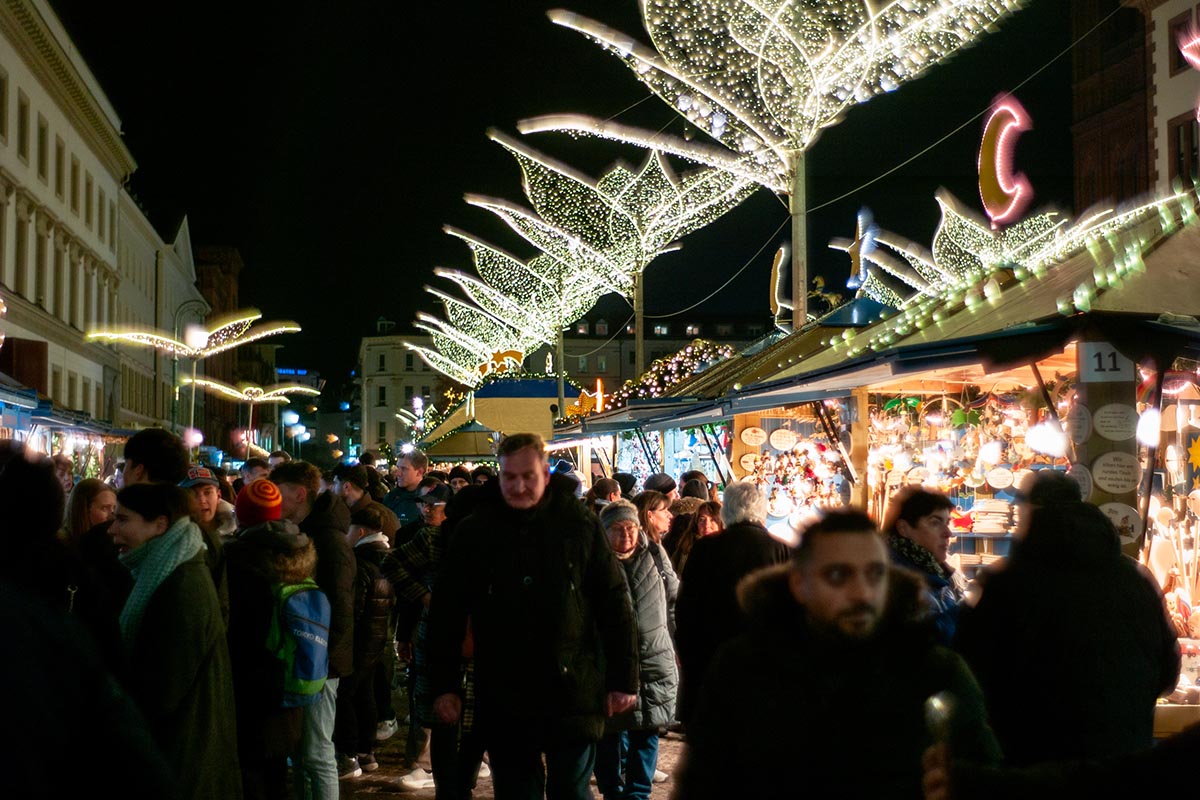
While Wiesbaden may not be internationally famous for its Christmas markets, it does host a large and impressive market. Its flower-themed decorations give it a distinctive and elegant look that sets it apart from other German markets.
Additionally, Wiesbaden is known for having one of the most beautifully designed Christmas mugs, so be sure to take one home as a festive souvenir.
I recommend planning Wiesbaden and Mainz on the same day, as neither city has a large number of sightseeing spots beyond their Christmas markets. This way, you can enjoy both festive markets without feeling rushed and make the most of your RMV day ticket.
Markets and Highlights
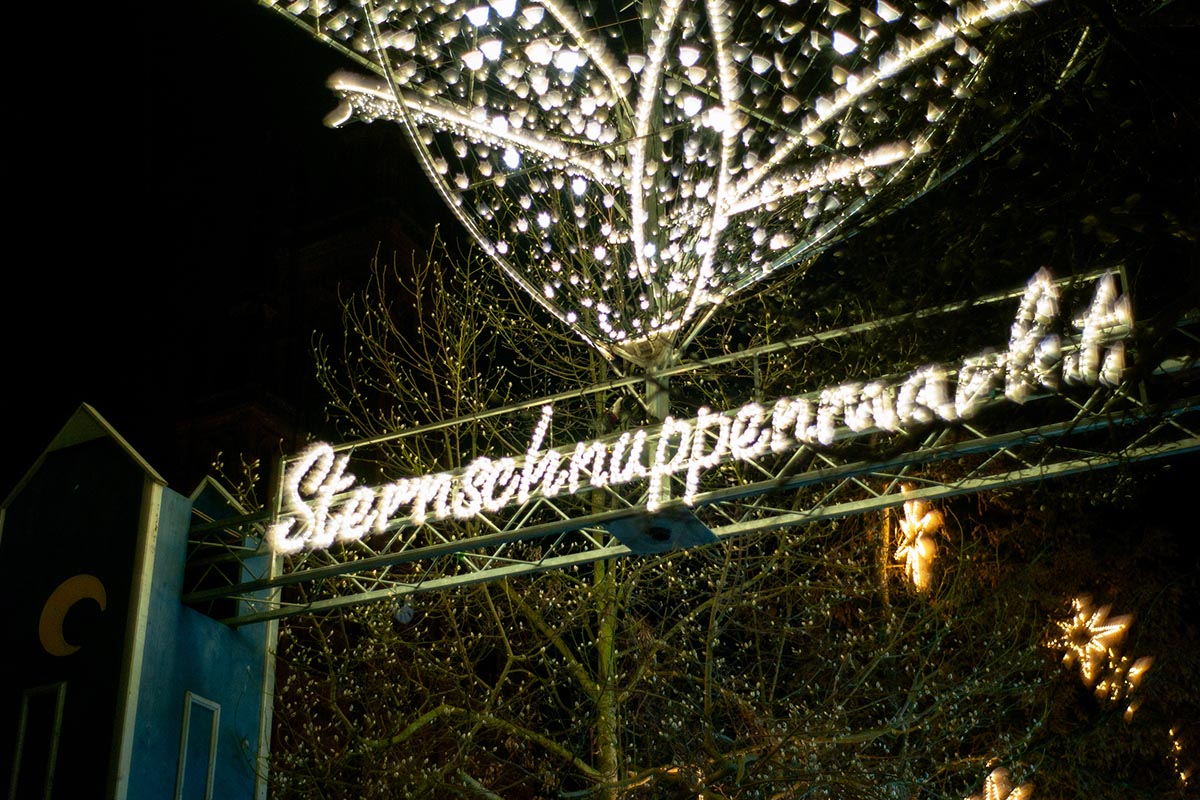
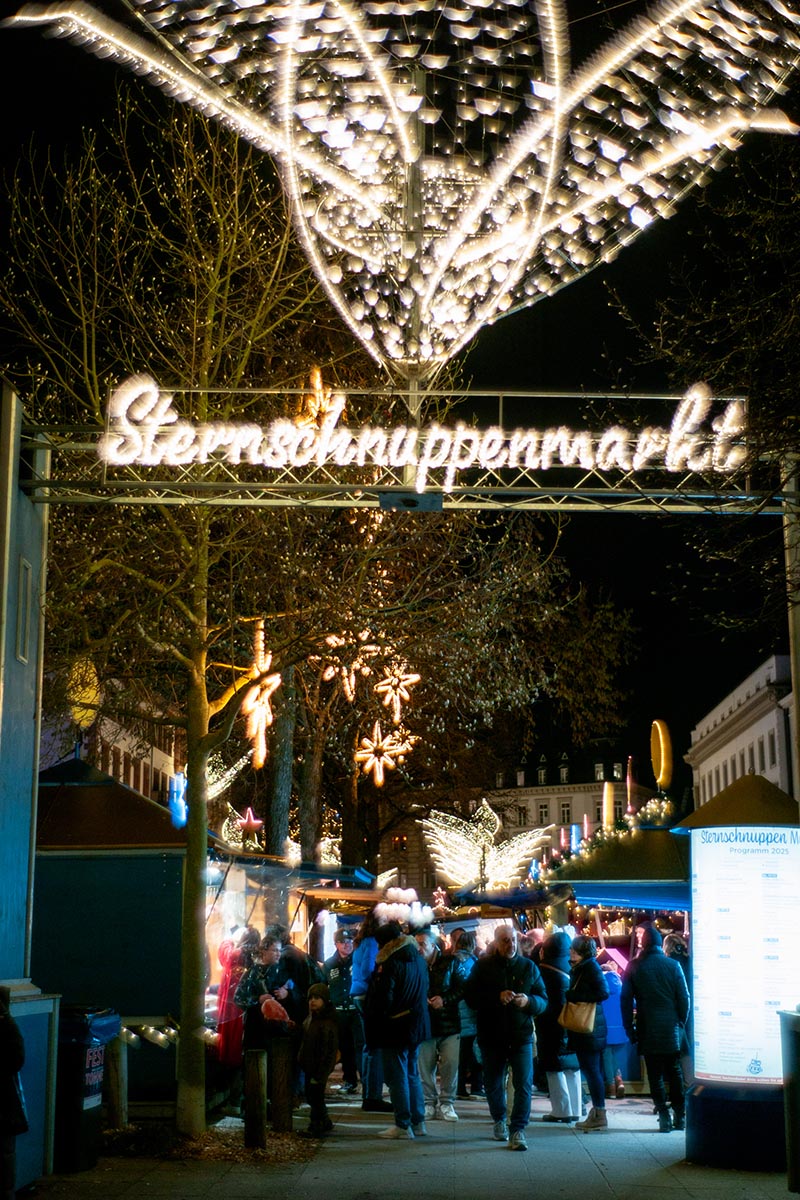
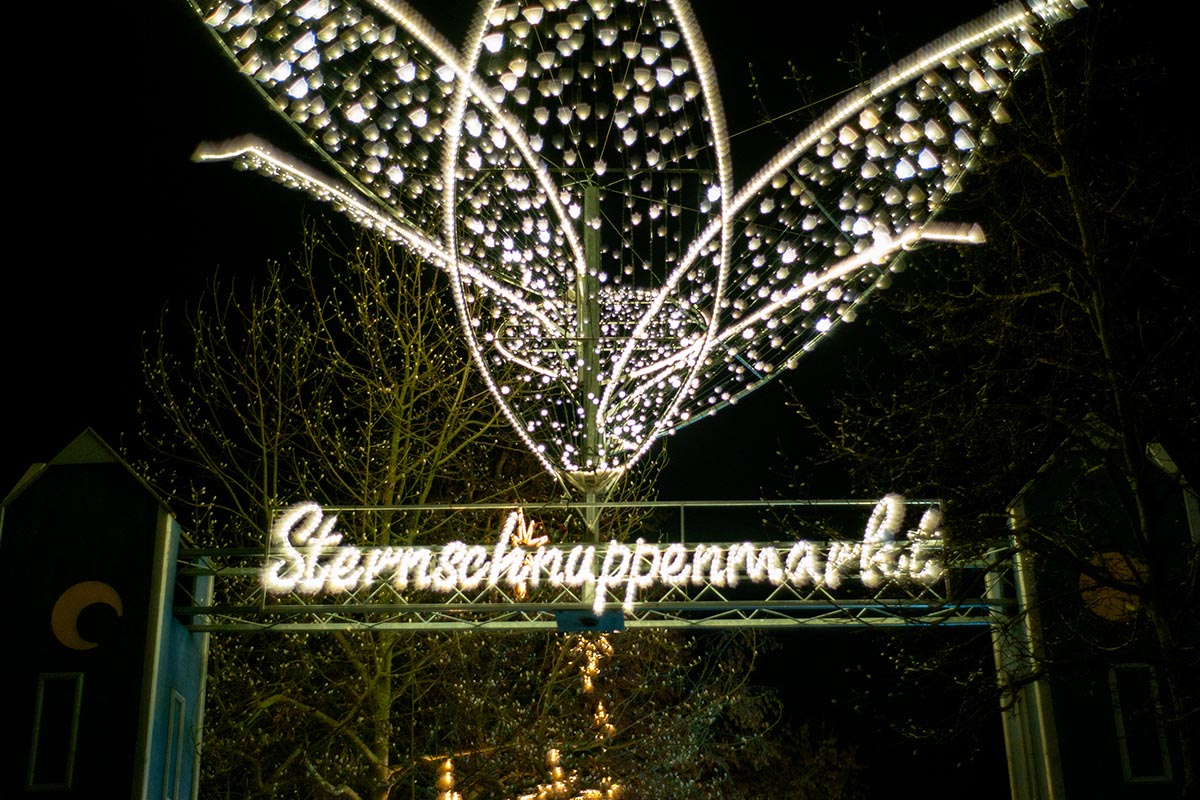
- Wiesbaden City Christmas Market (Sternschnuppenmarkt) – The central market in the city center, featuring beautifully decorated stalls, festive foods, and the signature flower-themed lights and ornaments.
- Marktplatz Christmas Market – Located in front of the historic Town Hall, offering traditional crafts, seasonal treats, and local specialties.
- Kochbrunnenplatz Market – Smaller and cozier, often highlighting local artisans, regional foods, and holiday decorations.
- Luisenplatz Christmas Market – Known for its elegant lighting and flower-themed decorations, adding a distinctive charm to Wiesbaden’s festive scene.
Getting There
Wiesbaden falls within the RMV (Rhein-Main-Verkehrsverbund) regional transport network, so you can easily purchase an RMV day pass—or a group RMV day pass for an even better deal if you’re traveling with others.
The RMV day ticket allows you to travel from Frankfurt to Wiesbaden on any RMV trains, which run very frequently throughout the day. With this ticket, you can also stop in other cities within the RMV network, such as Rüdesheim, Mainz, or even further north to Limburg, giving you the flexibility to explore multiple destinations in a single day.
Wiesbaden’s Christmas markets are not immediately adjacent to the train station, so you’ll need to walk about 20 minutes from Wiesbaden Hauptbahnhof to reach the Sternschnuppenmarkt. Given the city’s more recent developments, much of the route is fairly modern and can feel longer than it actually is.
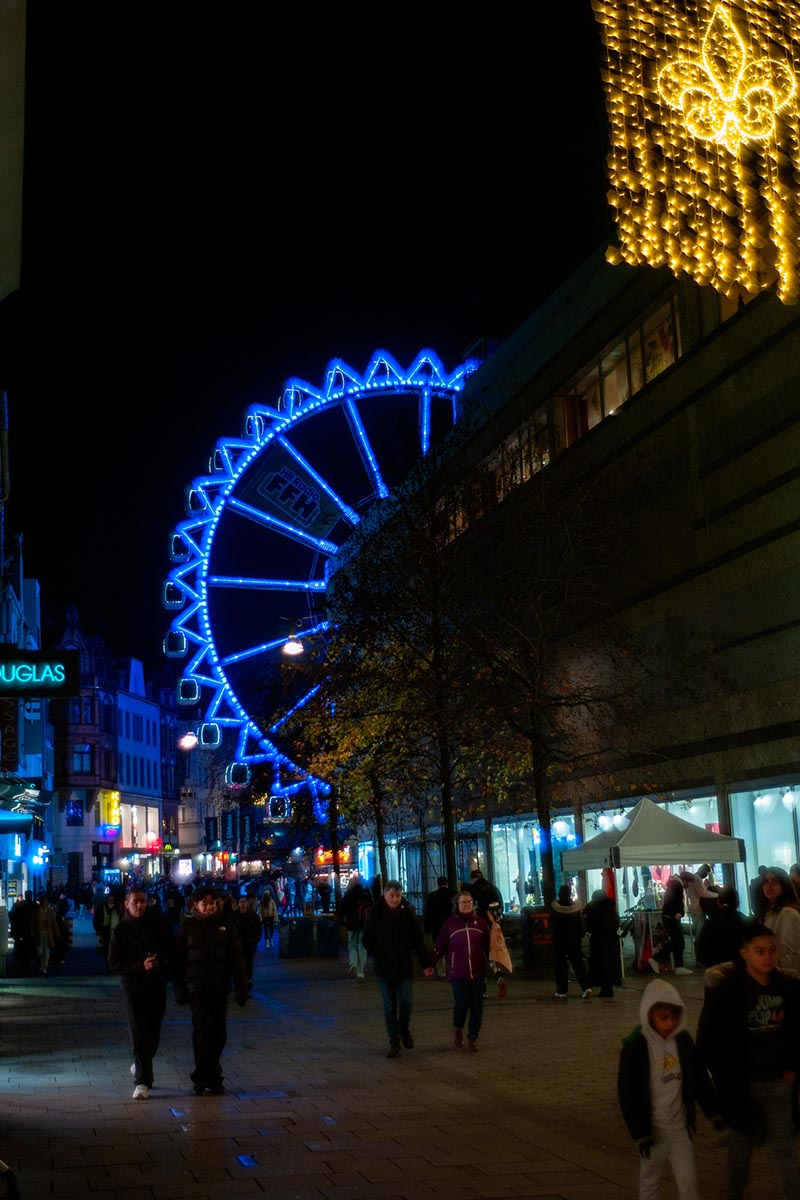
For a more interesting walk, I recommend heading north on Moritzstraße. This route soon leads you into a pedestrian-only zone lined with shops on both sides, allowing you to do a bit of shopping while making your way toward the main market.
Vibe and Atmosphere
Wiesbaden’s Christmas markets have a refined and elegant charm. The flower-themed decorations give the market a unique and sophisticated look, making it feel more polished than the rustic or crowded markets in larger cities.
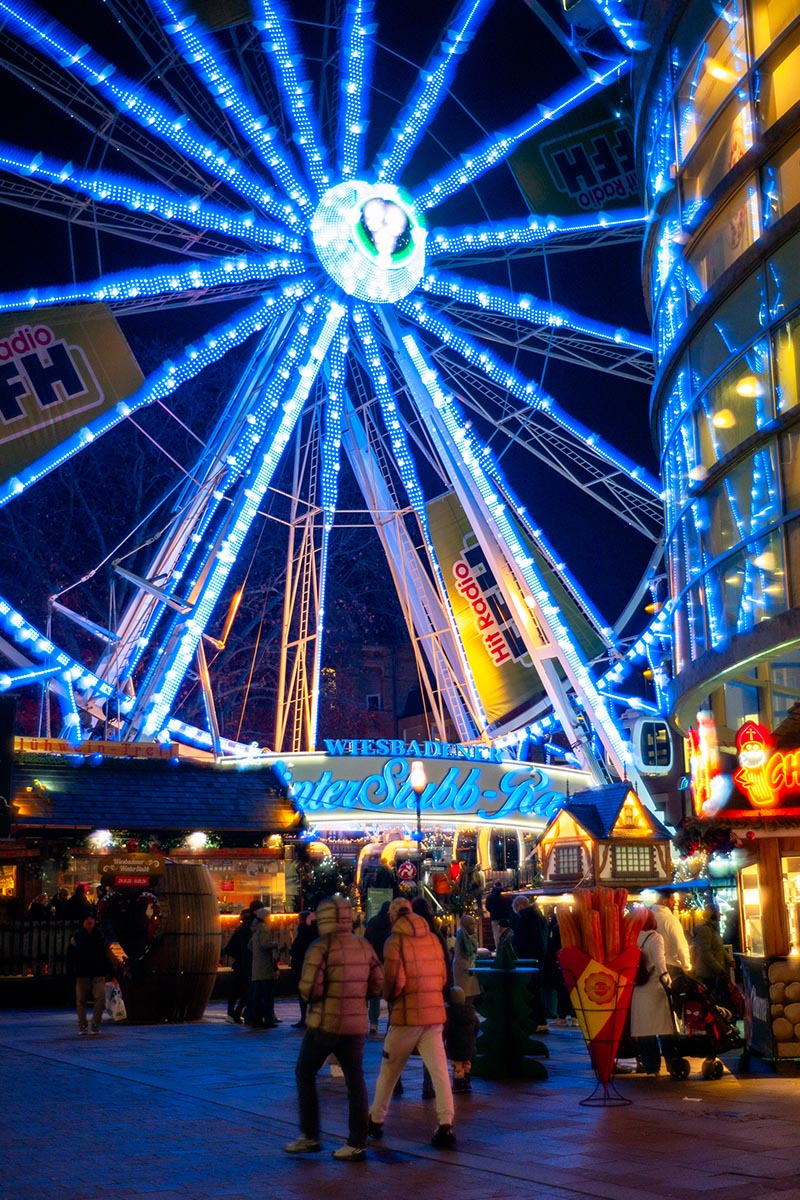
The atmosphere is quiet and relaxed, giving a sense of being at home rather than in a touristy spot. Visitors sip drinks and chat, treating the markets more like a local gathering place or festive bar.
If you’re limited on time, Wiesbaden isn’t a must-visit destination, but it’s a nice addition if you can fit it into your itinerary. I’m glad I made the trip because the Wiesbaden Christmas mug is simply amazing and worth taking home.
8. Strasbourg
Internationally known as the Capital of Christmas, Strasbourg deserves a spot on everyone’s bucket list. Located in eastern France right along the German border, Strasbourg sits in the Alsace region, a unique area where French and German cultures beautifully collide.
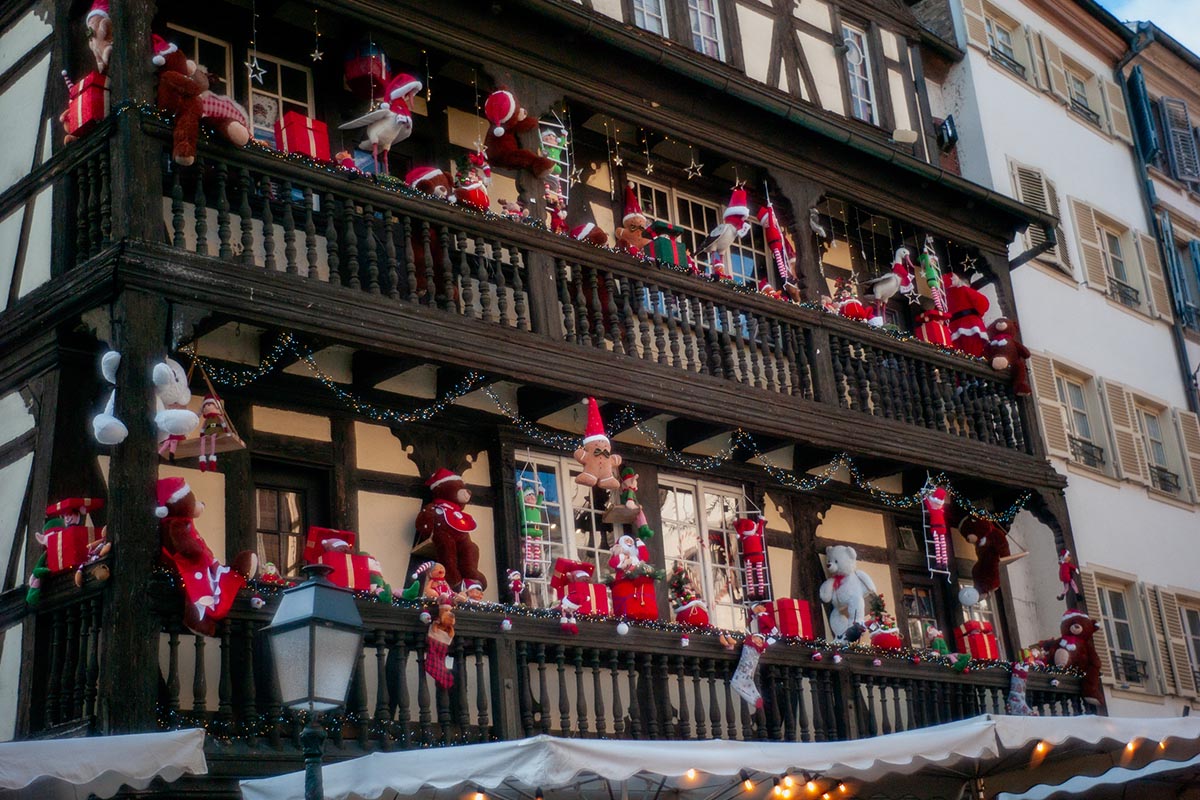
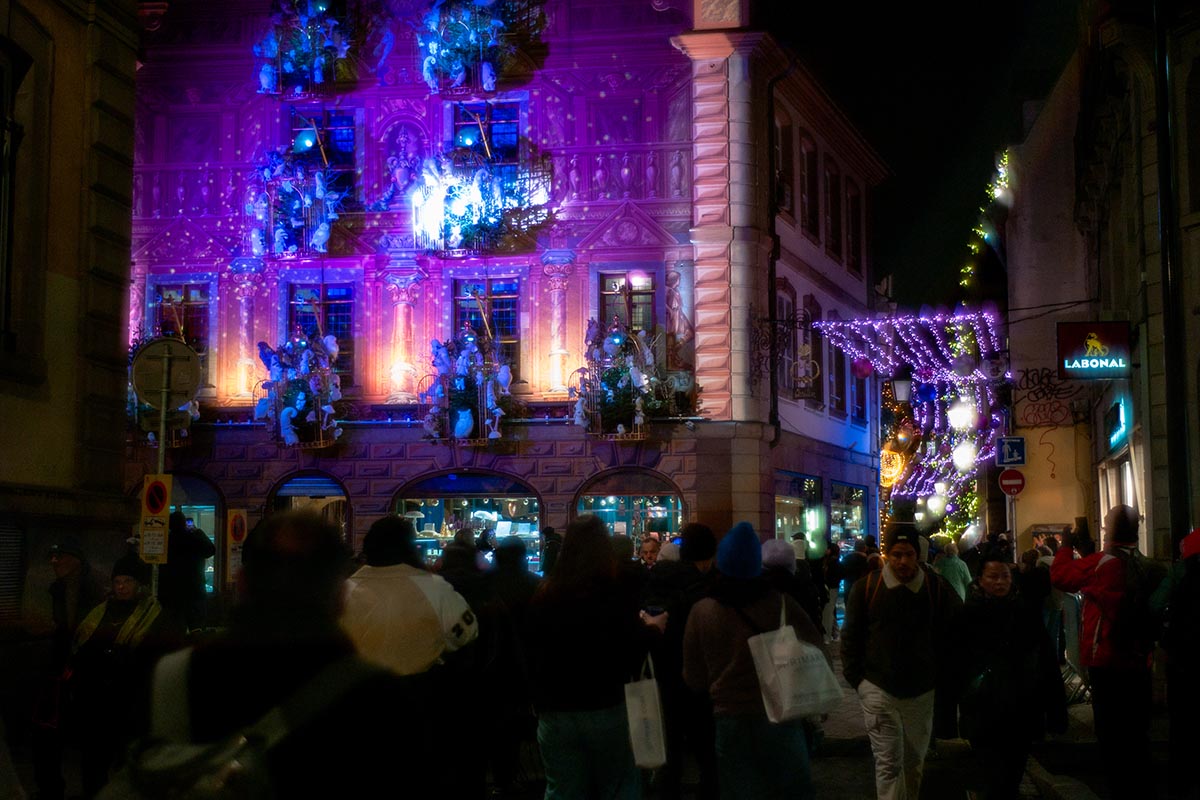
Strasbourg is often associated with its iconic teddy bear decor and elaborately decorated Christmas buildings, but that’s only part of the magic. What truly sets this city apart is how the entire town comes together for the season. Every street, shopfront, and restaurant is thoughtfully decorated, creating a cohesive and immersive festive atmosphere. Walking through Strasbourg feels like stepping into a real life Christmas storybook, where every corner brings a new surprise.
Where to Stay in Strasbourg to Save Money
Strasbourg gets extremely crowded during Christmas market season. Accommodations book out fast and prices skyrocket, especially around the opening week. I personally ran into this issue while planning my two night stay during the first week of the Christmas markets.
After hours of research, I found a solution that saved me money without sacrificing comfort. I stayed at Hôtel Athena Restaurant & Spa Strasbourg, located just seven minutes by car west of Strasbourg train station. The room rates here were significantly lower than hotels near the train station or in Old Town, even during peak season.
Getting there was also surprisingly easy. A quick 12 euro Uber or Bolt ride takes you straight to the hotel. I actually found this more convenient than staying in Old Town, where you often still need to walk back to your hotel through crowded streets at night. With Hotel Athena, I could relax, get picked up directly, and arrive comfortably after a long day at the markets.
I booked directly on their official website with the best rate available online and the entire stay was comfortable and smooth. Highly recommended.
Markets and Highlights
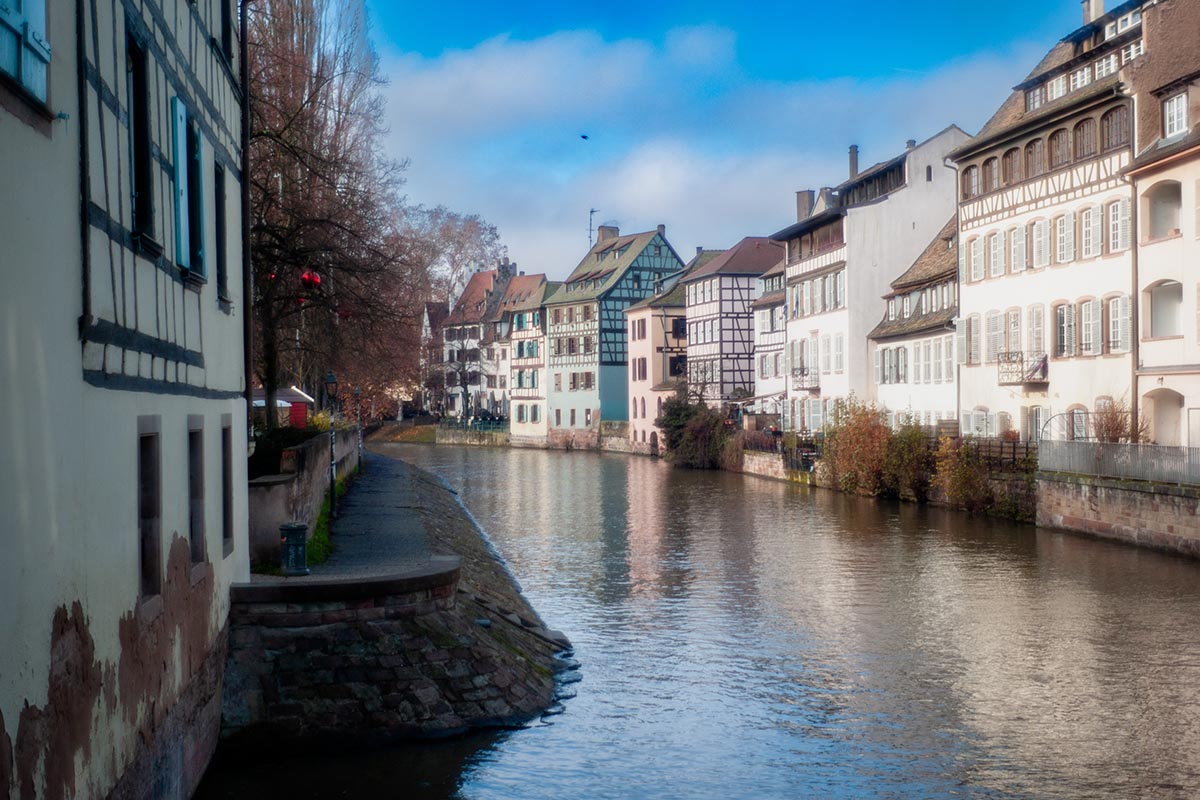
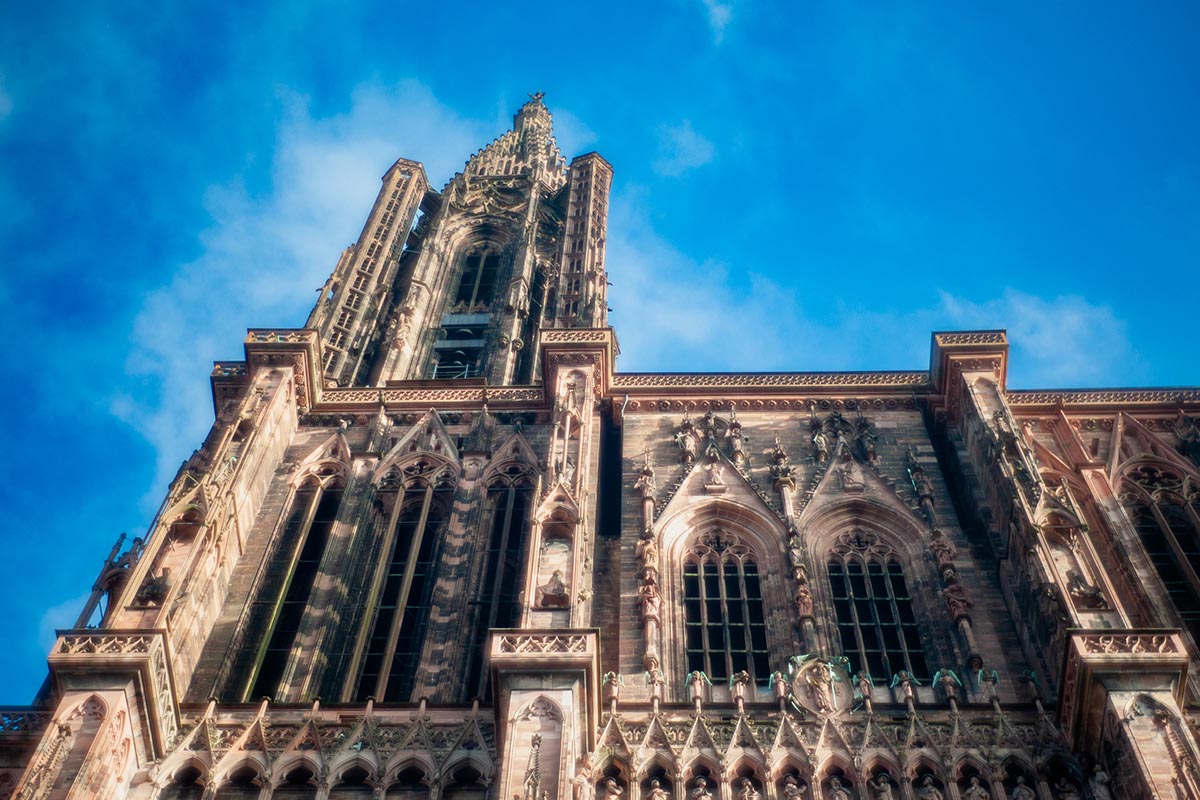
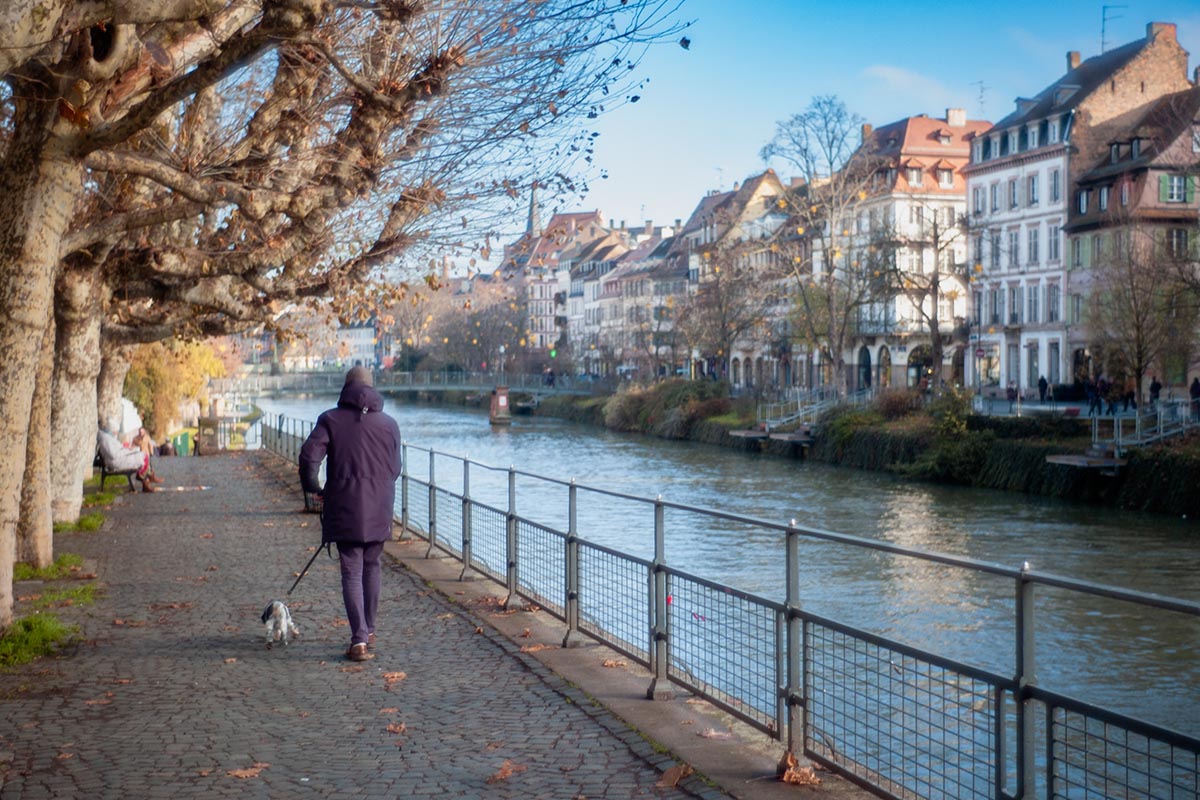
Strasbourg’s Christmas markets are scattered throughout its Old Town, and thanks to its layout, the river views and bridges add a sense of uniqueness and calm to the overall atmosphere. The famous teddy bear decor is tucked away in a small back alley behind Cathédrale Notre Dame de Strasbourg, just before you reach Place du Marché aux Poissons, making it a fun surprise as you wander through the city.
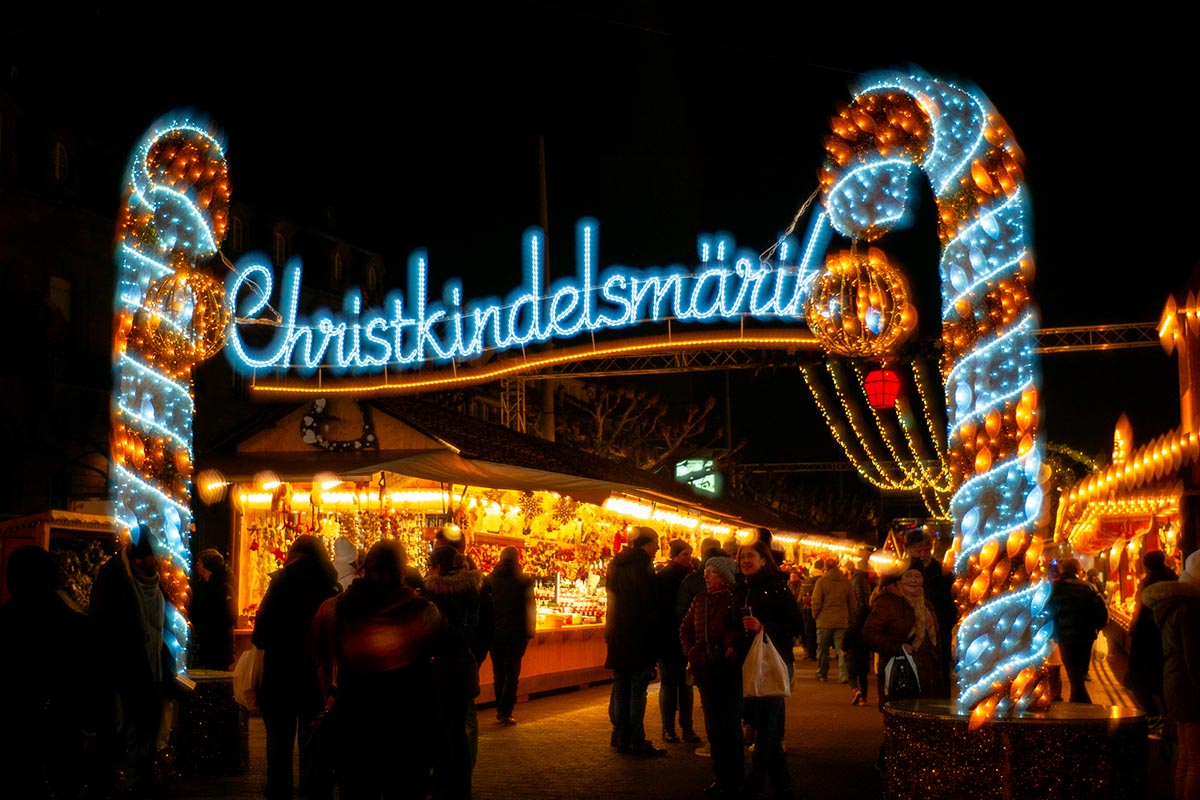
- Christkindelsmärik at Place Broglie – The oldest and most traditional Christmas market in Strasbourg, featuring classic wooden chalets, ornaments, and Alsatian specialties.
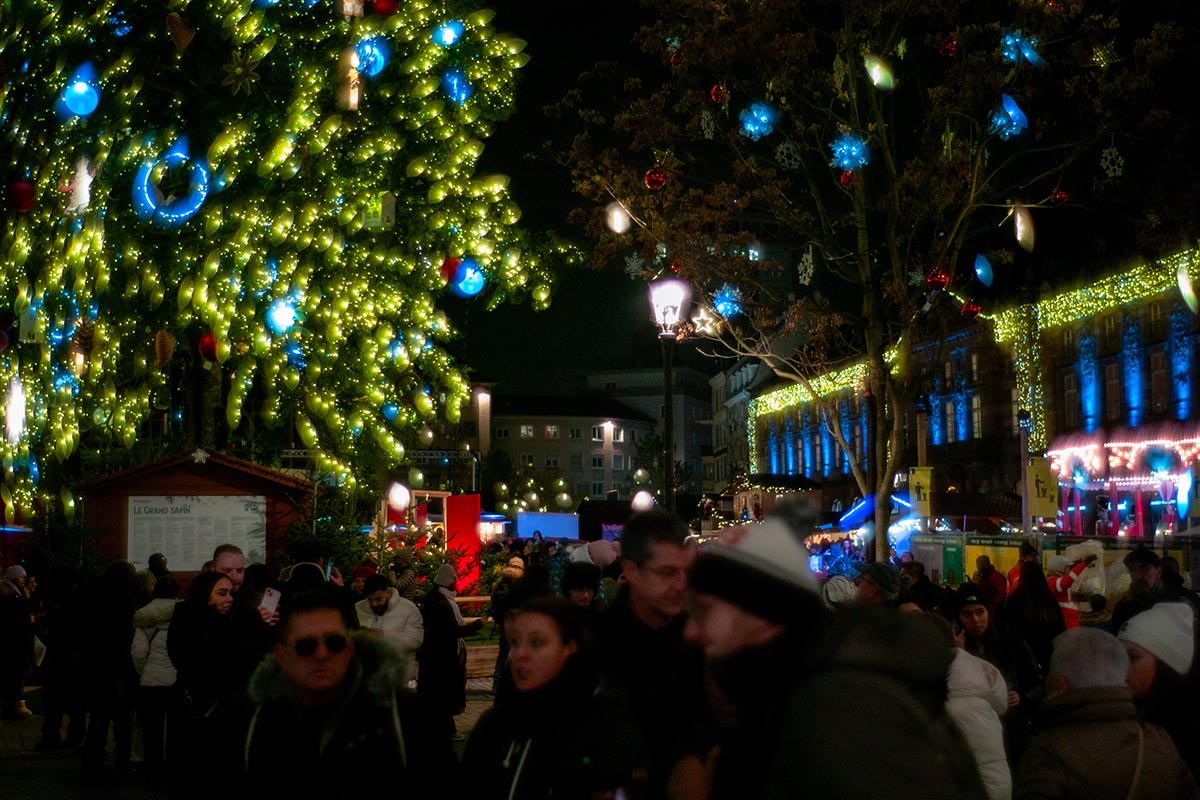
- Place Kléber Christmas Market (Grand Sapin) – Home to Strasbourg’s iconic giant Christmas tree and one of the busiest and most festive gathering spots in the city.
- Cathedral Christmas Market at Place de la Cathédrale and Place du Château – Set against Strasbourg Cathedral, this market focuses on gifts, decorations, and postcard worthy views.
- Carré d’Or Christmas Market – A charming market woven through small streets near the cathedral, showcasing artisanal goods and regional food products.
- The Dock of Delights at Terrasse Rohan and Place du Marché aux Poissons – A food focused market known for mulled wine, festive snacks, and comforting Alsatian dishes.
- OFF Christmas Market at Place Grimmeissen – An alternative and eco conscious market featuring independent vendors, fair trade products, and a relaxed local vibe.
- Unyielding Small Producers of Alsace Market – Dedicated to small local producers from Alsace offering regional wines, specialty foods, and handmade goods.
- Place Saint Thomas Christmas Market – A quieter, less touristy market with a cozy local atmosphere, ideal for a calmer stroll.
- Place Benjamin Zix Christmas Market – Located in Petite France, this smaller market is incredibly scenic and perfect for photos.
- Place Gutenberg Christmas Market – Often themed or featuring guest regions, with a mix of crafts, gifts, and food stalls.
- Place du Marché Gayot Christmas Market – A creative market known for unique handmade items and a slightly younger, artsy atmosphere.
Getting There
Taking the high speed ICE train from Frankfurt Hbf to Strasbourg takes about two hours, making it easy to visit Strasbourg as a day trip from Frankfurt. Alternatively, you can use Strasbourg as a base and visit Colmar the following day, which is what I did.
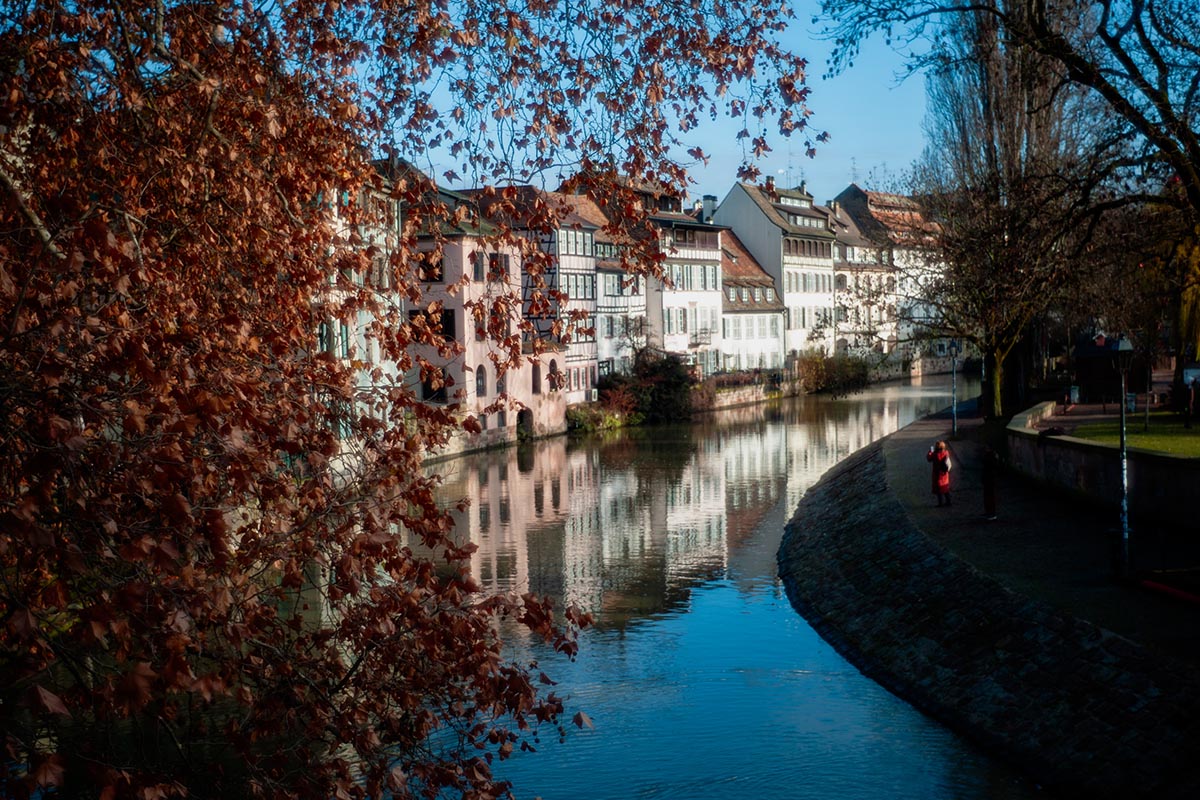
Strasbourg train station isn’t located right next to the Old Town, so be prepared for a short walk to reach the iconic Christmas markets. After arriving, follow the pedestrian road Rue du Maire Kuss heading southeast. Before long, you’ll start to see riverbanks and bridges, which mark the entrance to Strasbourg’s Old Town.
From here, you can turn right to explore Petite France, a stunning area filled with river views and beautiful historic architecture. Or you can continue straight for another 15 minutes to reach the main Christmas market areas.
Either way, Strasbourg feels like something straight out of a fairytale. It’s a city where getting lost is part of the experience, with breathtaking views waiting around every corner.
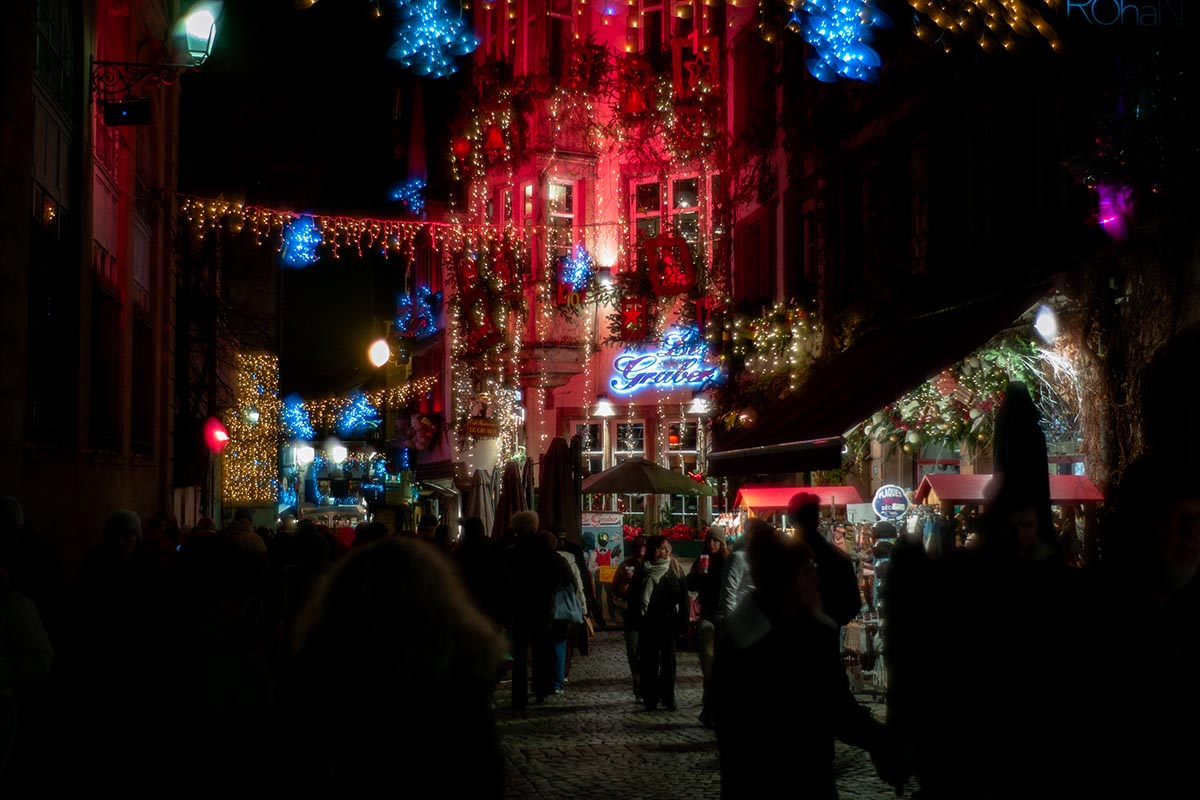
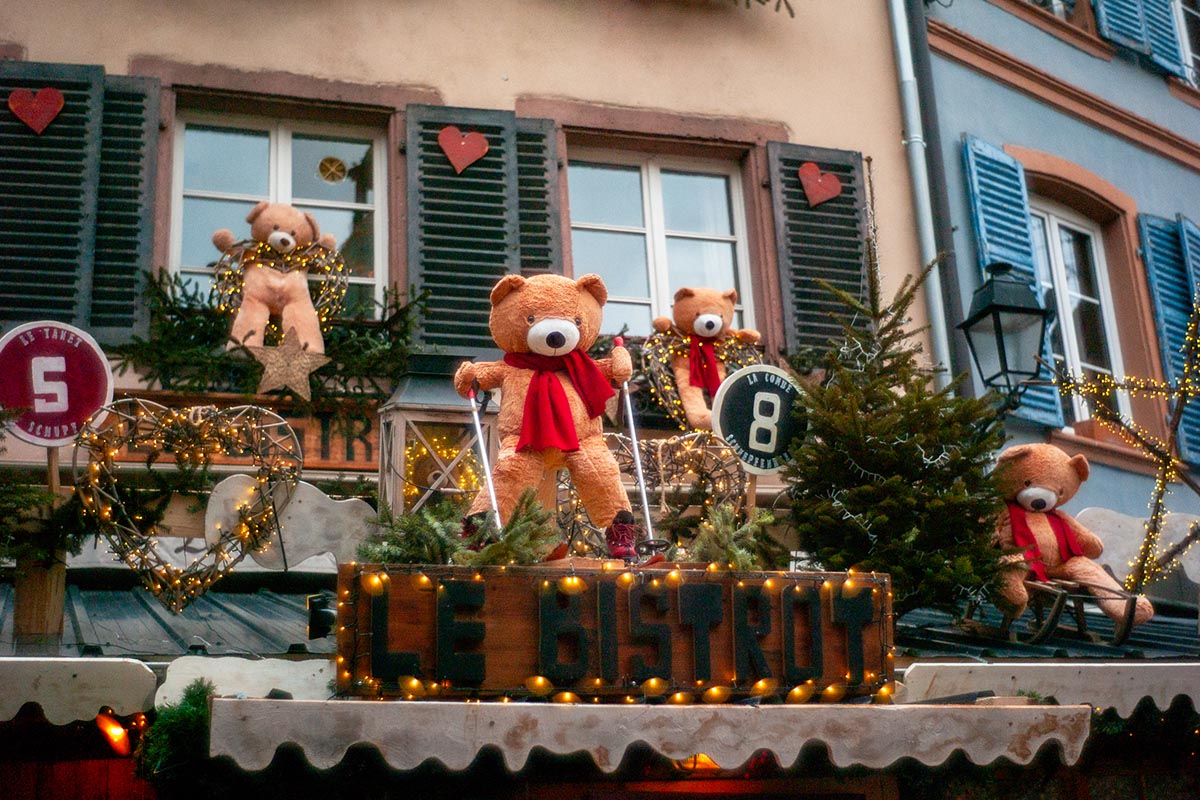
The famous teddy bear decor is located on Rue du Maroquin, right on the storefront of Le Tire Bouchon French restaurant. During winter, the restaurant transforms into one of Strasbourg’s most iconic Christmas buildings. The alleyway itself is narrow but constantly packed with visitors trying to capture photos of this unforgettable festive scene.
Vibe and Atmosphere
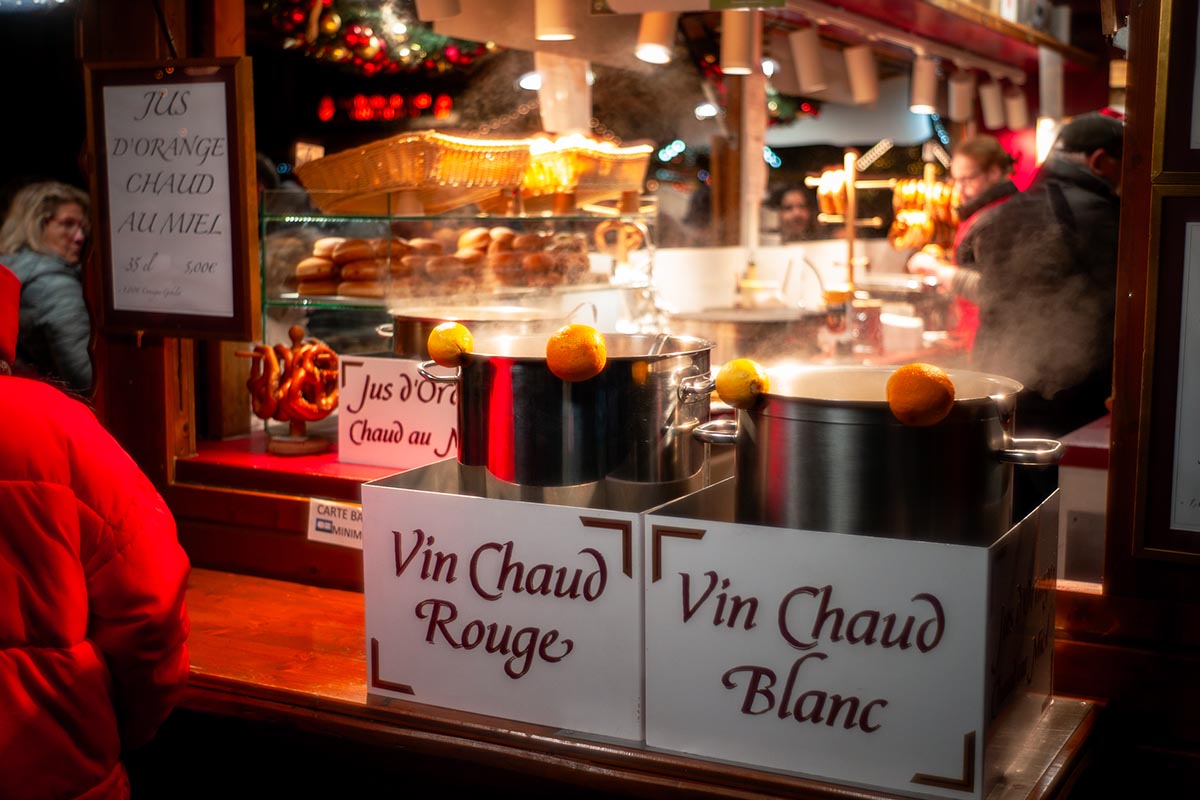
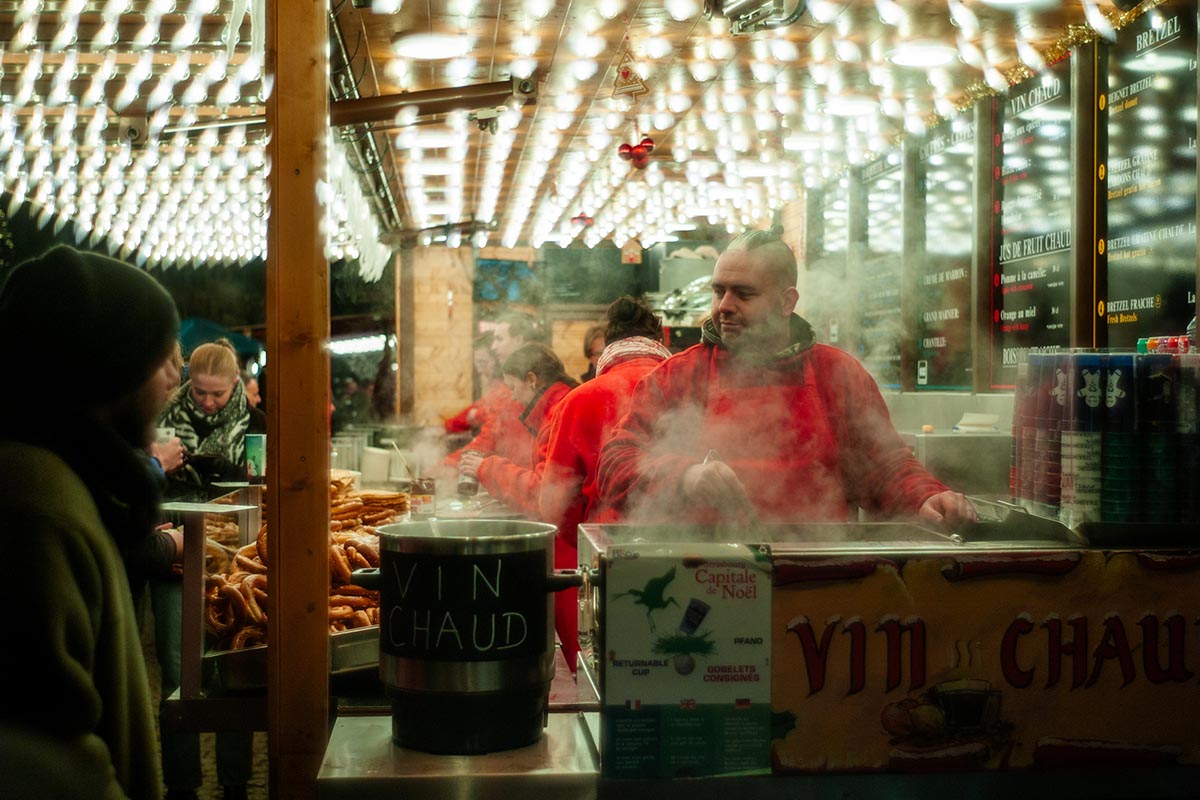
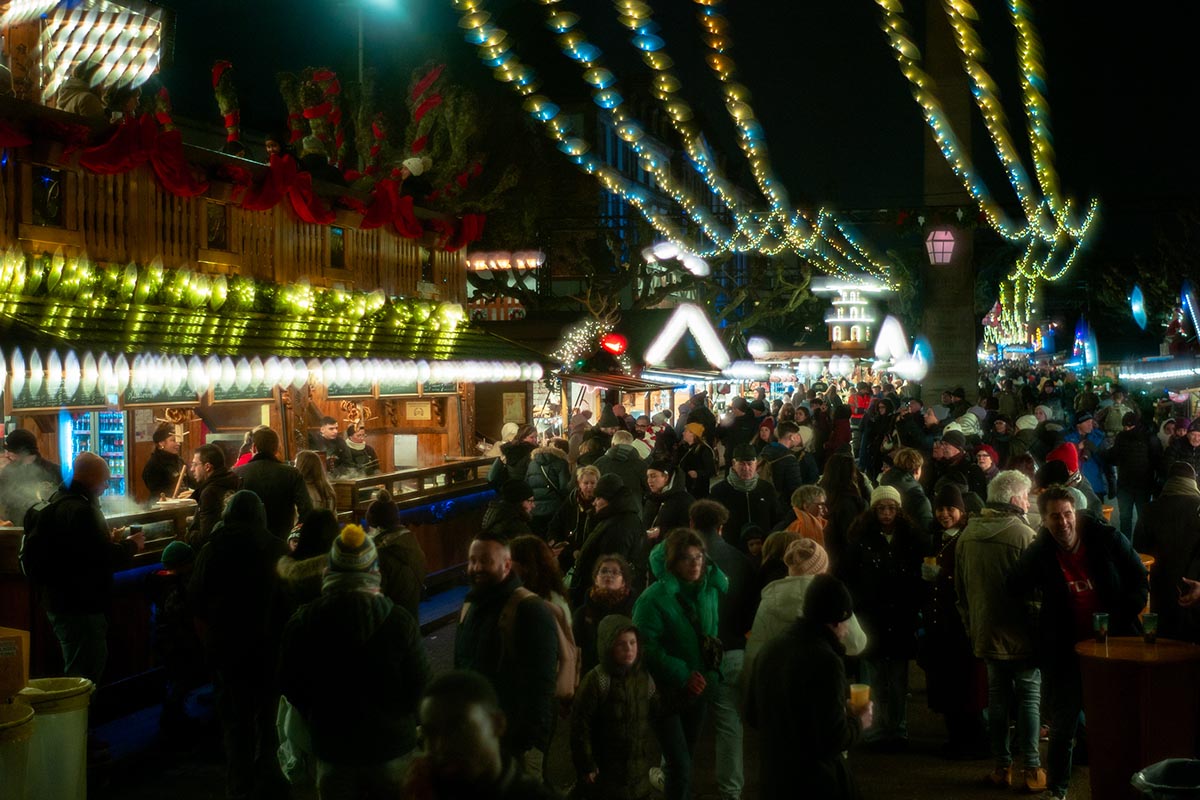
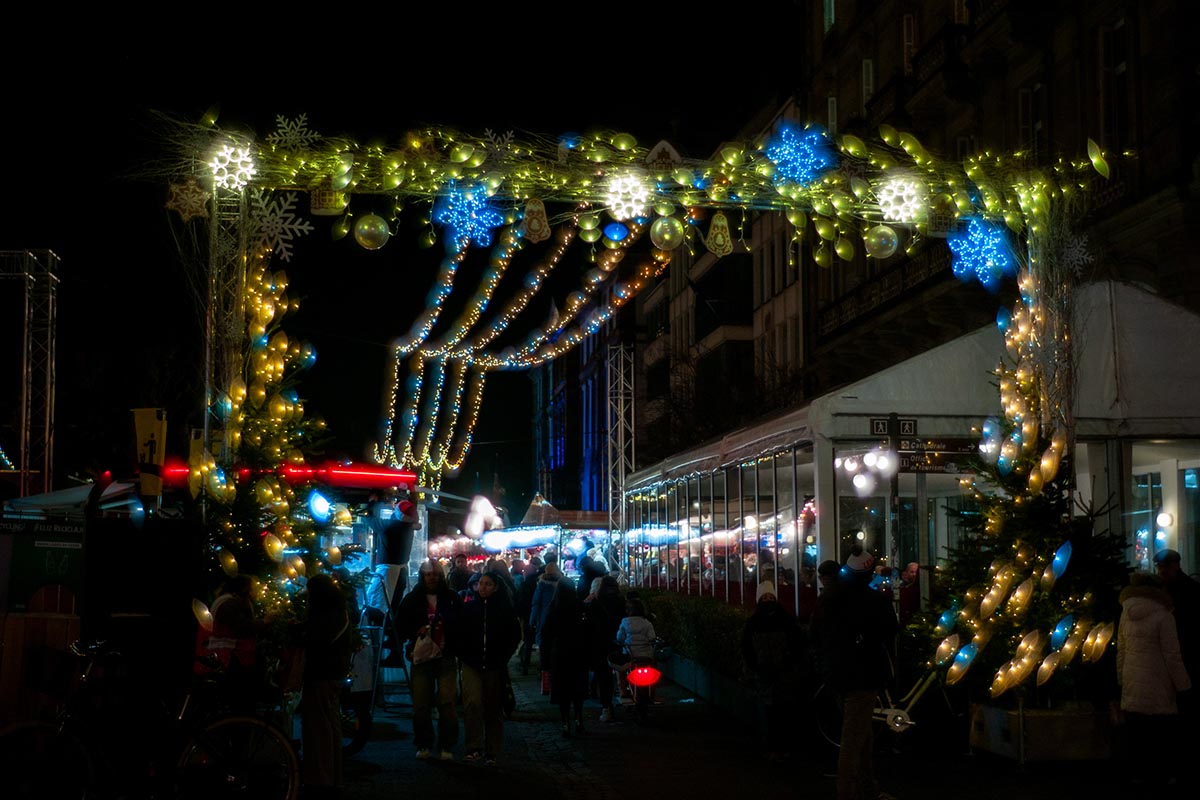
Being in Strasbourg actually feels like the town is quite large because there is a lot of walking from the moment you get off at Strasbourg Station. There isn’t much of a festive vibe near the train station and the area feels fairly modern, but as you walk toward downtown, the magic slowly begins to unfold.

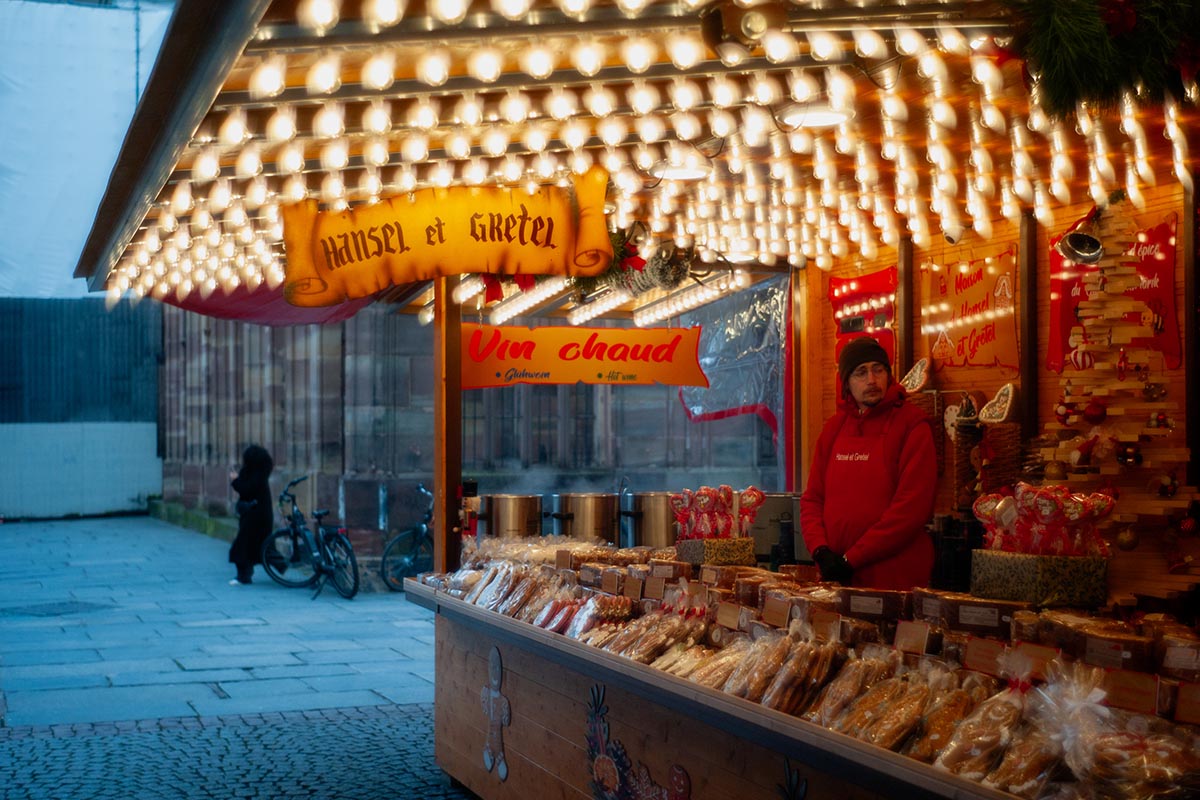
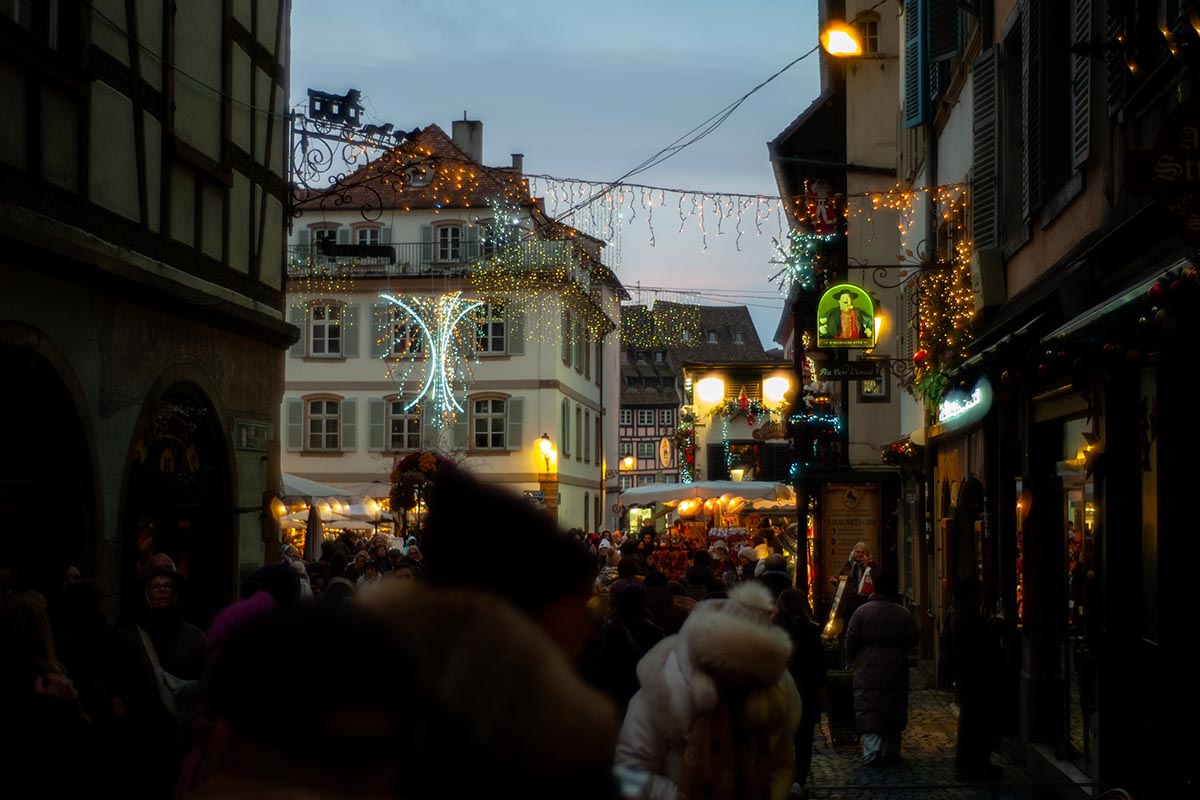
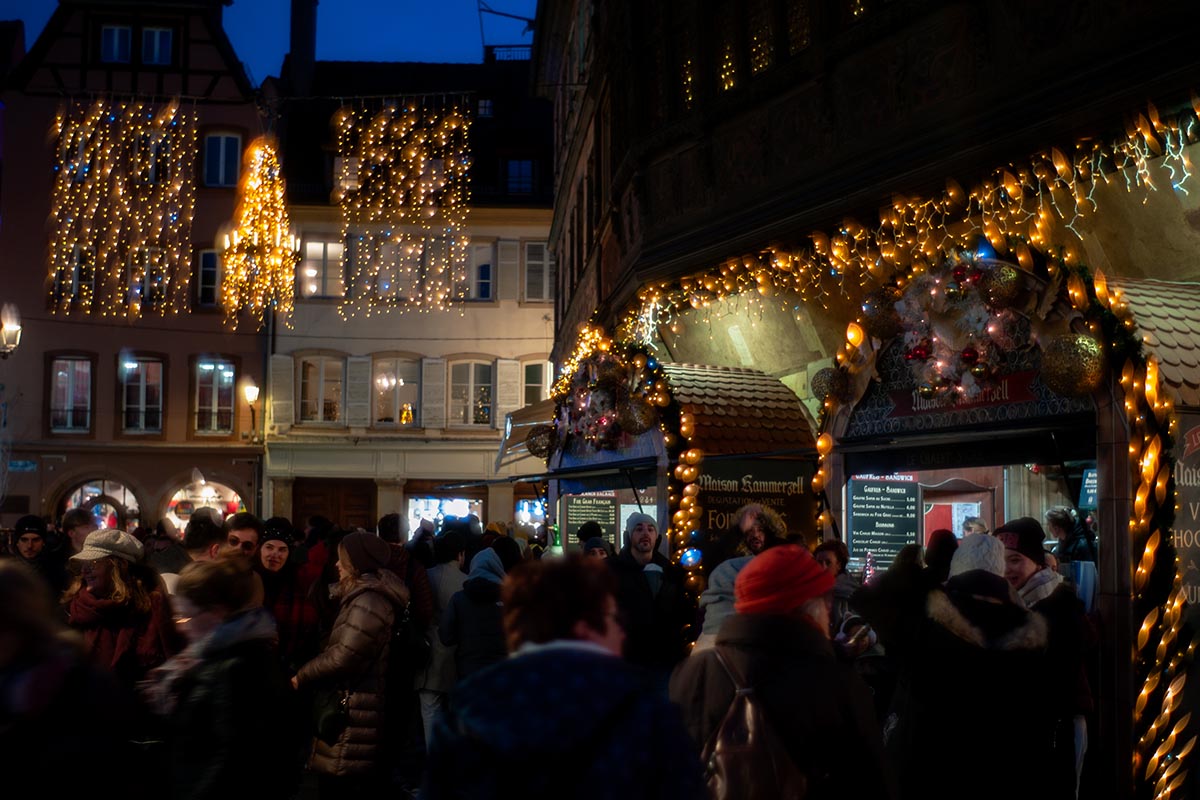
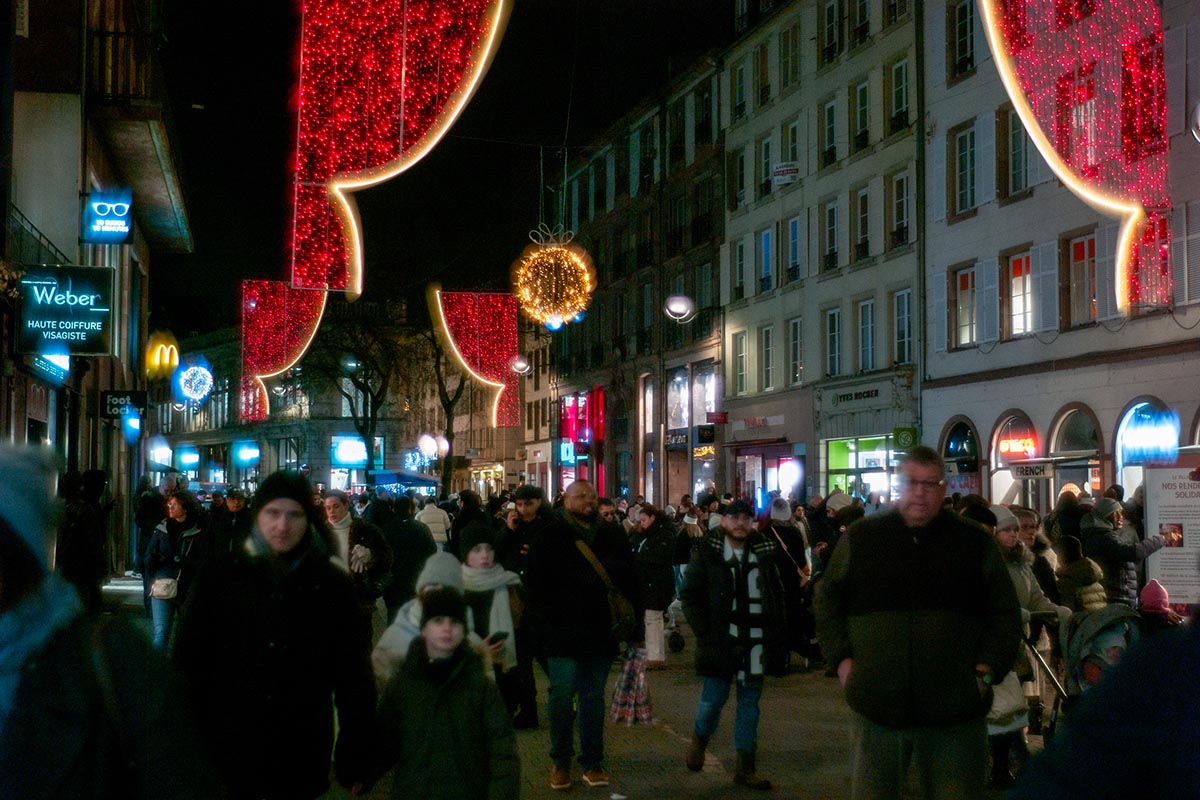
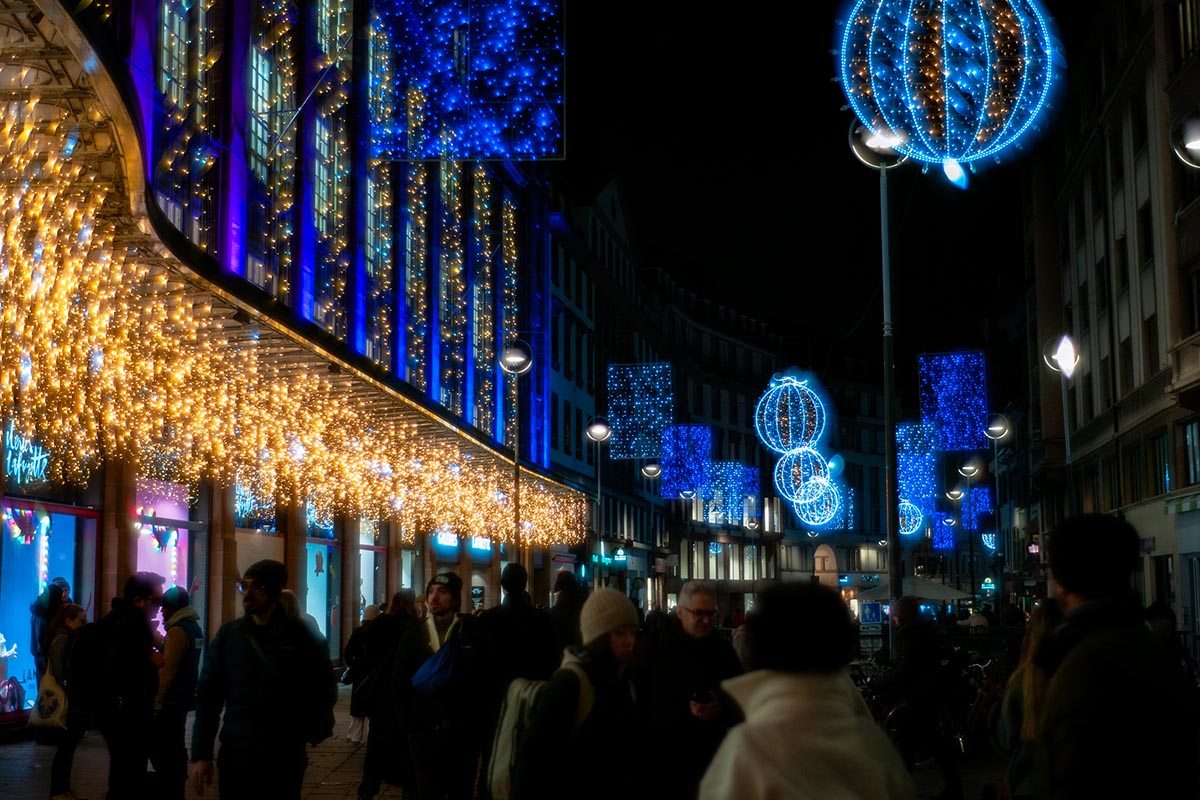
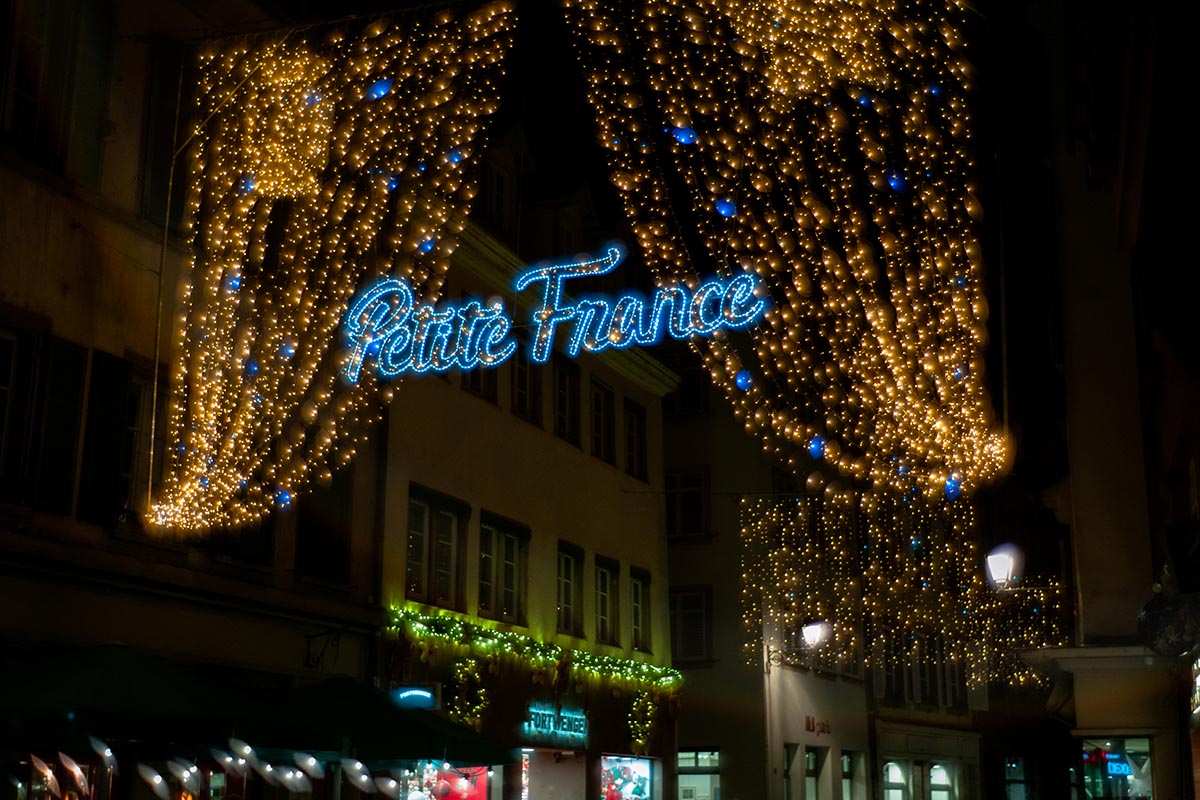
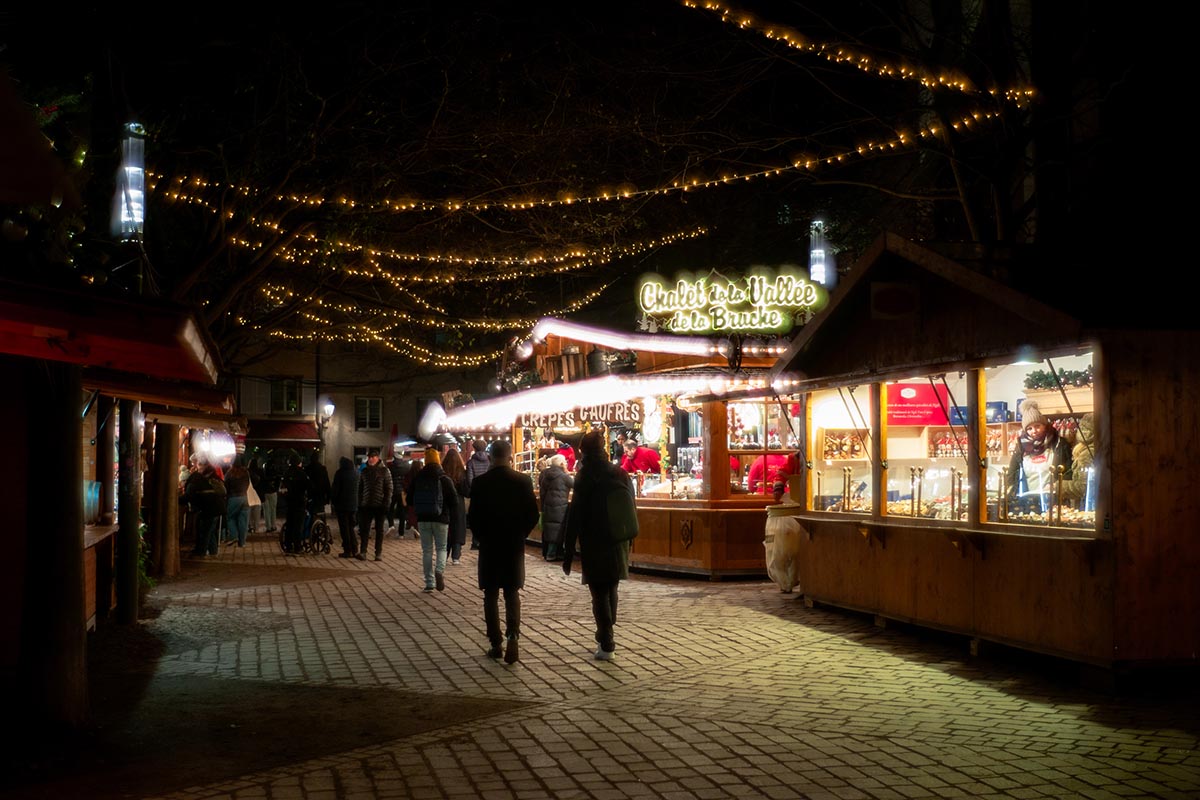
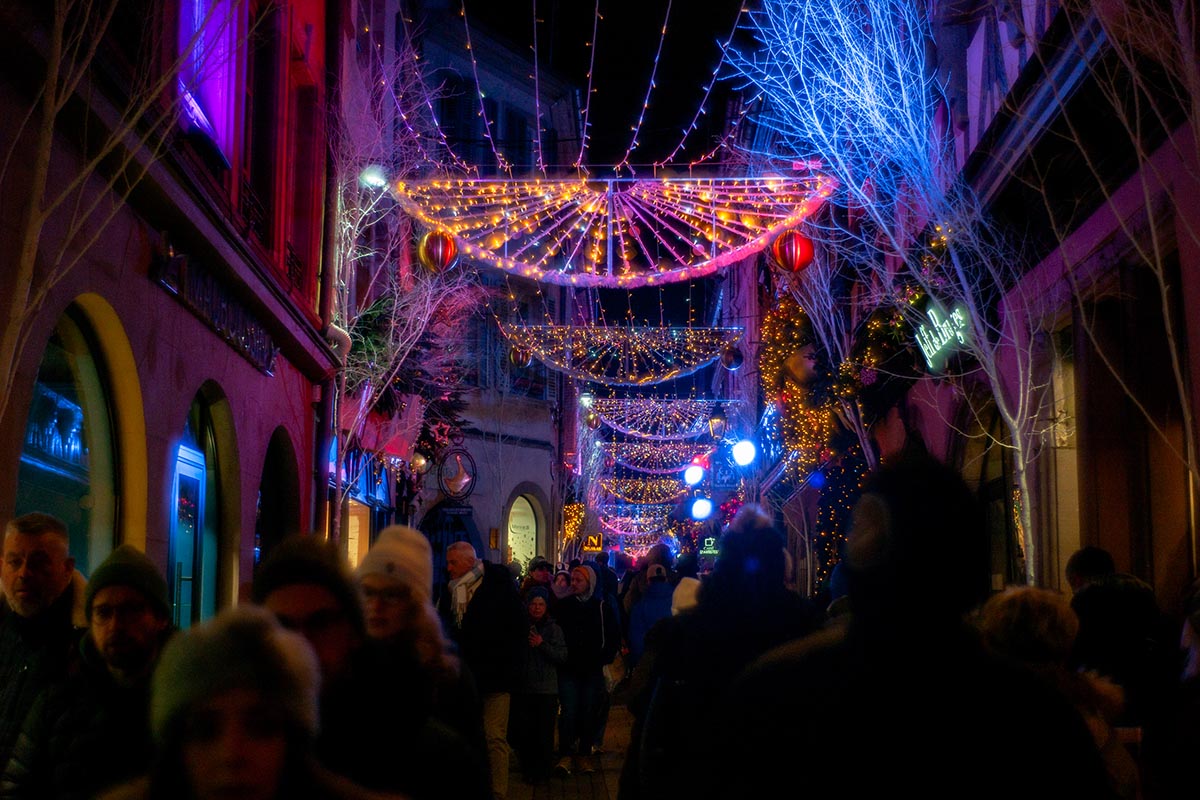
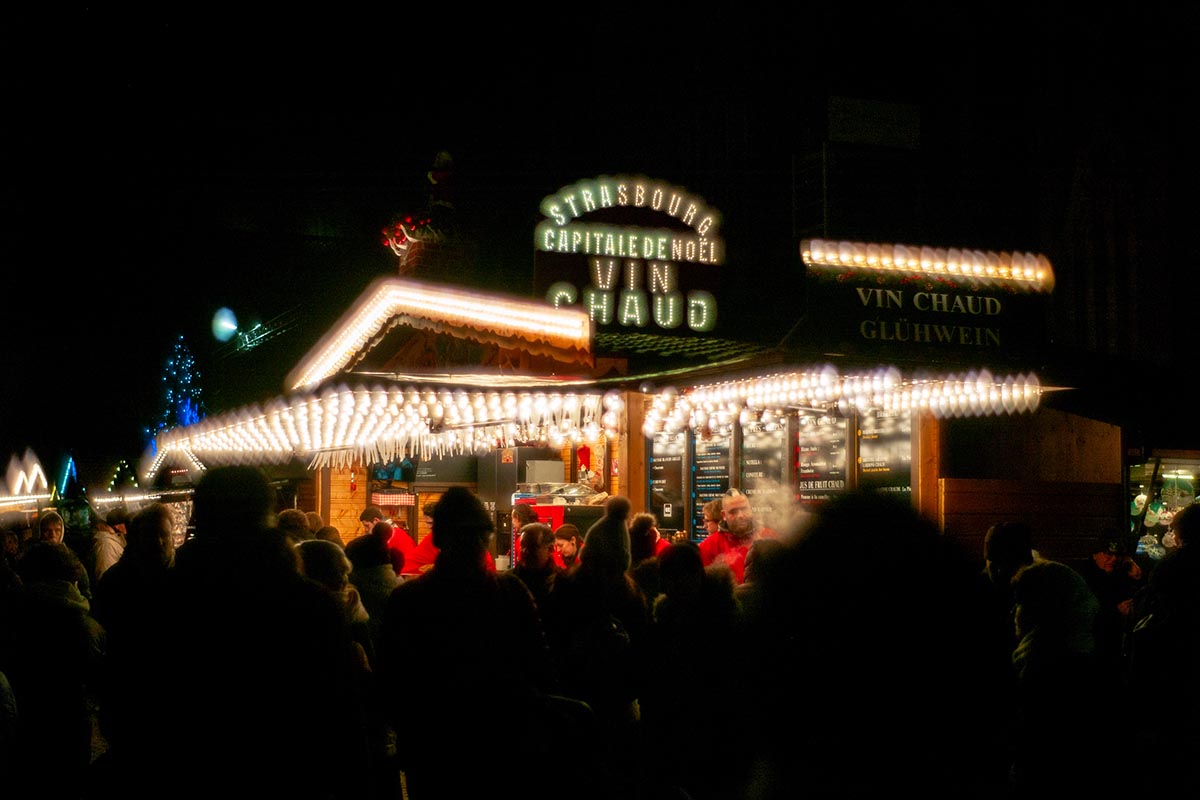
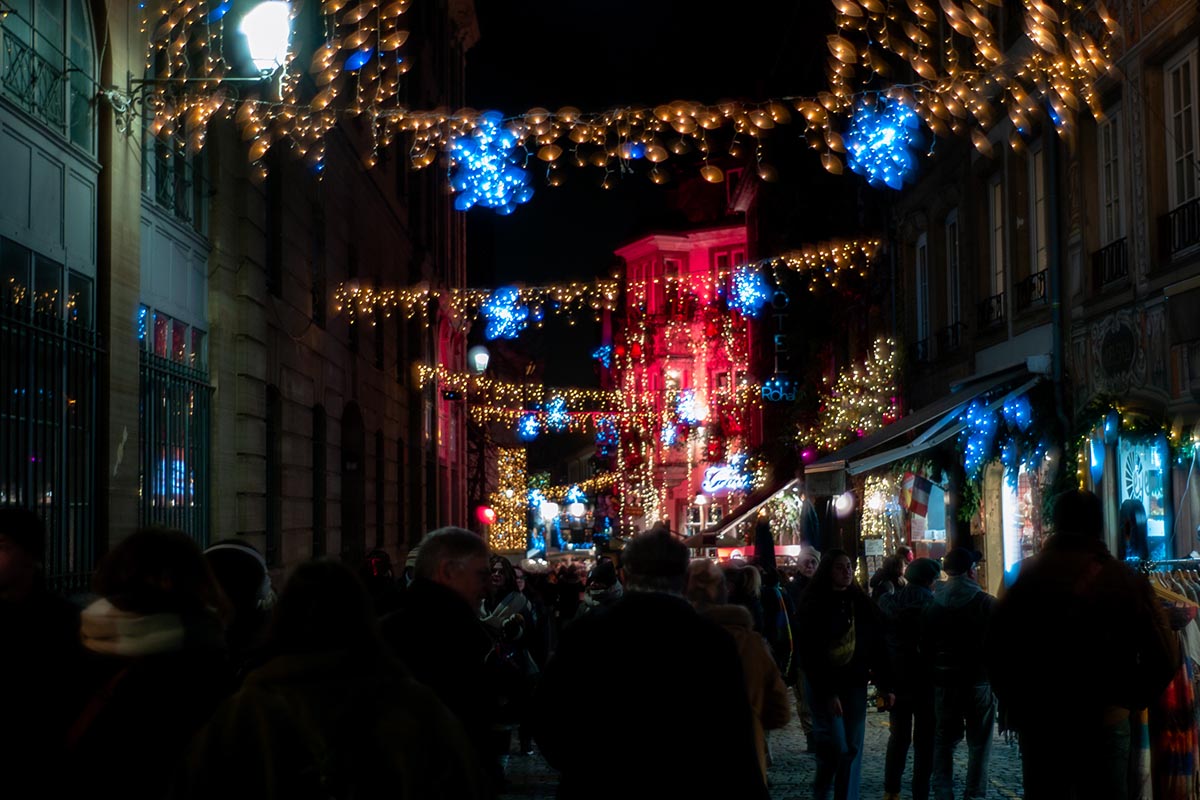
First, the river banks, bridges, and charming half timbered houses come into view, signaling that you’ve entered the historic core of the city. From there, the atmosphere becomes noticeably more festive, with Christmas lights strung across streets, decorated shopfronts, and the smell of mulled wine in the air. Rather than being concentrated in one square, the Christmas spirit in Strasbourg is spread throughout the Old Town, making the entire area feel immersive without being overwhelming.
The heart of Strasbourg is very dense, with narrow streets and houses packed tightly together. This density is what makes Strasbourg’s Christmas atmosphere so special. You experience so much at once, lights, decorations, markets, and historic buildings all layered together, which feels very different from other cities where everything is more spread out.









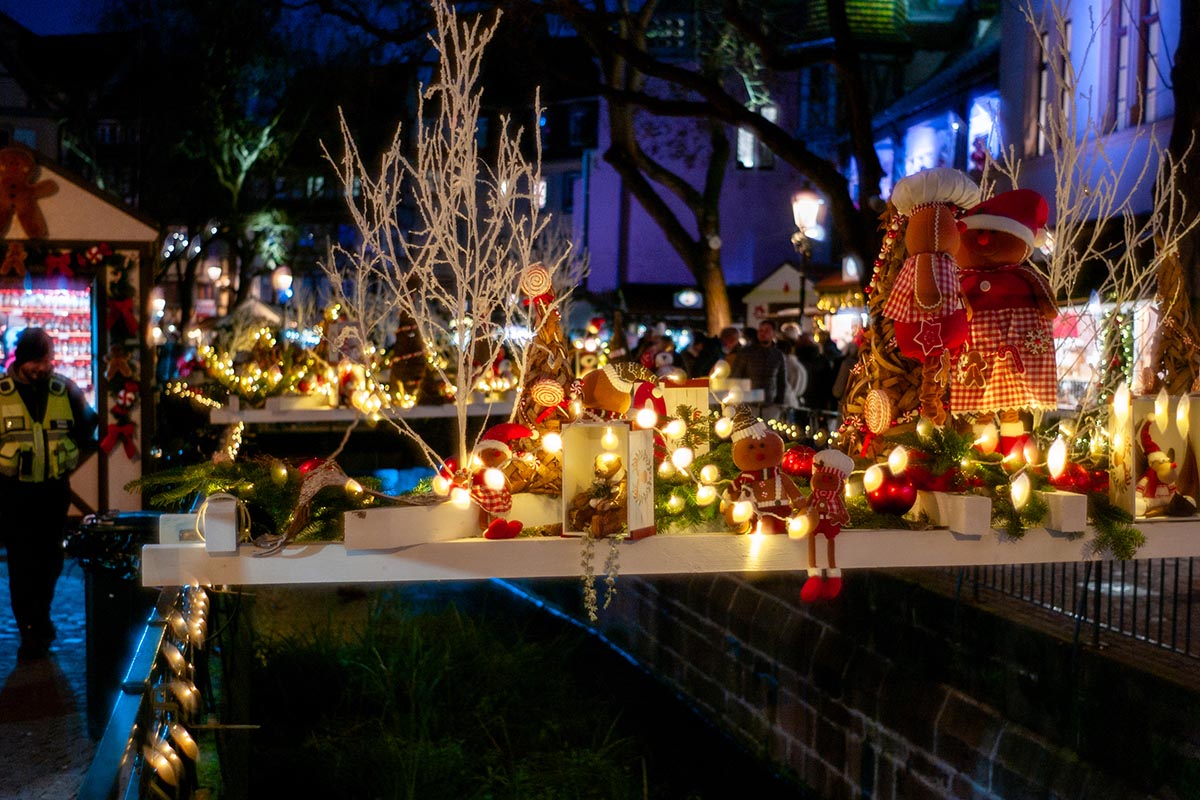
9. Colmar
Colmar is a small town just a one hour train ride from Strasbourg and is often paired with Strasbourg thanks to its close proximity and internationally famous Christmas markets.
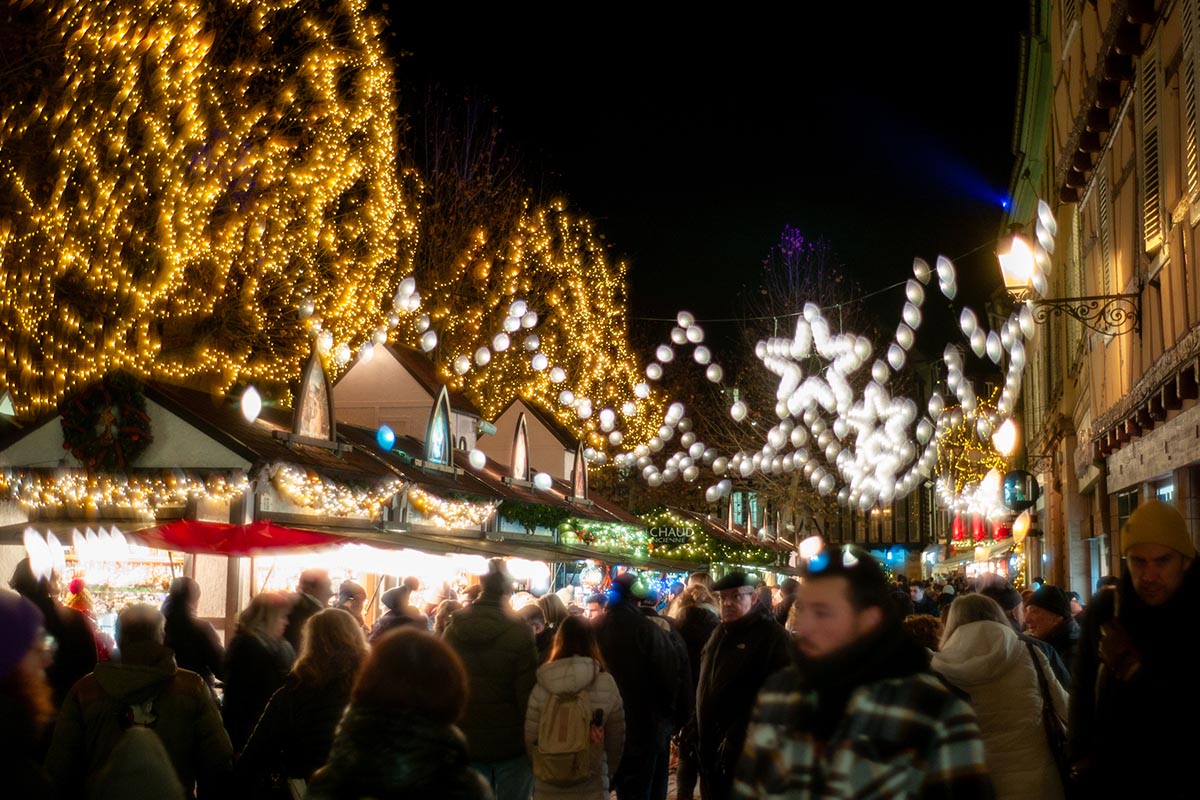
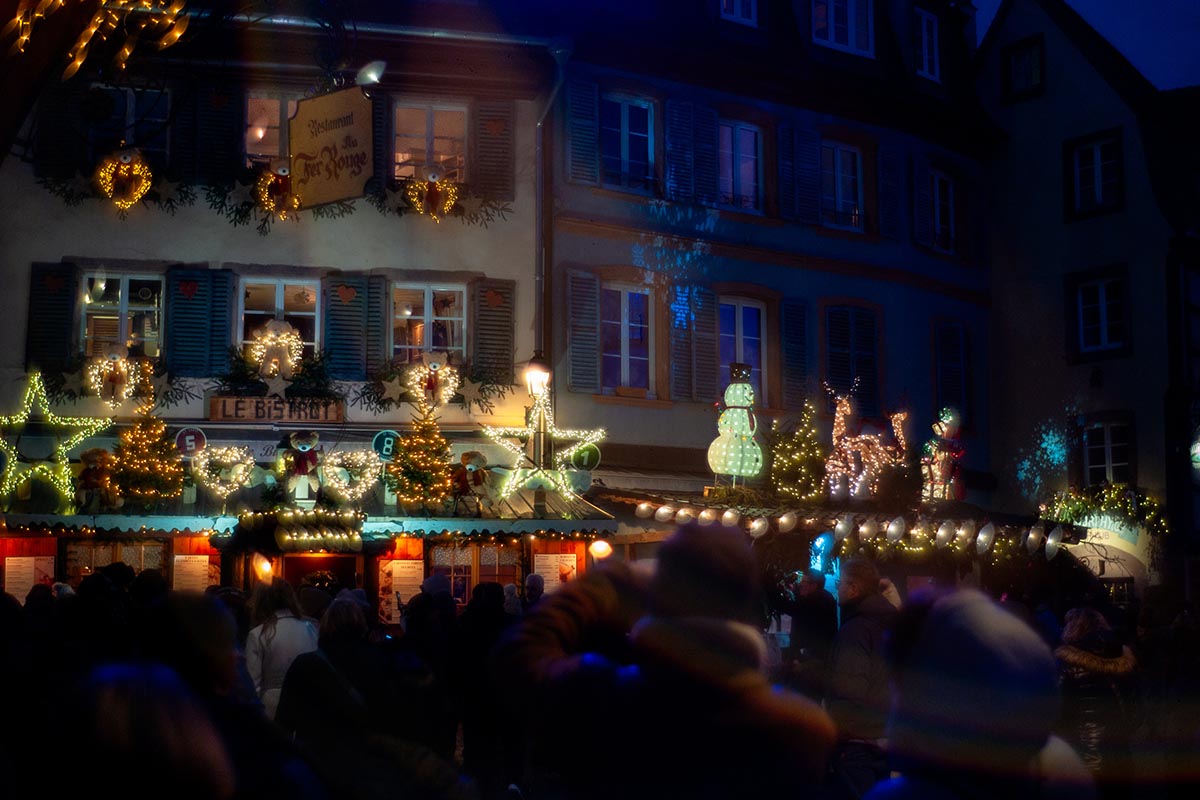
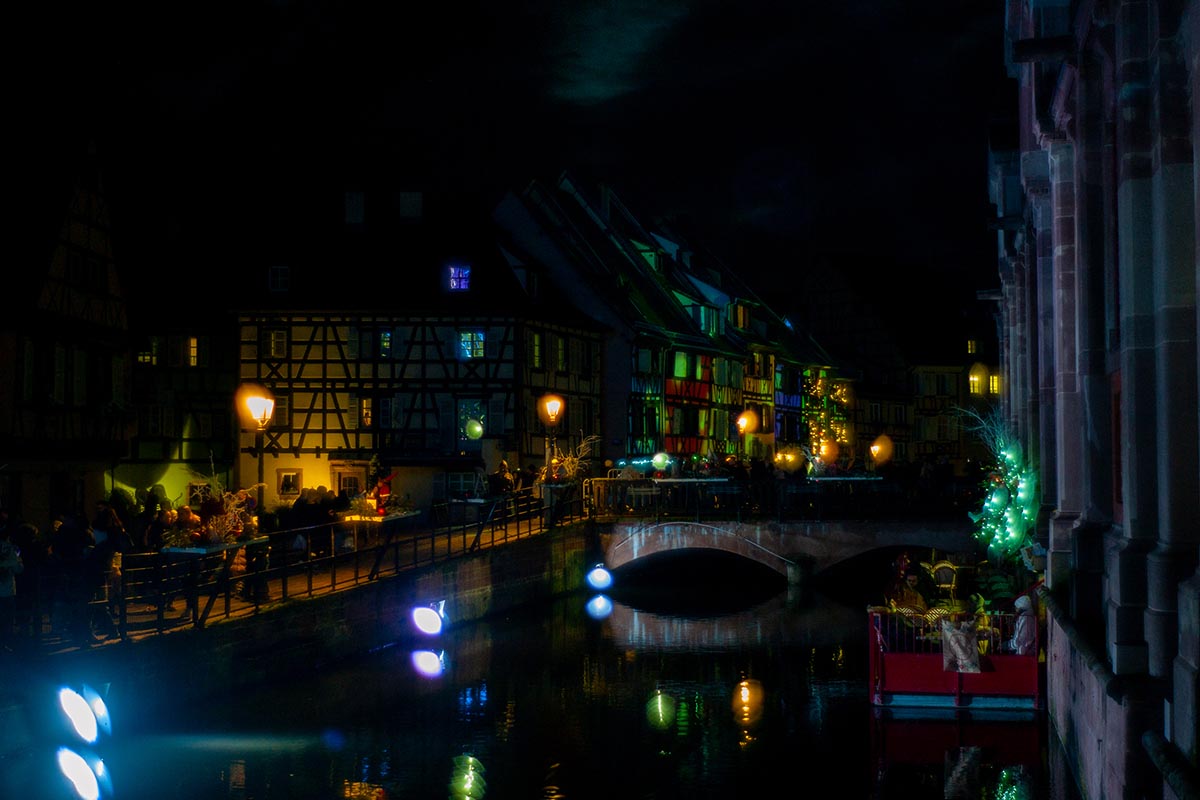
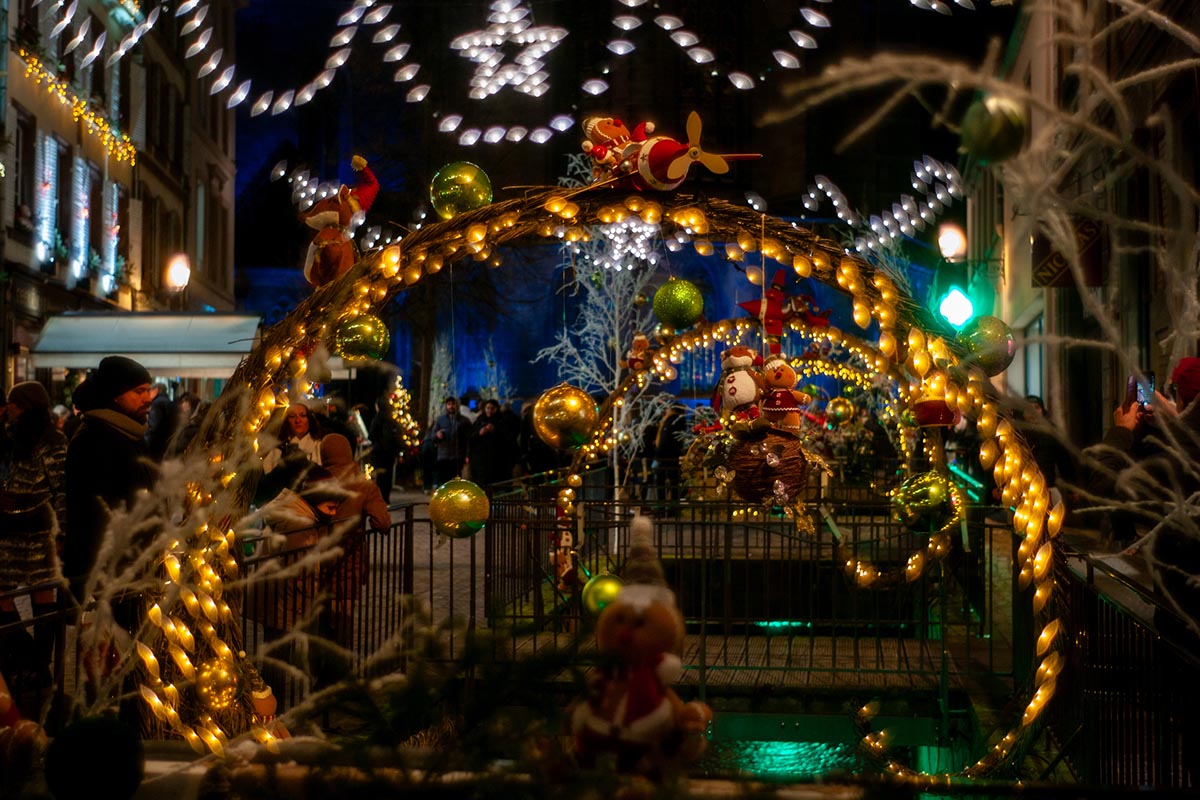
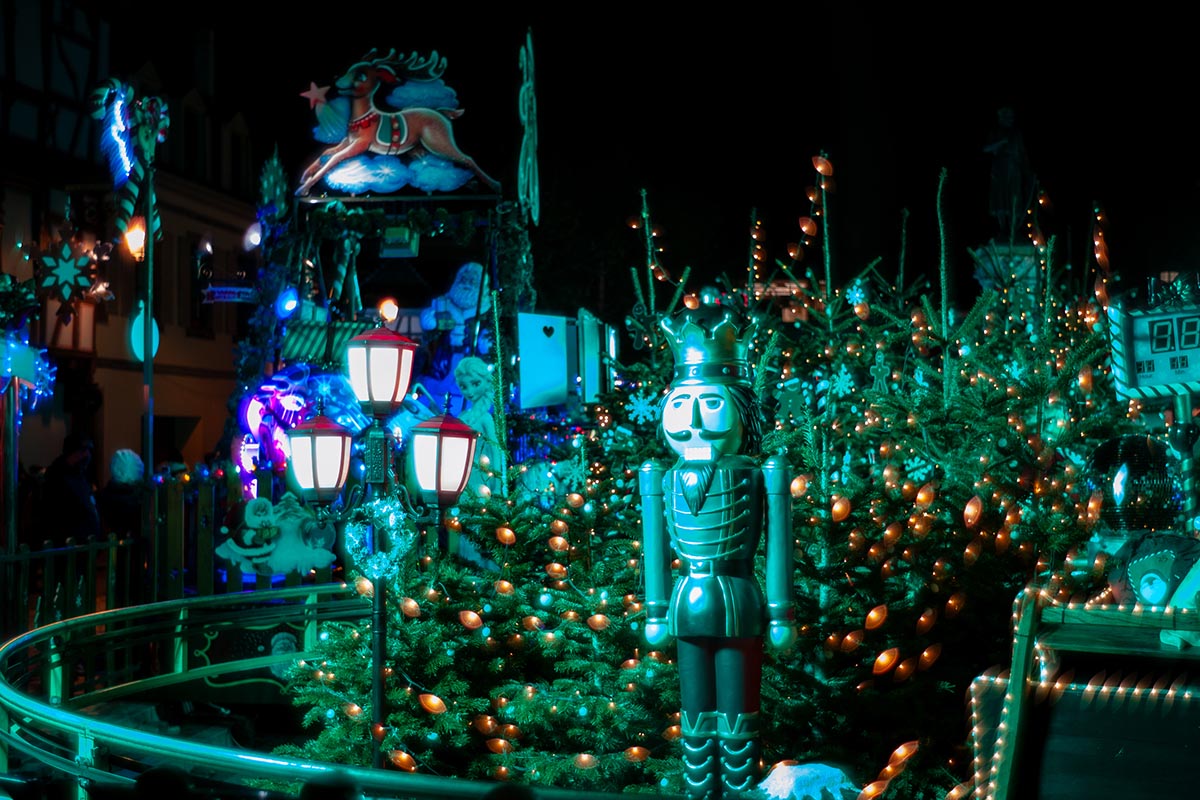
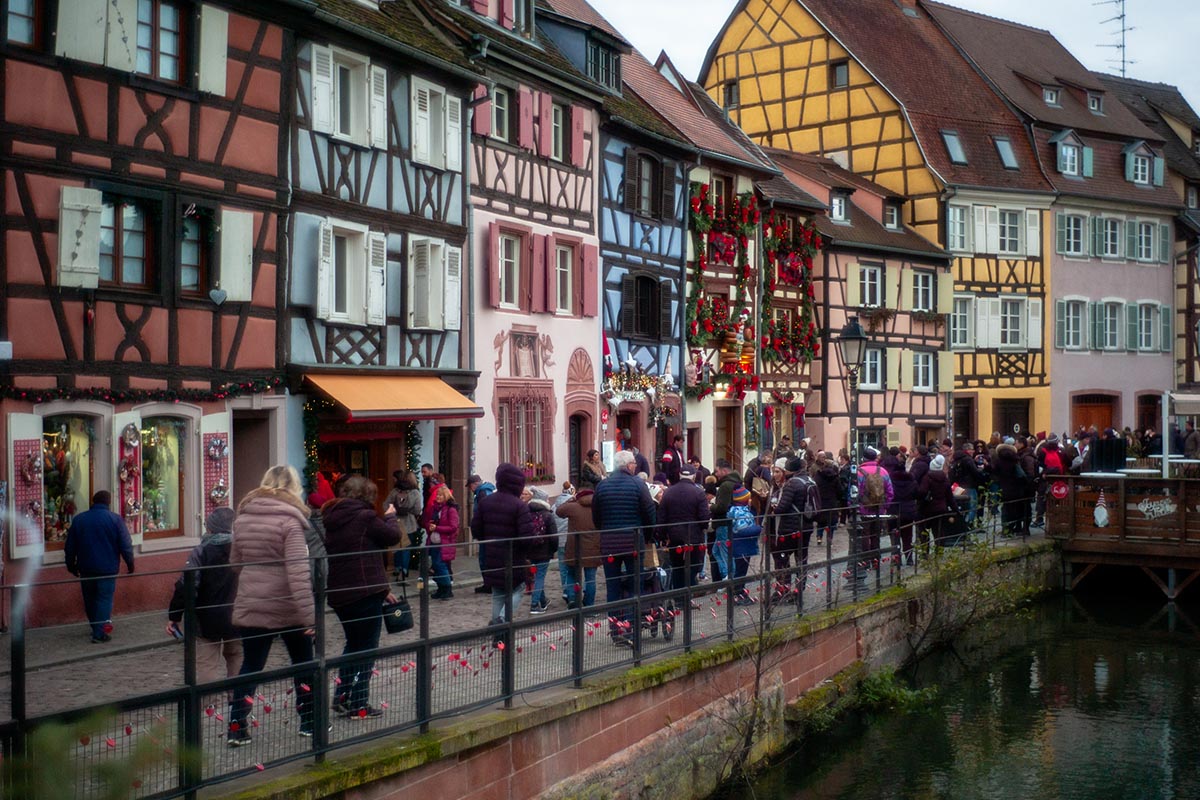
Like Strasbourg, Colmar also features picturesque river views throughout the town, but on a much smaller scale. The overall feel is more intimate and distinctly small town, which makes it resemble a real life Disneyland set. Everything feels carefully designed and almost too perfect, yet at the same time remains authentic and genuine.

Markets and Highlights
Colmar is quite small, so it’s easy to walk between its Christmas markets. That said, much of the town outside the market areas is fairly quiet and undecorated, so it’s best to pin the Christmas markets on Google Maps ahead of time to make sure you don’t miss any while you’re there.
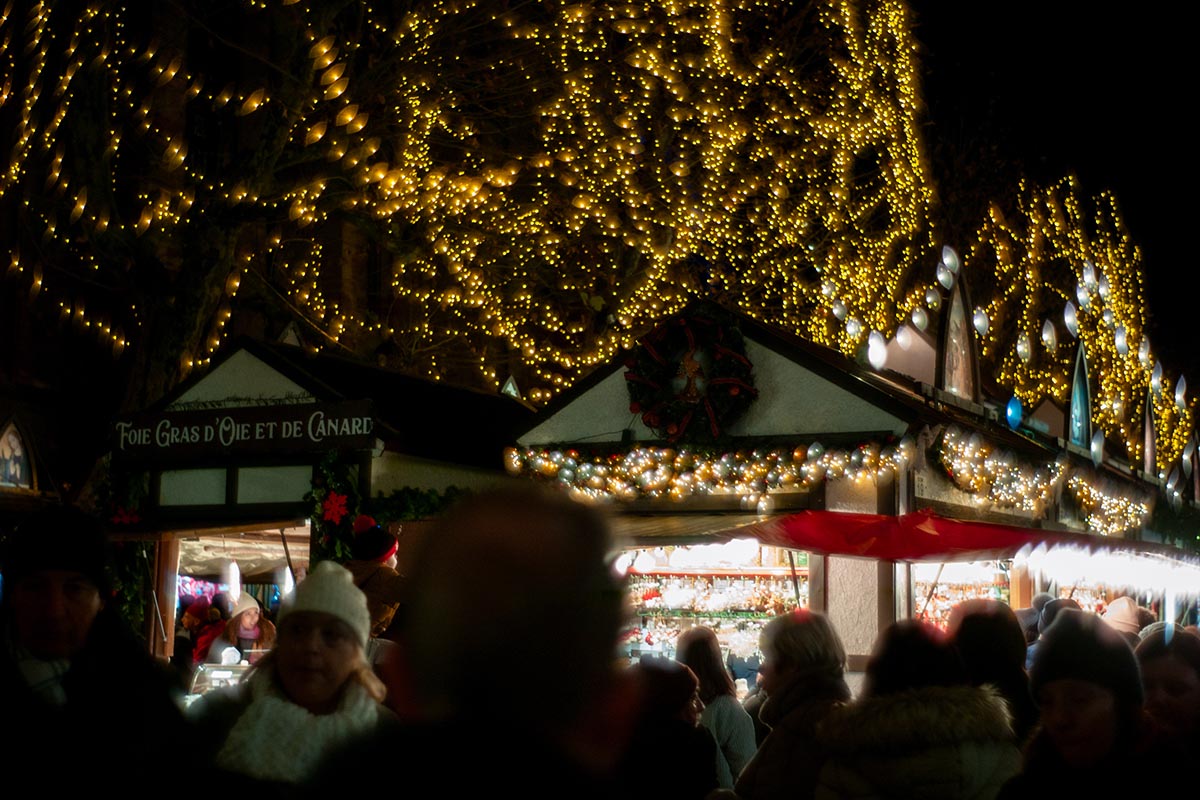
- Place des Dominicains Christmas Market – Known for its elegant atmosphere, Christmas lights in the trees, and a strong focus on arts and crafts.
- Place Jeanne d’Arc Christmas Market – Set in a more open square, featuring a traditional Alsatian vibe with food stalls and regional products.
- Koïfhus Christmas Market (Old Customs House) – Located inside and around the historic Koïfhus building, specializing in handmade crafts and local artisans.
- Petite Venise Christmas Market – One of the most scenic markets, set along the canals with charming riverside views, especially beautiful at night.
- Place de l’Ancienne Douane Christmas Market – A lively central market with a mix of food, drinks, and gift stalls, close to many restaurants and shops.
- Parc du Champ de Mars Christmas Market – Located just outside the Old Town, this market is more open and less scenic than Petite Venise, but it’s often less crowded and features food stalls, drinks, and sometimes larger installations or rides.
Getting There
Colmar Place de la Gare is the train station where most visitors arrive. Trains run frequently between Strasbourg and Colmar, so there’s no need to buy tickets far in advance. That said, trains can get very overcrowded during Christmas market season, and it’s common to find no seating available.
With just a five minute walk, directly across from the station, you’ll reach your first Christmas market at Parc du Champ de Mars. This market is more family oriented, with entertainment and attractions geared toward children and families.
From there, continue on foot toward the Old Town on the east side. This is where you’ll find the rest of Colmar’s Christmas markets, with most of them clustered close together and easily accessible on foot, making it simple to visit multiple markets in one walk.
Vibe and Atmosphere
Colmar has a much calmer and more intimate atmosphere compared to Strasbourg. The town is small, walkable, and easy to navigate, which immediately makes the experience feel more relaxed.
I personally prefer Colmar over Strasbourg because of its small town charm and peaceful pace. In larger cities, it’s easy to feel rushed or anxious, constantly checking the time to make sure you can get back, but in Colmar, everything feels slower and more manageable.
The Christmas markets are compact and close together, allowing you to enjoy the decorations, river views, and festive stalls without feeling overwhelmed. Colmar feels cozy rather than crowded, making it a place where you can slow down, wander freely, and fully take in the Christmas atmosphere.


10. Brussels
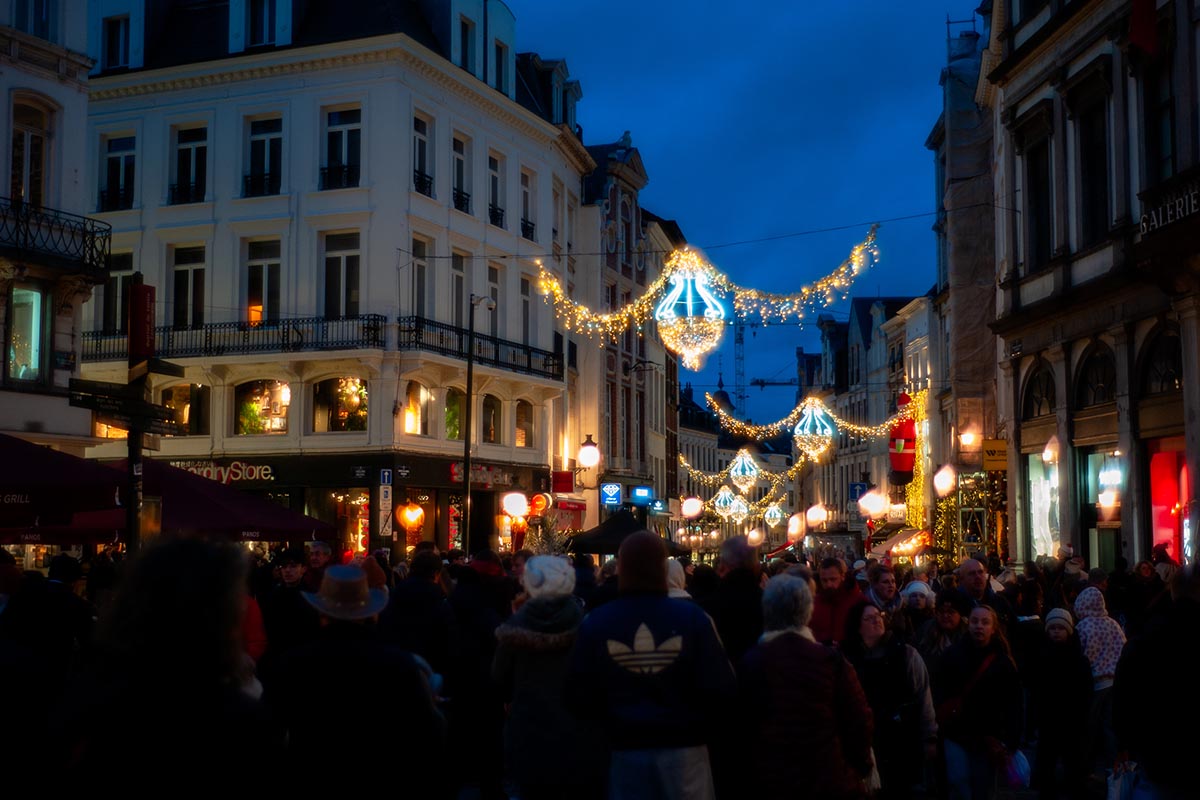
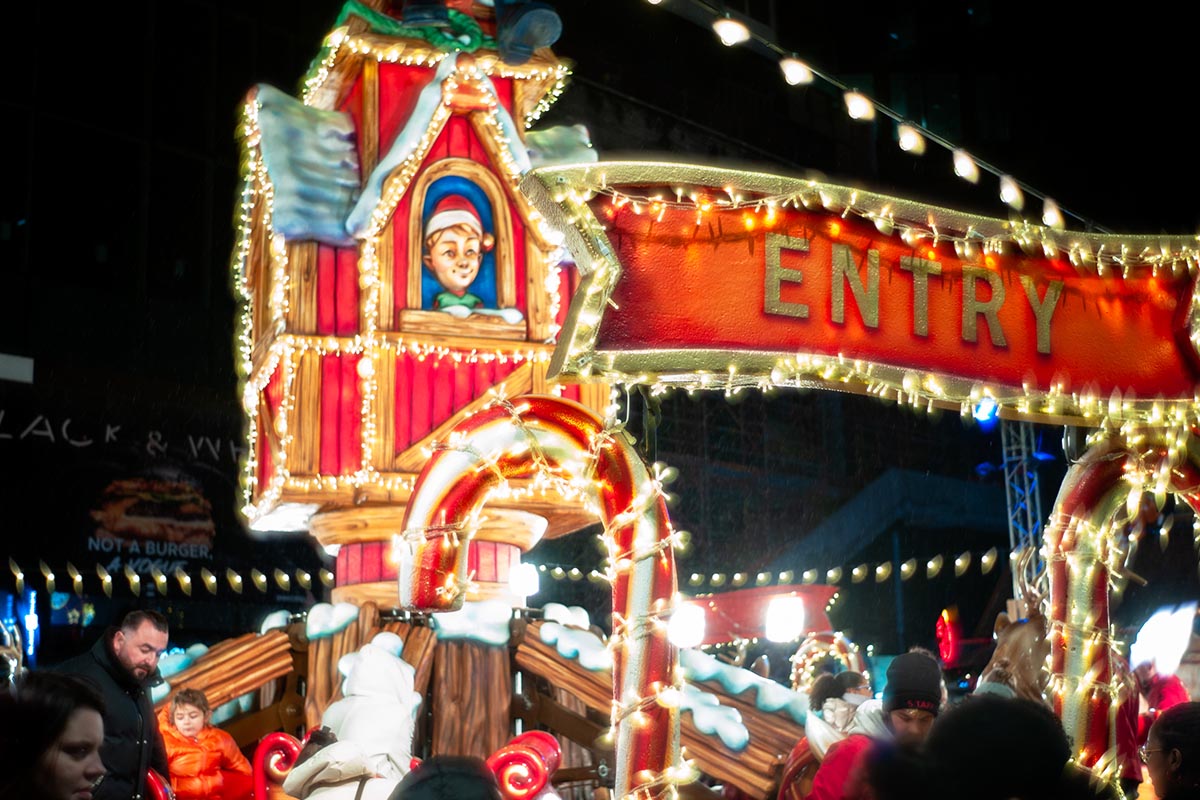
Brussels is among the top destinations during the holiday season. This modern city hosts the largest and most impressive Christmas market in Belgium. From the magical light show at Grand Place to the iconic 100 plus stall Christmas market at Marché aux Poissons, with Place Sainte Catherine as the central backdrop, the festive atmosphere feels nonstop.
People from all around the world gather in Brussels during the holidays to soak in the Christmas vibe within an urban setting. If you are looking to combine festive shopping with long city walks, Brussels is the perfect place to be.
Markets and Highlights
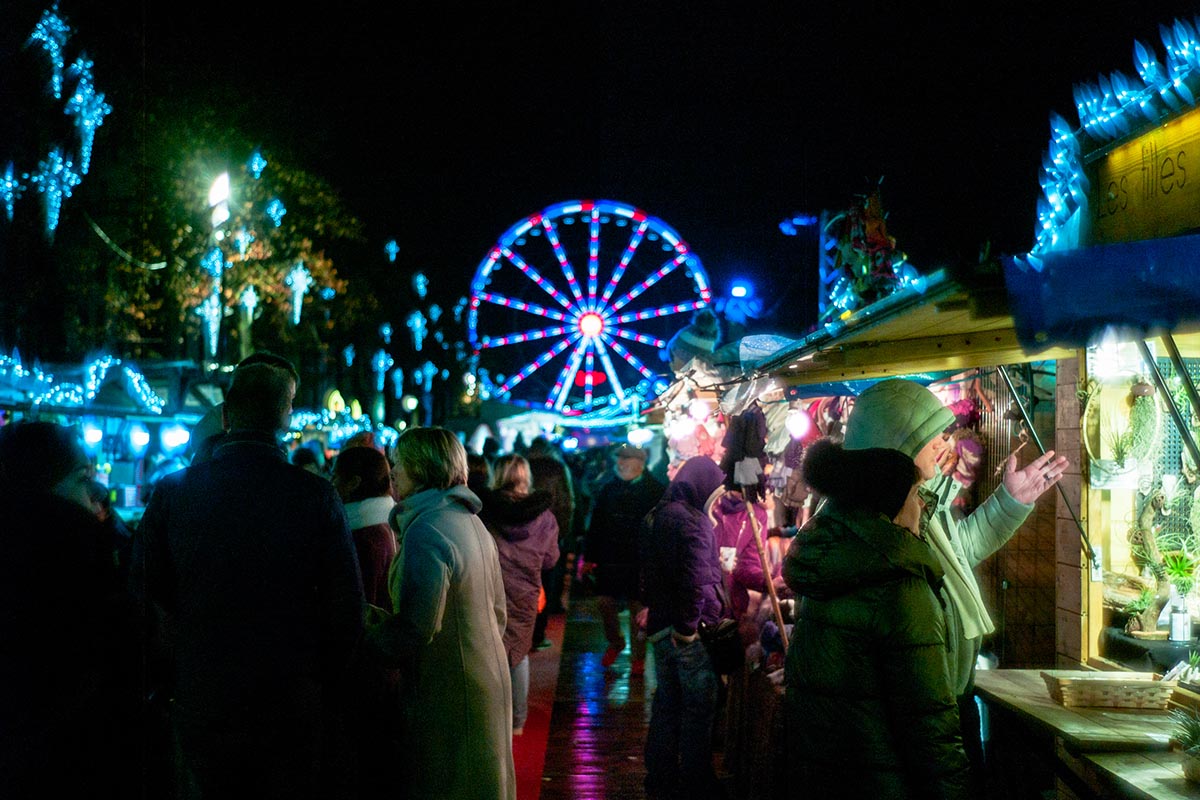
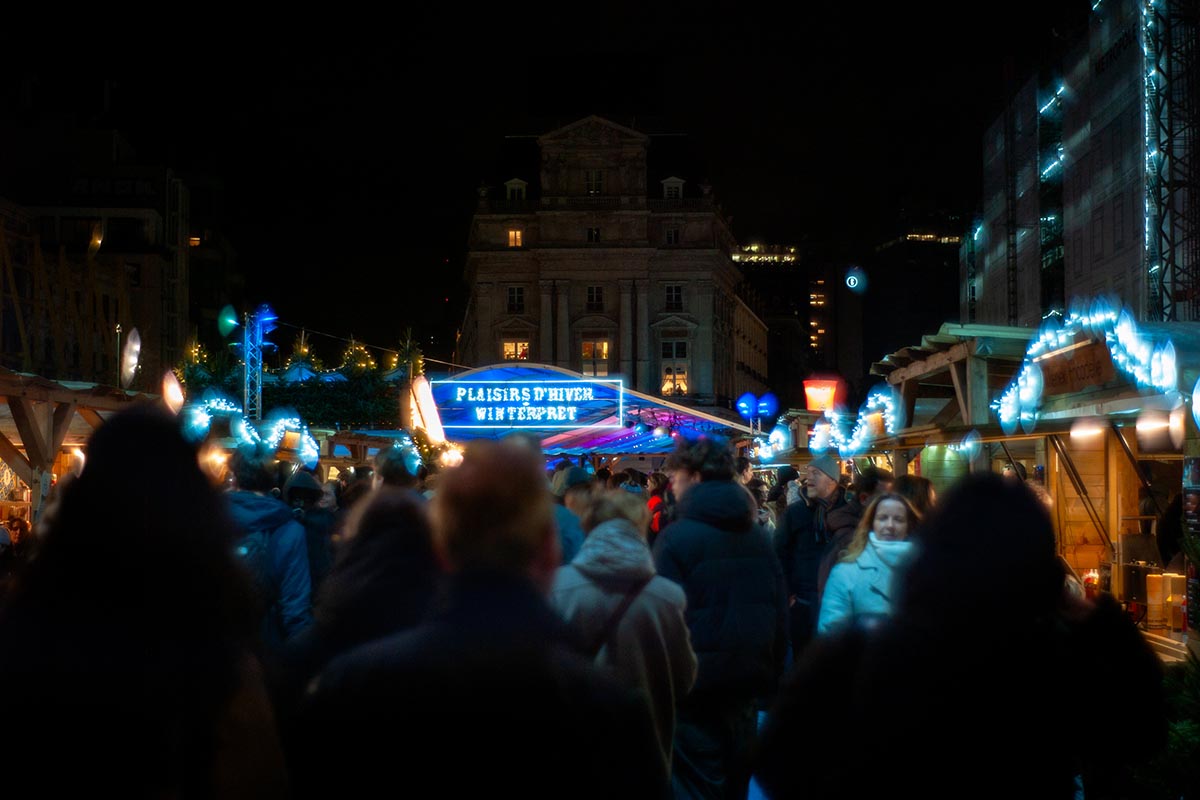
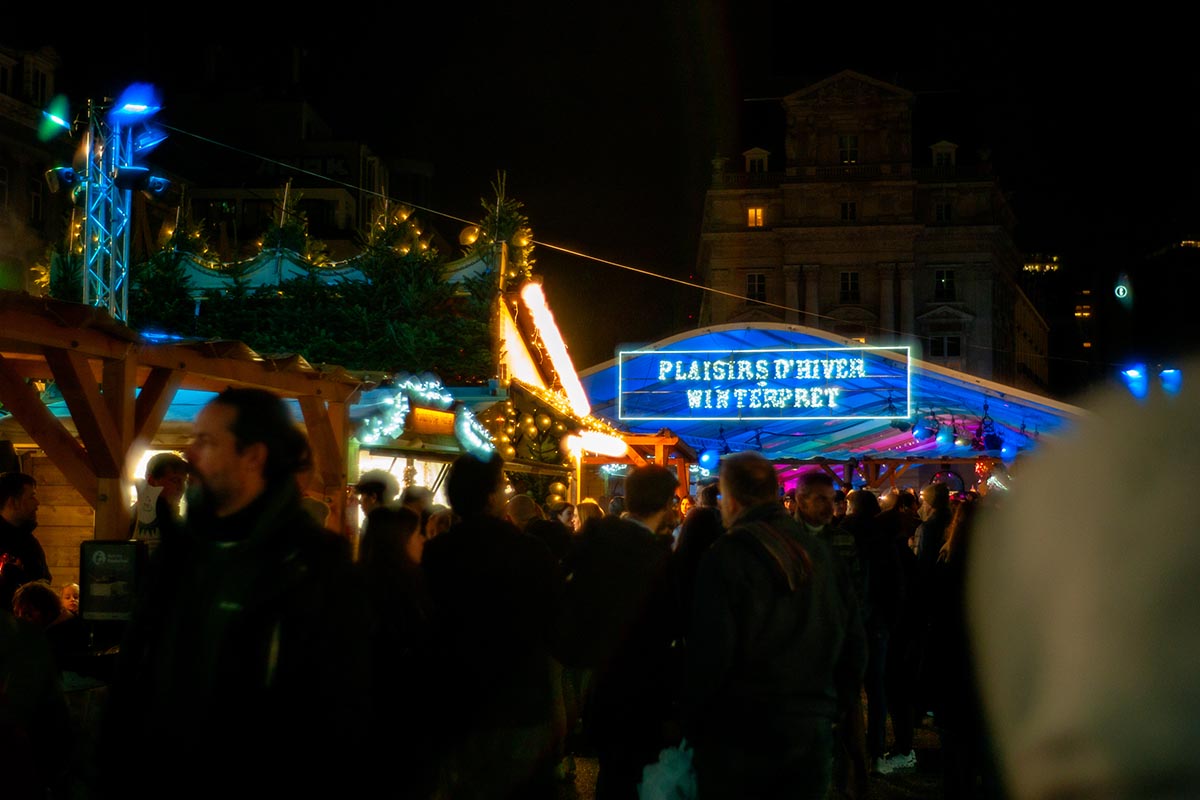
- Marché aux Poissons (Fish Market) – The largest and most iconic section with 100 plus stalls. Long parallel rows of chalets packed with food, drinks, gifts, and souvenirs. This is the stretch most people picture when they think of Brussels Christmas markets.
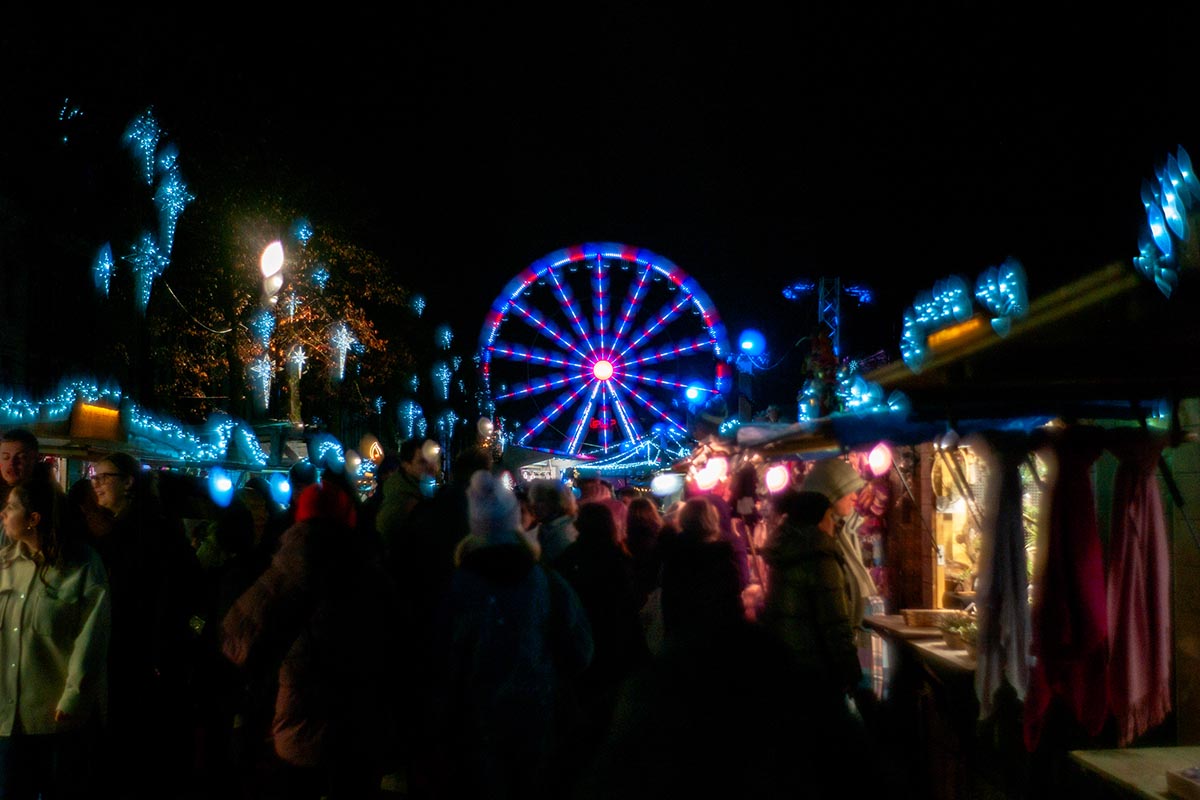
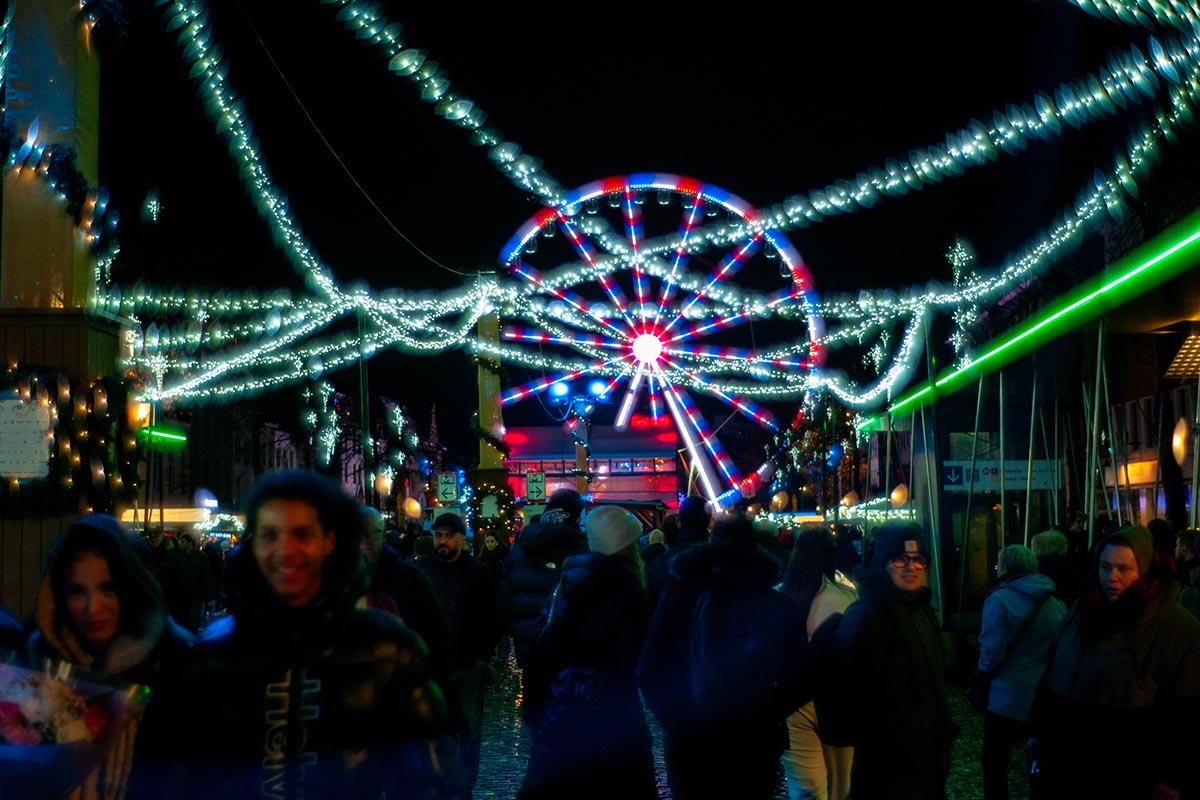
- Place Sainte Catherine – The heart of the market atmosphere. Home to the Ferris wheel and surrounded by food focused stalls. Lively, social, and especially busy at night.
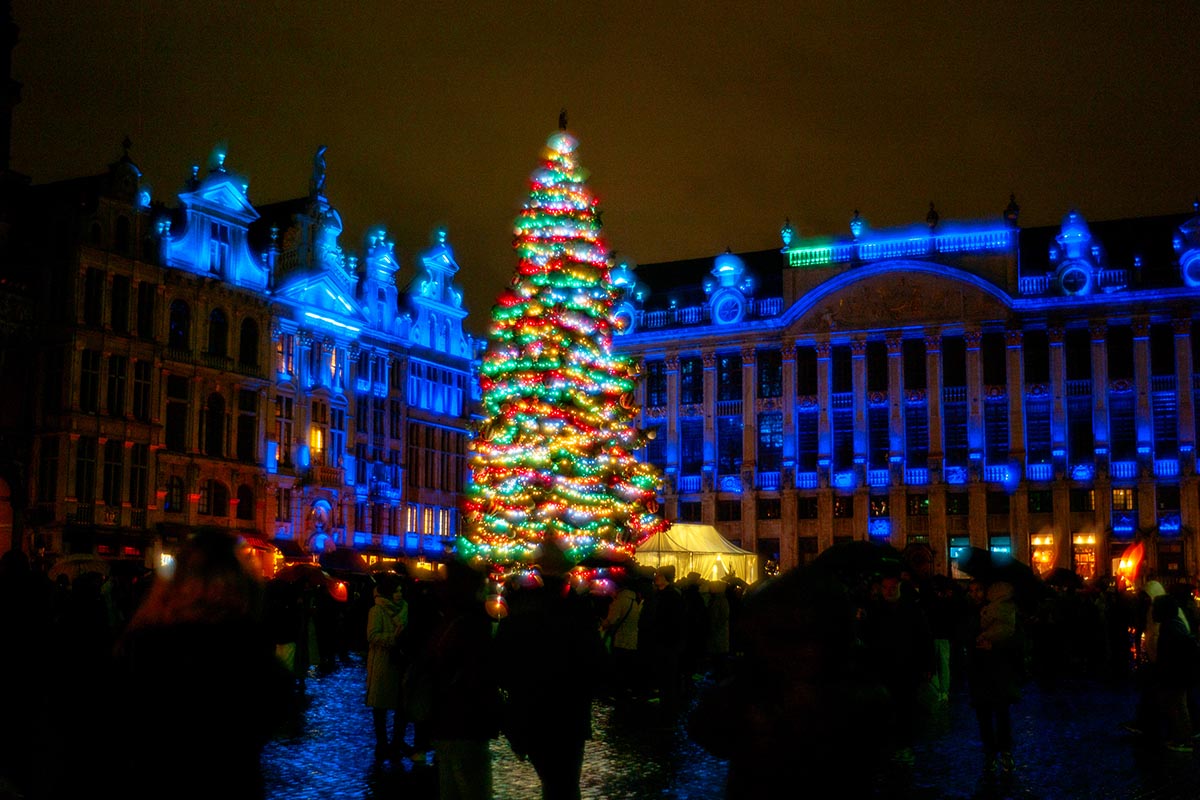
- Grand Place – No traditional stalls here, but essential to the Christmas experience. Famous for its nightly light and sound show that draws huge crowds.
- Boulevard Anspach – The long connecting boulevard between market zones. Dense rows of stalls on both sides make it feel like one continuous Christmas street.
- Bourse (Place de la Bourse) – A smaller cluster near the Stock Exchange building. Mostly food and drink stalls and a good stopping point while walking between areas.
- Place de Brouckère – Another busy hub often featuring the ice skating rink. More open and lively, popular with families and groups.
- Place de la Monnaie – A quieter section with fewer stalls. Mostly decorative and a nice transition area between shopping streets and markets.
Getting There
Brussels has three main train stations: Bruxelles Midi on the southwest side of the city, Bruxelles Central in the heart of the city right next to Grand Place, and Bruxelles Nord in the north.
It is important to understand where these stations are located so you do not accidentally arrive at the wrong one, especially if you are traveling between countries.
If you are coming from France such as Paris or Strasbourg, you will most likely arrive at Bruxelles Midi. It is about a 10 minute drive from downtown. I took the train from Strasbourg to Brussels and arrived at Bruxelles Midi, then called an Uber to Grand Place where my hotel was located.
Bruxelles Central is the most convenient station if you are planning day trips within Belgium, especially to Bruges. Since it sits right in the city center, it is extremely popular with tourists. Keep in mind that many travelers base themselves in Brussels and take day trips to Bruges, so trains from this station can get quite crowded.
Lastly, if you are heading back to Frankfurt for your return flight, you will likely depart from Bruxelles Nord. This station is also about a 10 minute drive from the city center.
All three stations provide easy access in and out of Brussels, but knowing their locations ahead of time will make getting around the city much smoother.
Once you’re in the city, walking is the best way to get to the Christmas markets and stop for some shopping and restaurants along the way.
Vibe and Atmosphere
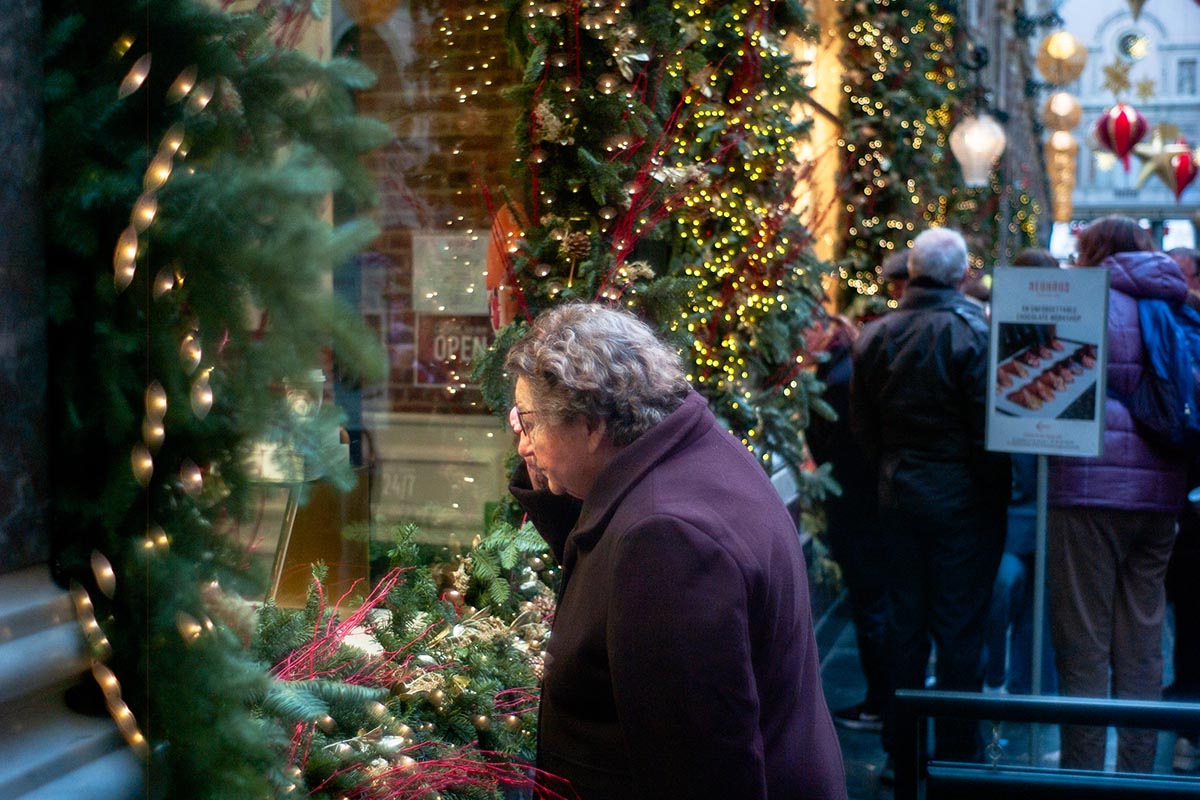
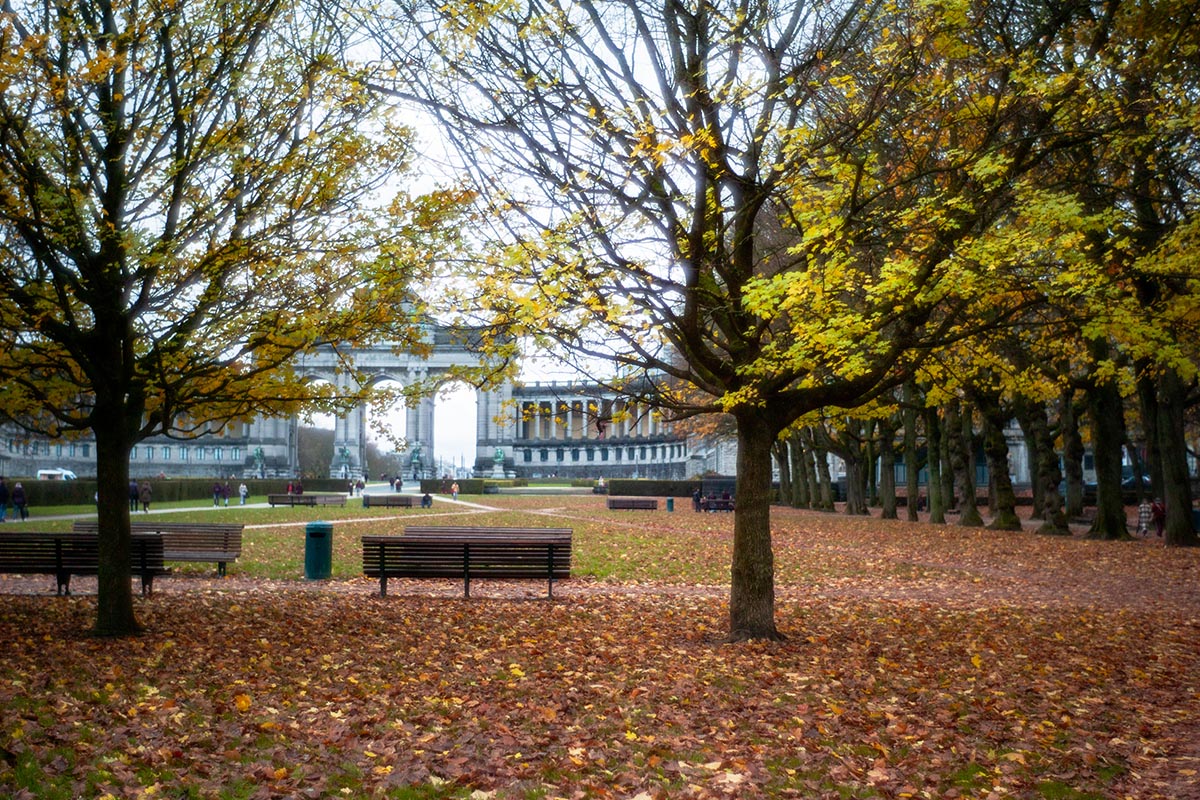
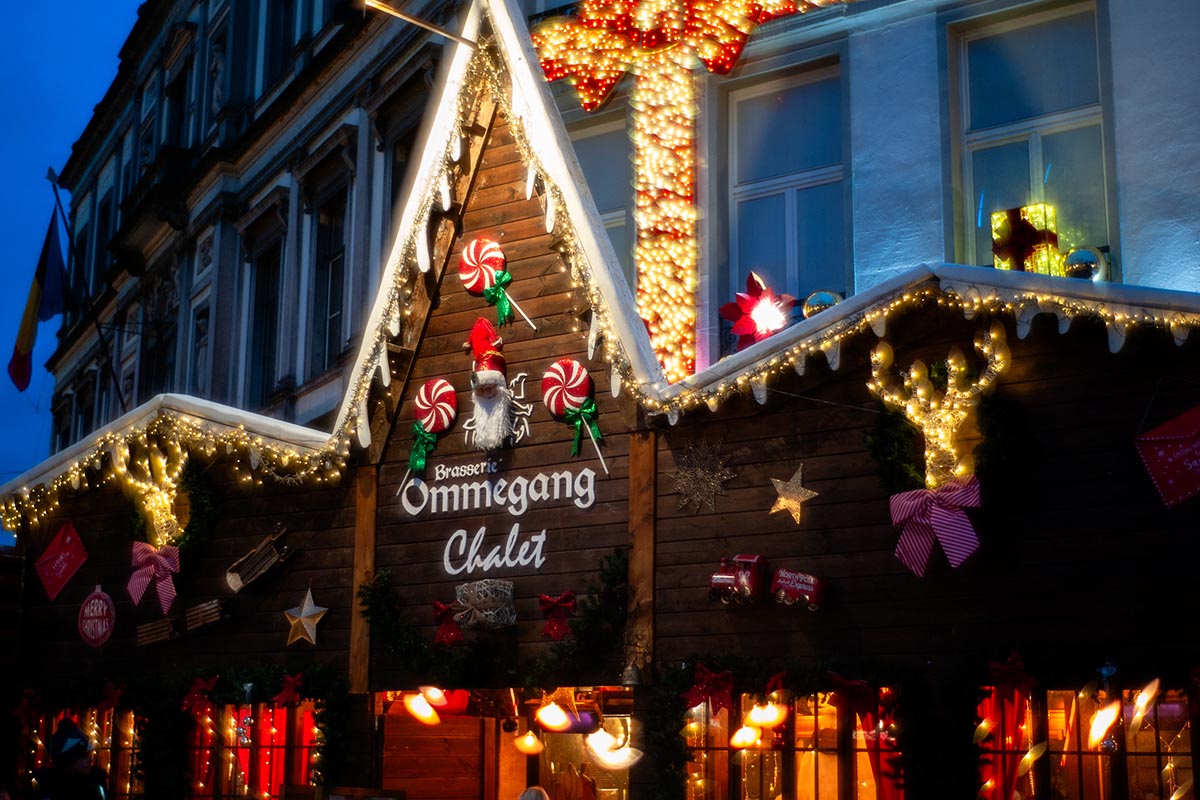
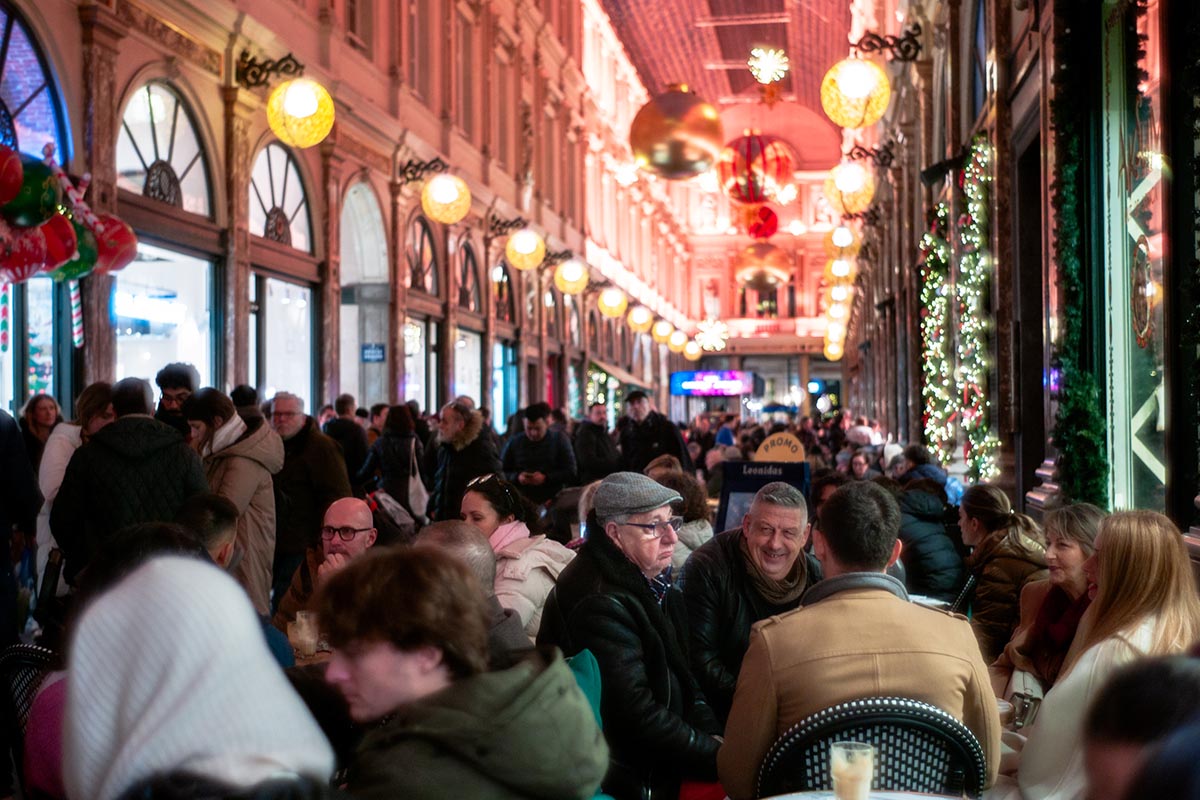
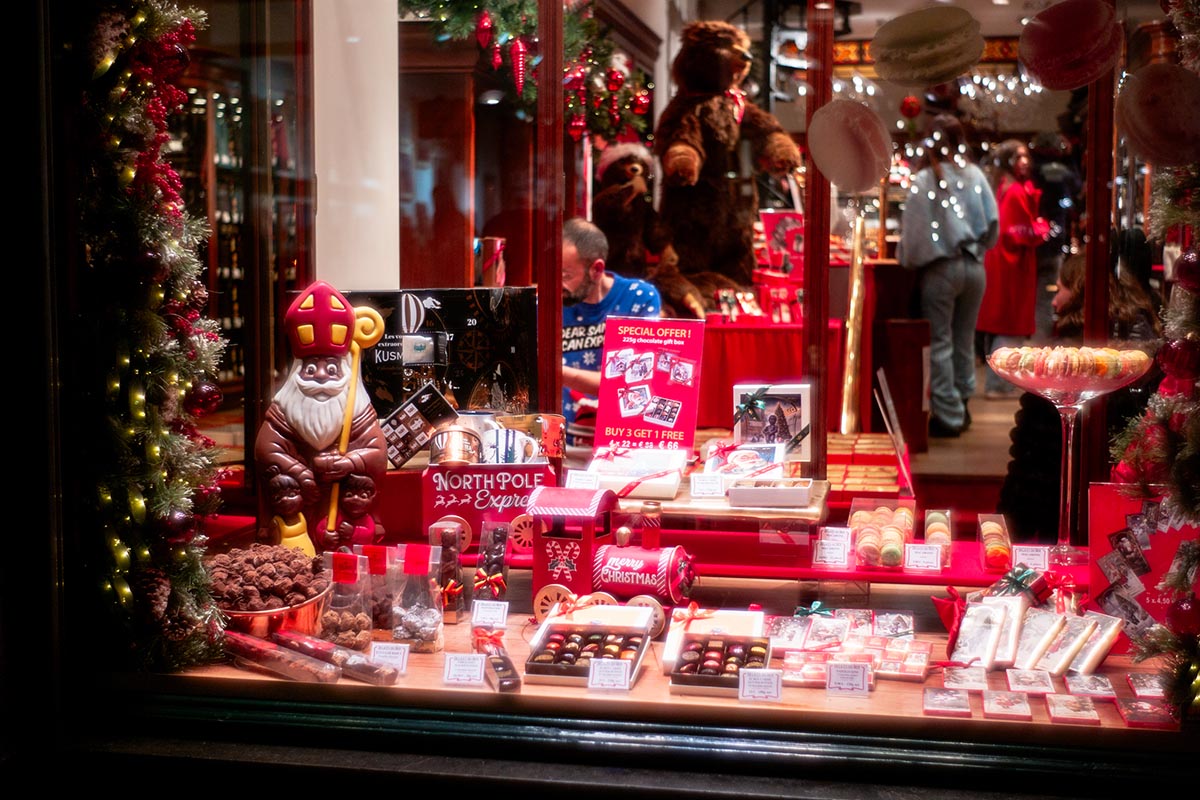
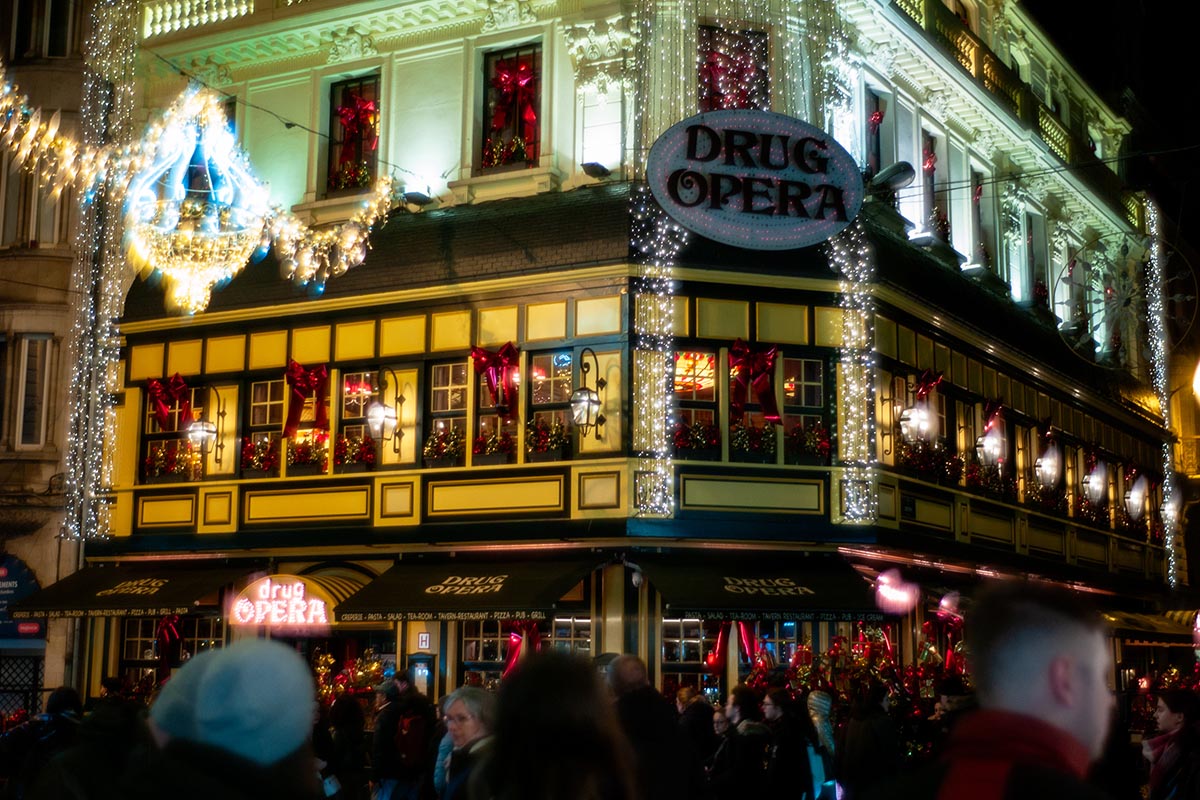
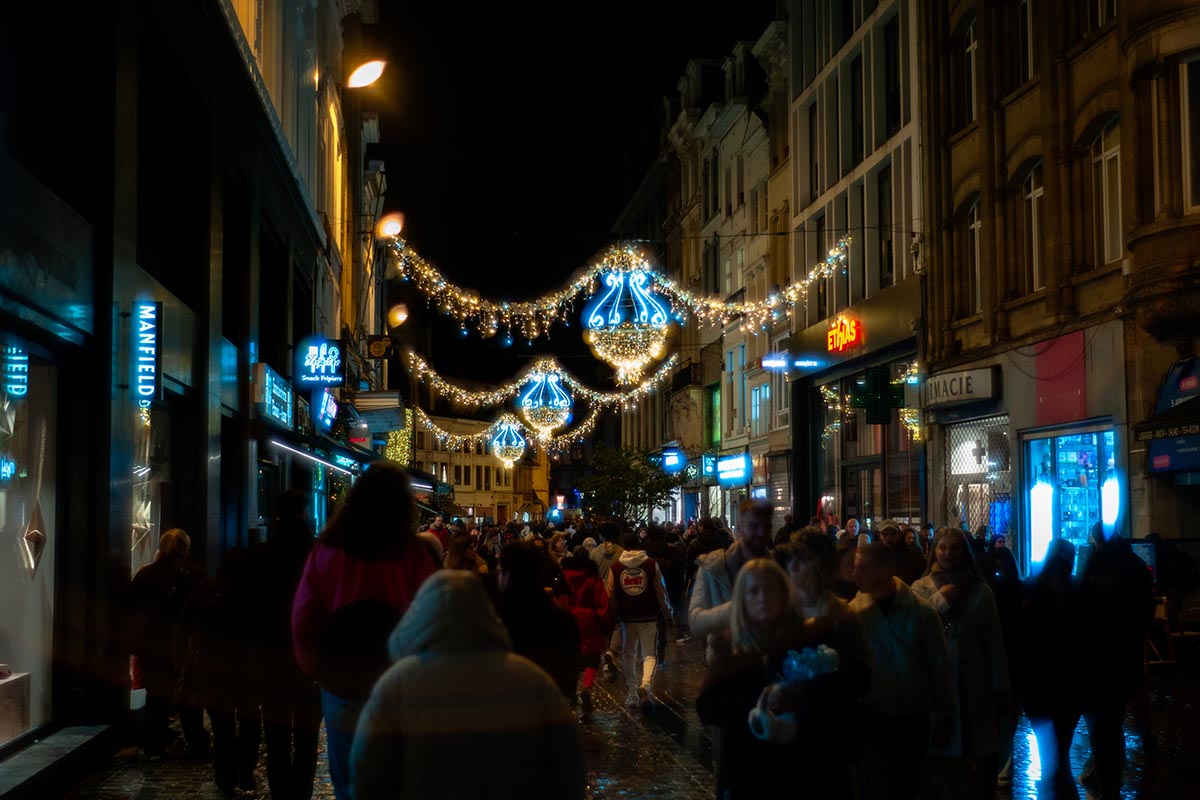
Brussels feels more like a modern city, so if you are looking for old world charm with traditional, heavily decorated Christmas markets, you might be a bit disappointed. The overall vibe leans more toward a modern date city, with Christmas stalls and lights added on top rather than the city transforming entirely for the holidays.
The city itself feels very urban, with high rises, endless shops and restaurants, and a chaotic energy driven by large crowds. There are many families and kids around, so it can get noisy, especially in the evenings and on weekends.
The main Christmas market you often see on social media takes place at Marché aux Poissons, located further northwest in the city center. This market is incredibly large, but while the size is impressive, the stalls are not as intricate or well constructed compared to German Christmas markets. Overall, the setup feels more barebones and budget compared to world class markets like Cologne or Strasbourg.
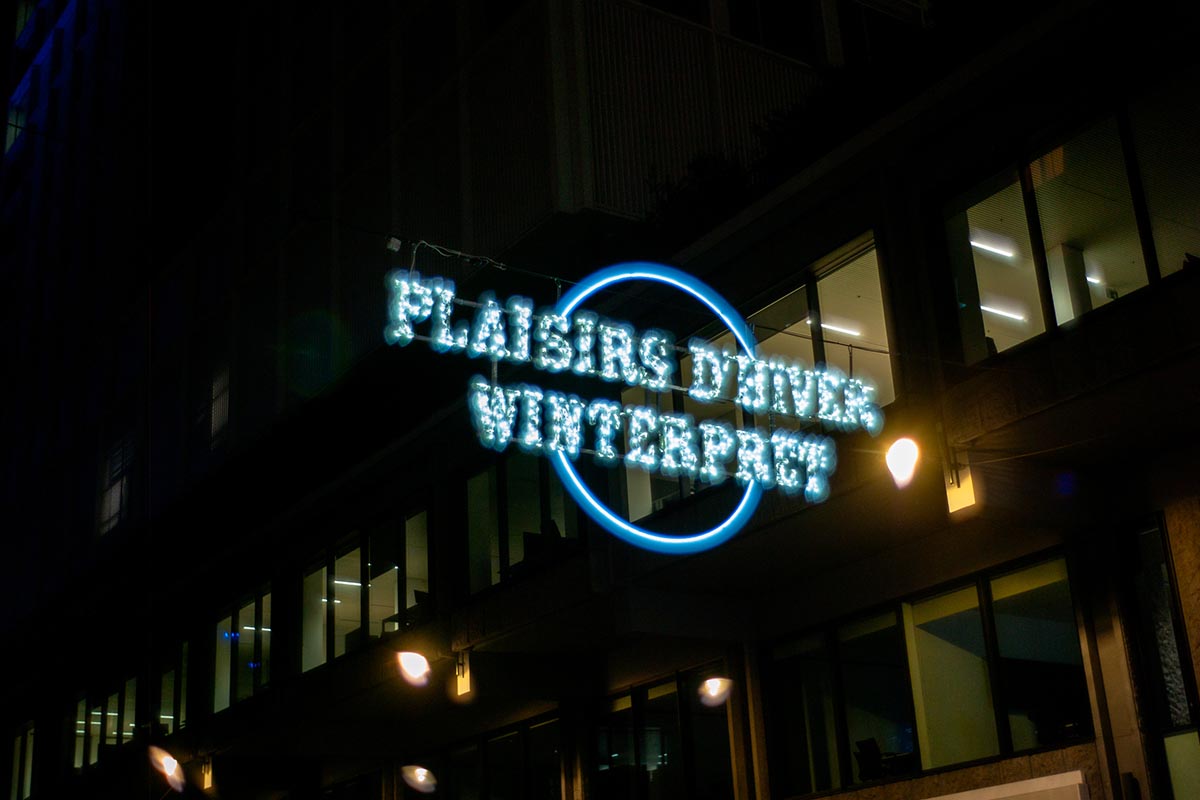
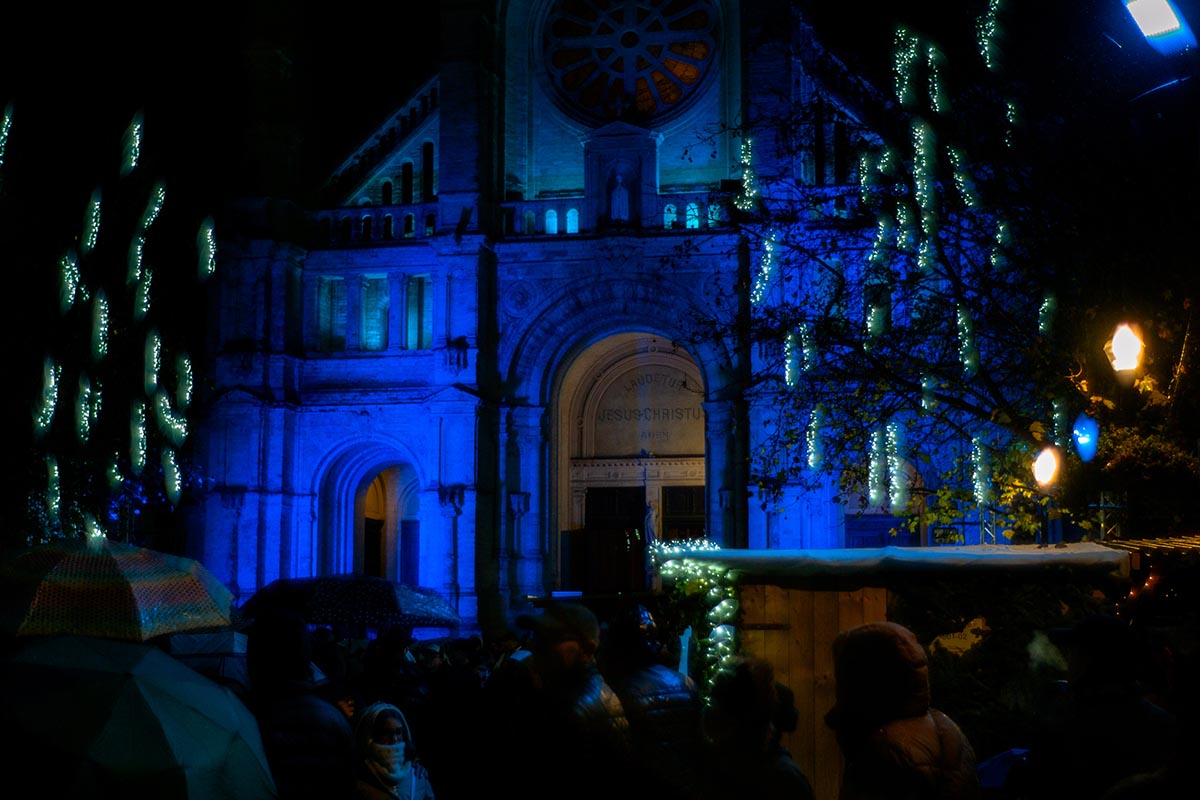
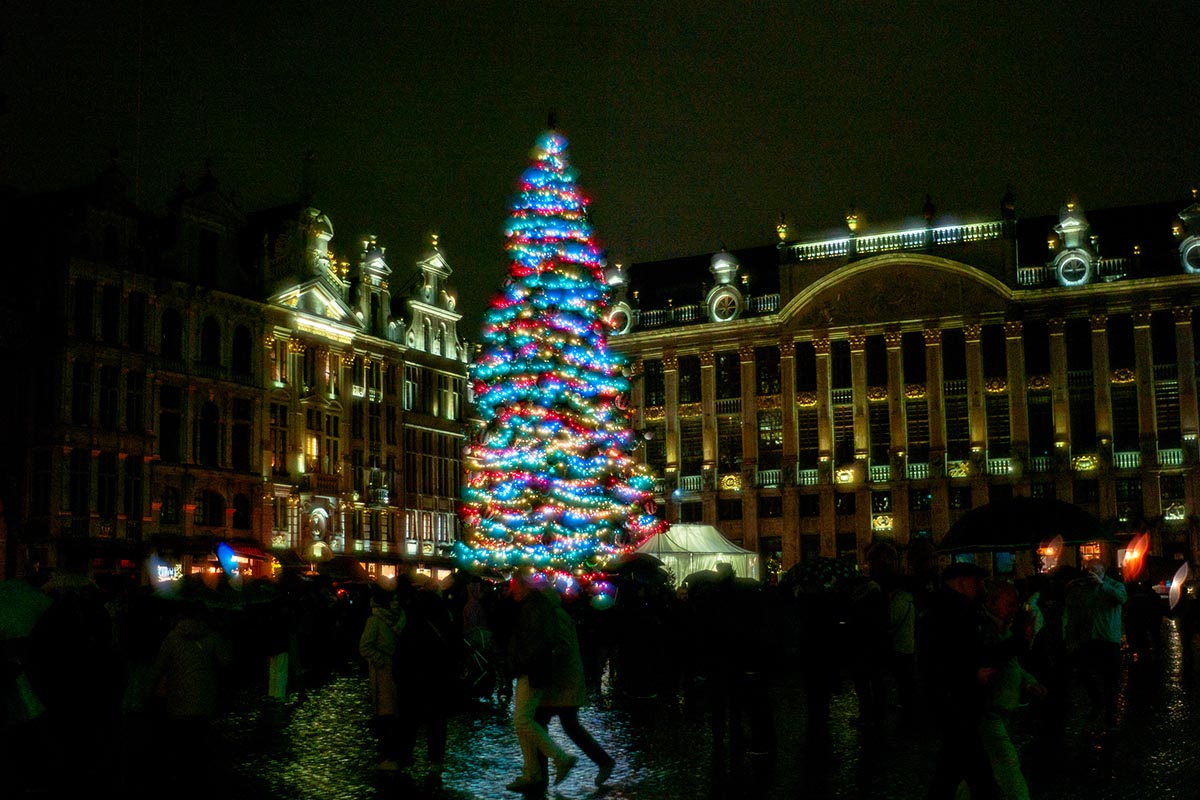
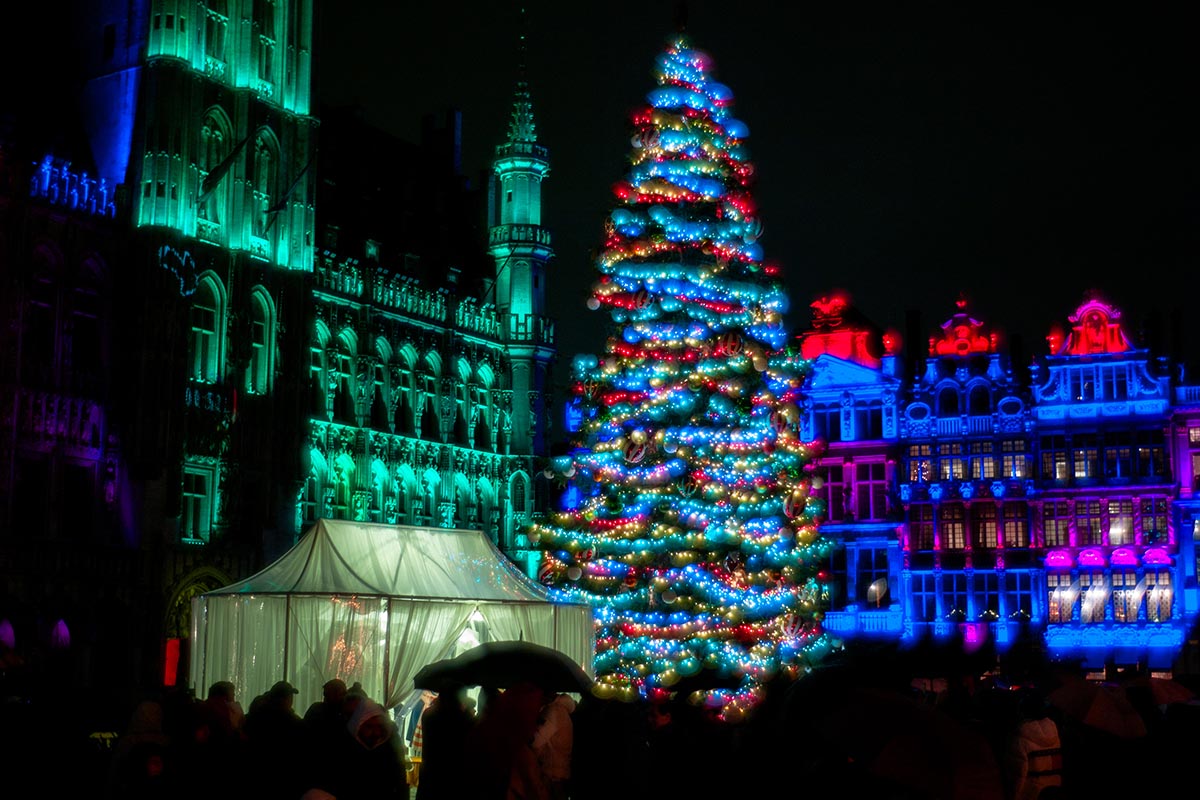
Grand Place is another major highlight during the Christmas season. While there are no Christmas stalls here, the historic buildings light up for a magical light and music show that is unique to Brussels and definitely worth seeing.



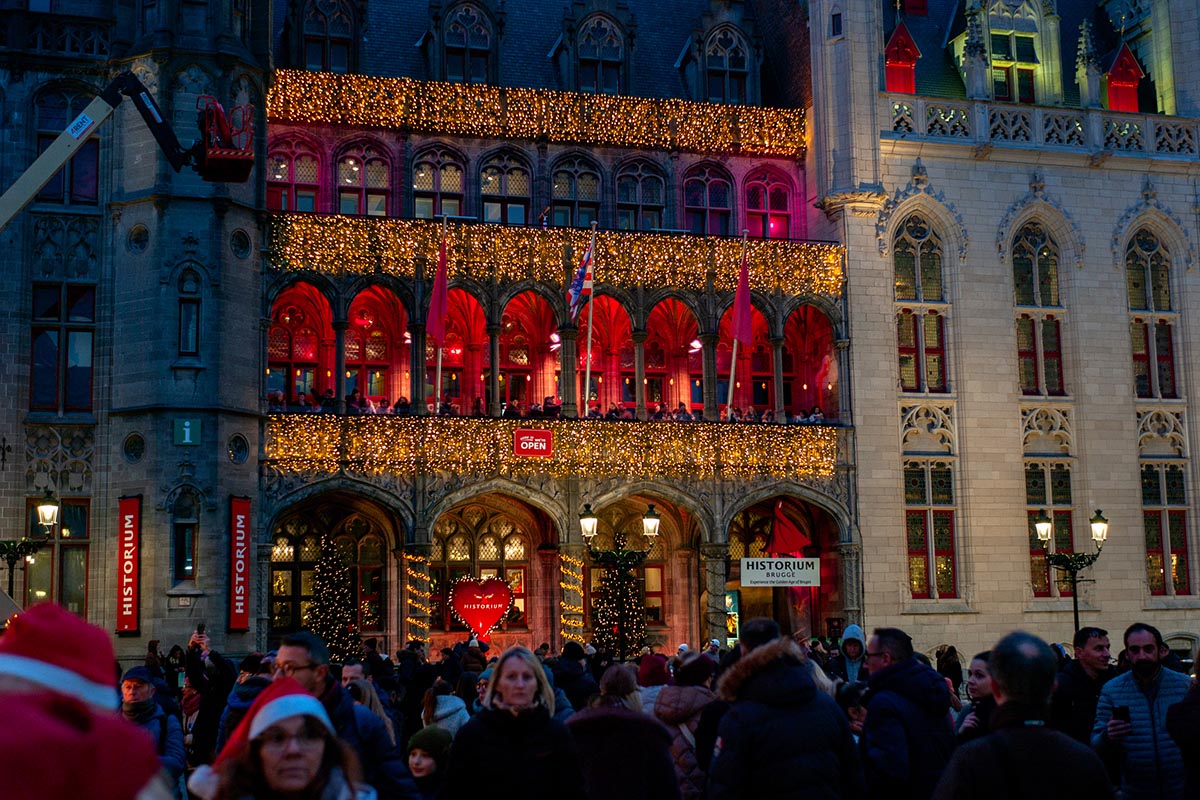
11. Bruges
Bruges is just an hour away from Brussels Central Station by train, with departures every 20 minutes, making it a convenient and must-visit day trip from Brussels.
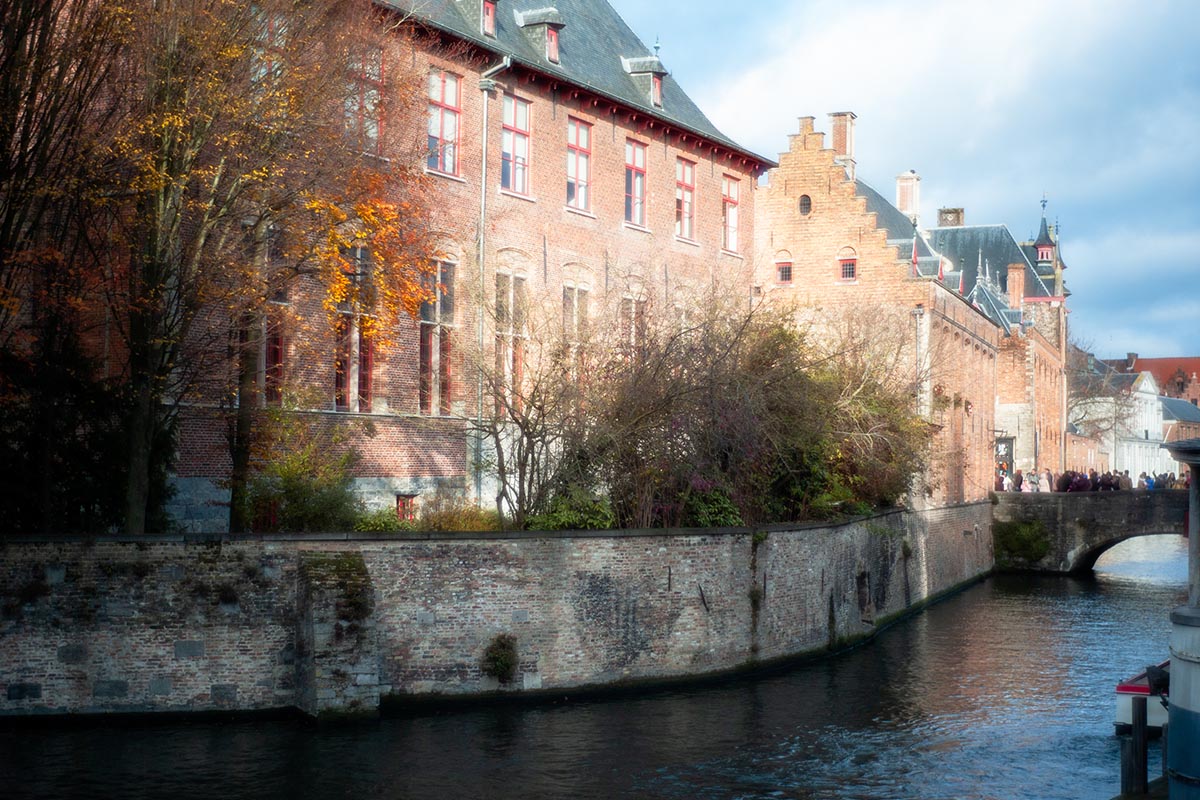
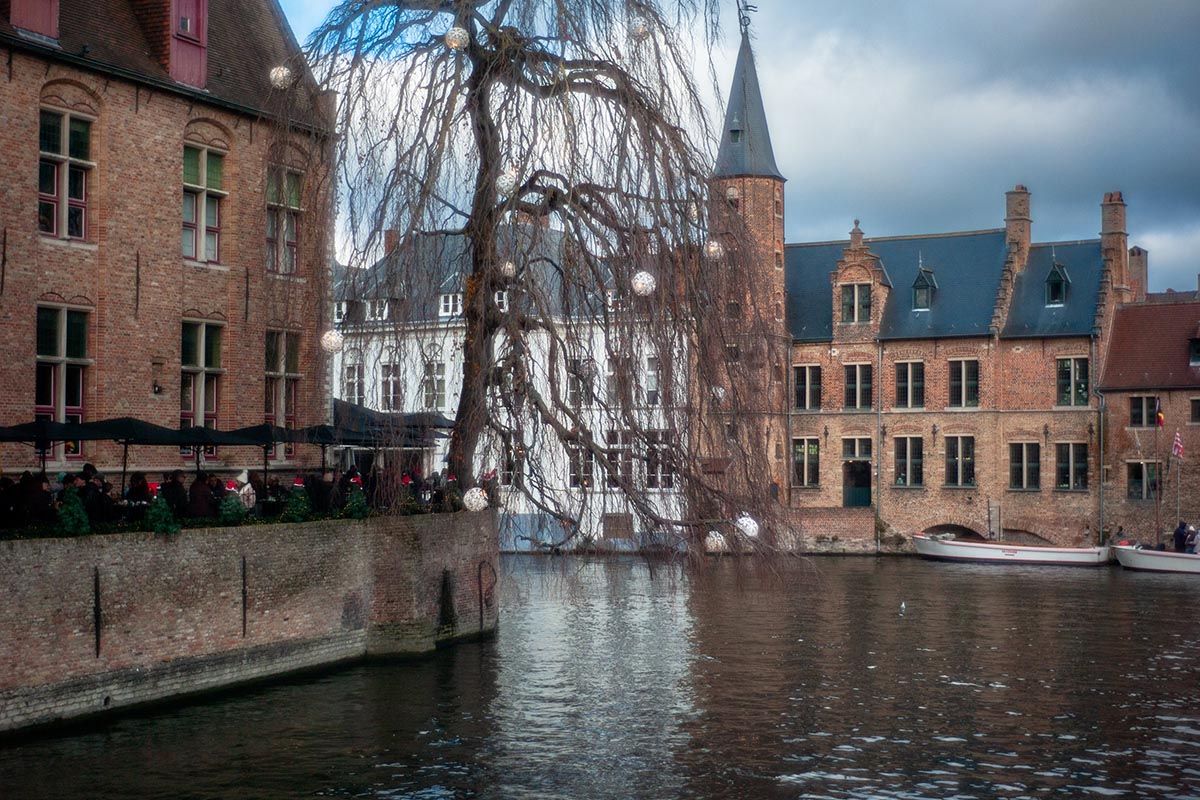
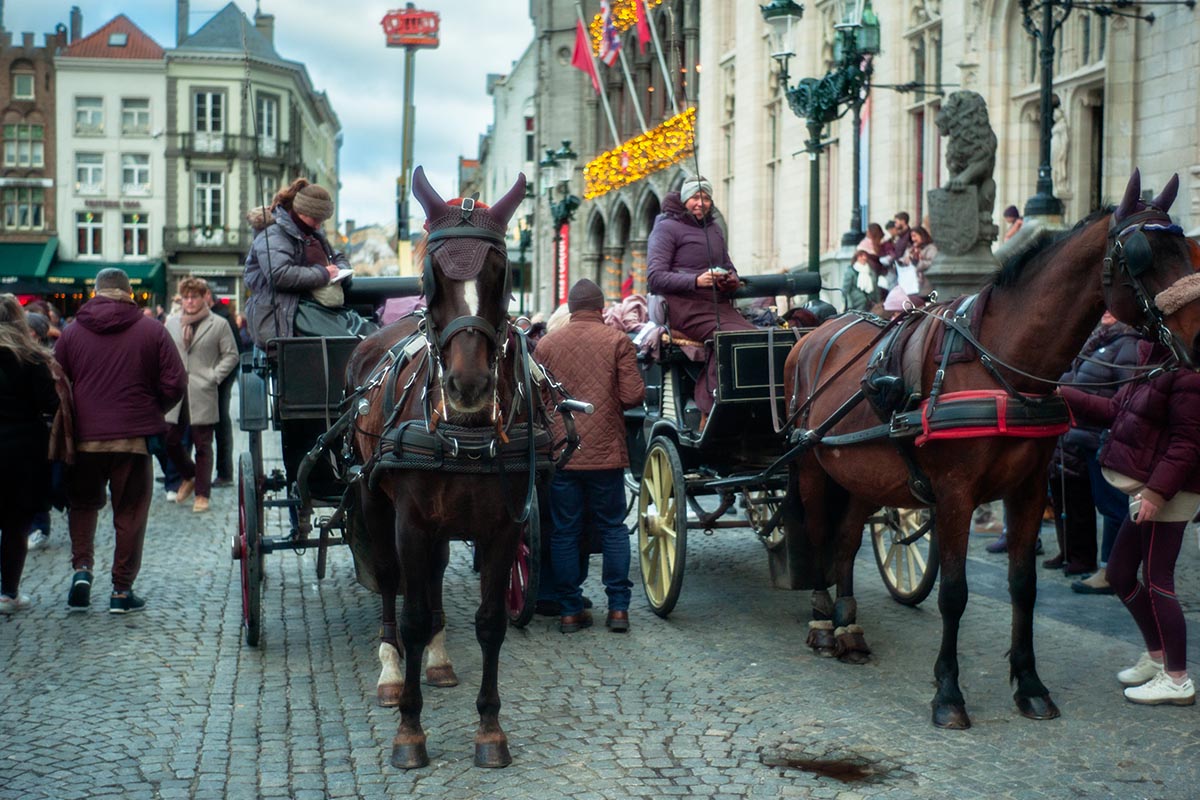
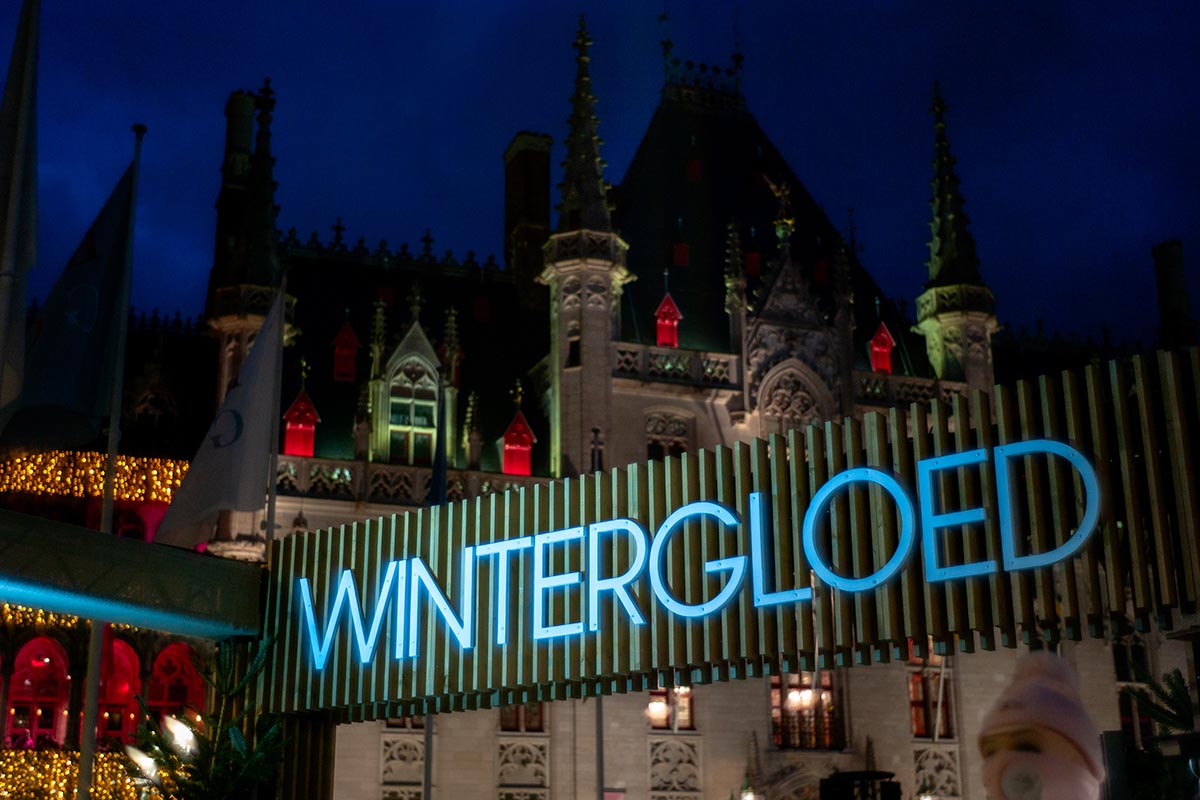
Compared to Brussels, Bruges offers an intimate, small-town charm reminiscent of Colmar, with rivers and bridges weaving throughout the city. The resemblance is striking. Unlike Brussels’ modern city vibe, Bruges feels more authentic and relaxed, providing a far more enjoyable experience.
When it comes to Christmas, Bruges’s festive atmosphere is far more immersive than Brussels, making it a stronger destination overall for the holiday season.
Markets and Highlights
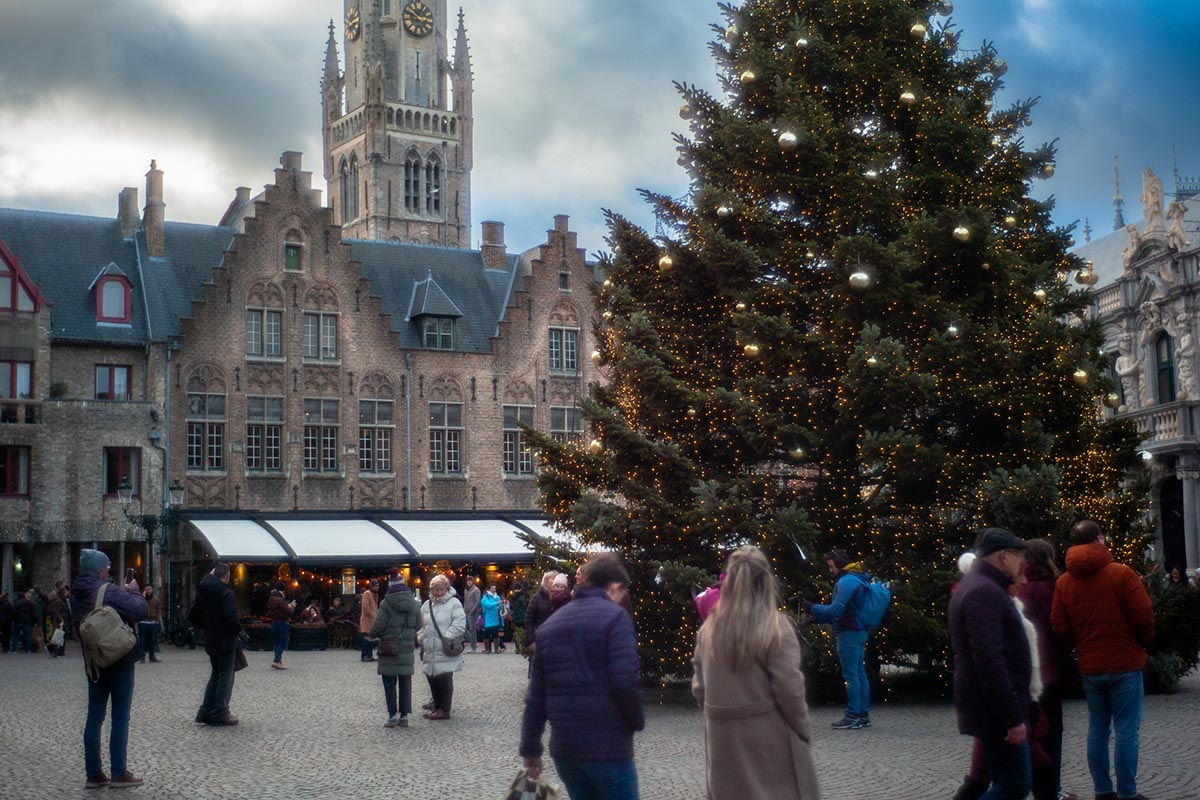
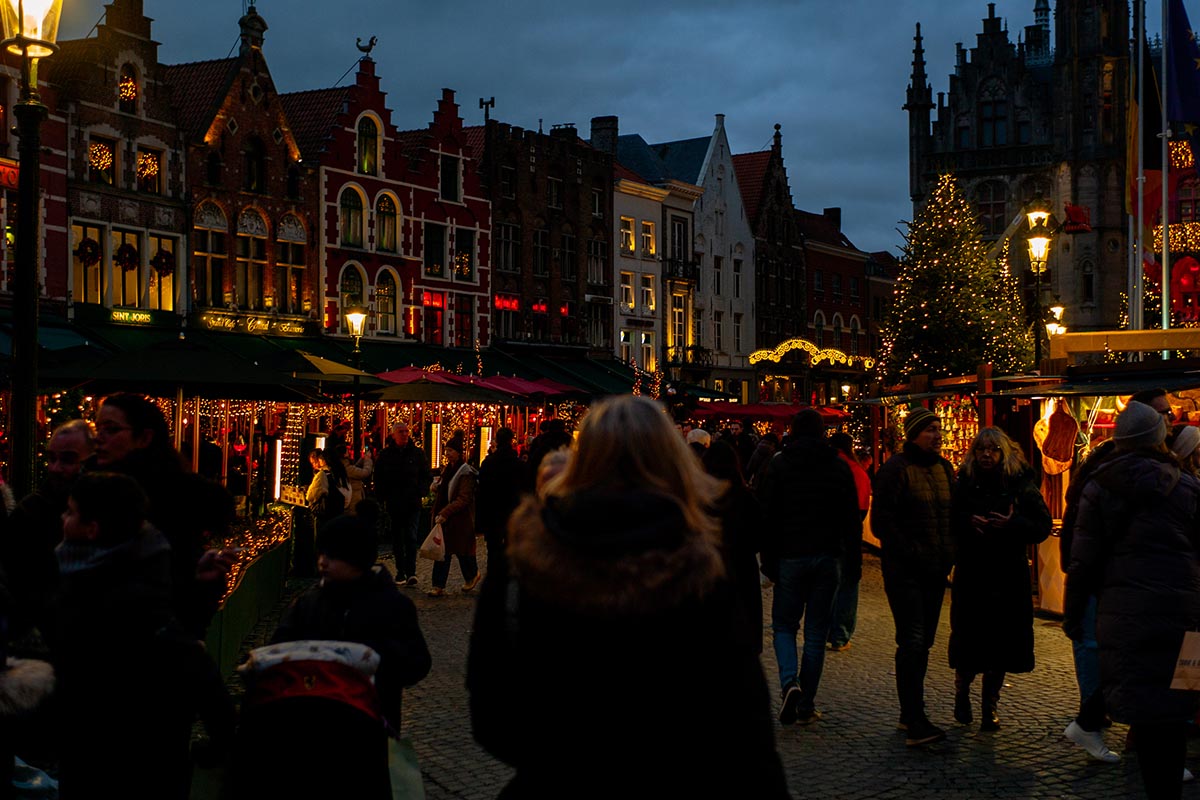
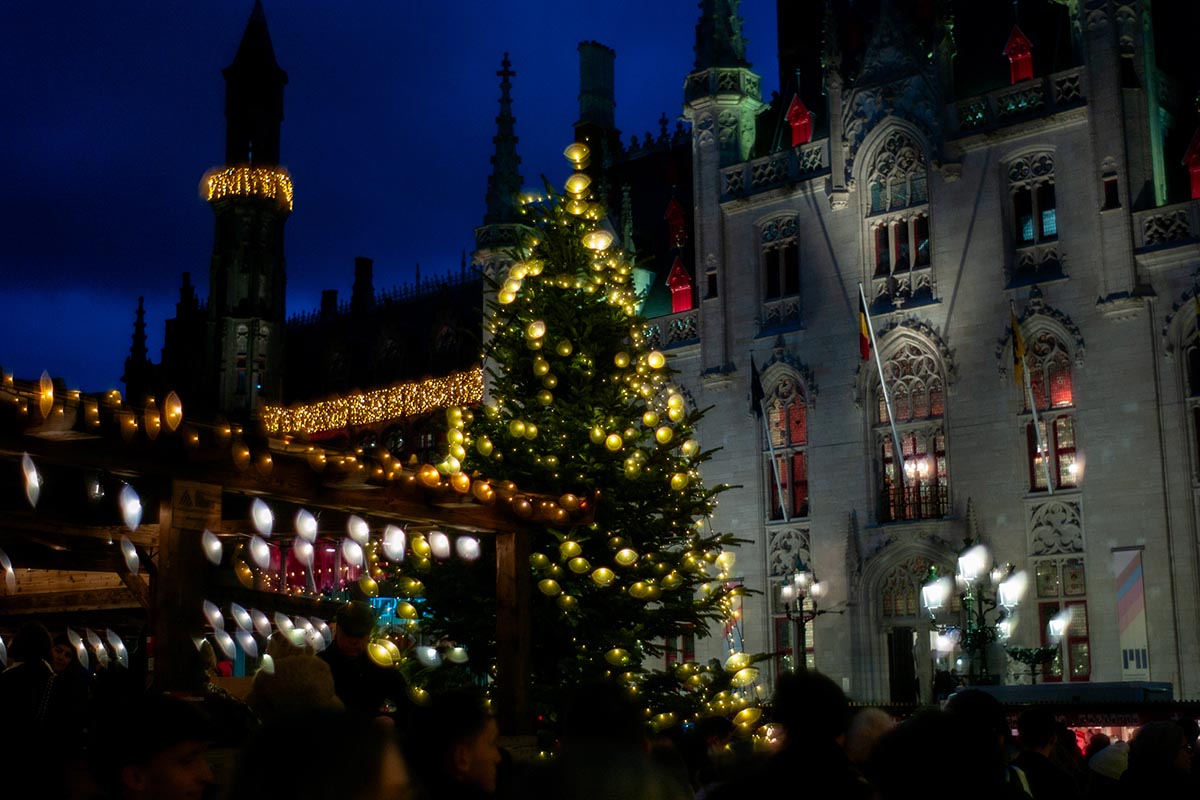
- Market Square (Markt) Christmas Market – The central market is the heart of Bruges’ festive scene, with a large Christmas tree, ice rink, and numerous stalls selling gifts, decorations, and local treats.
- Simon Stevinplein Market – Smaller and more intimate, with artisan stalls and seasonal food, offering a cozy atmosphere away from the crowds.
- Jan van Eyck Square – A charming spot with local crafts, souvenirs, and festive decorations, perfect for strolling while enjoying the city lights.
- Burg Square Christmas Market – Set near the historic town hall, this market is smaller but very picturesque, often featuring gourmet food stalls and handmade gifts.
- Sint-Anna Quarter Christmas Stalls – A quieter area with artisan food and local crafts, giving a more authentic, neighborhood feel.
Getting There
Bruges Train Station is just an hour away from Brussels, with trains departing from Brussels Central Station every 20 minutes. Upon arriving at Brugge Station, head north, and you’ll soon find yourself wandering through narrow residential alleyways.
After a short 5-minute walk through these charming alleys, you’ll arrive at Bruges’ old town. Walk a little further, and you’ll reach the main Christmas market at Market Square. The town is compact, so exploring it won’t take long, making it perfect for a day trip.
Vibe and Atmosphere
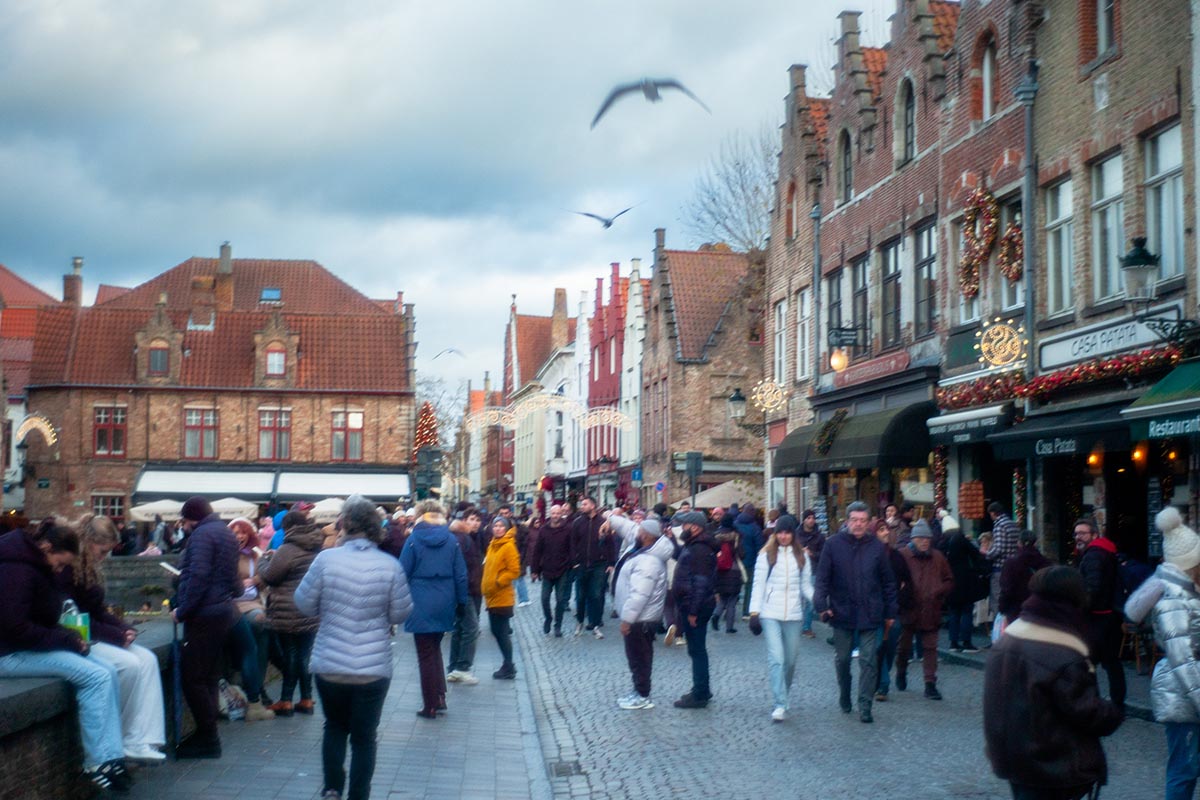
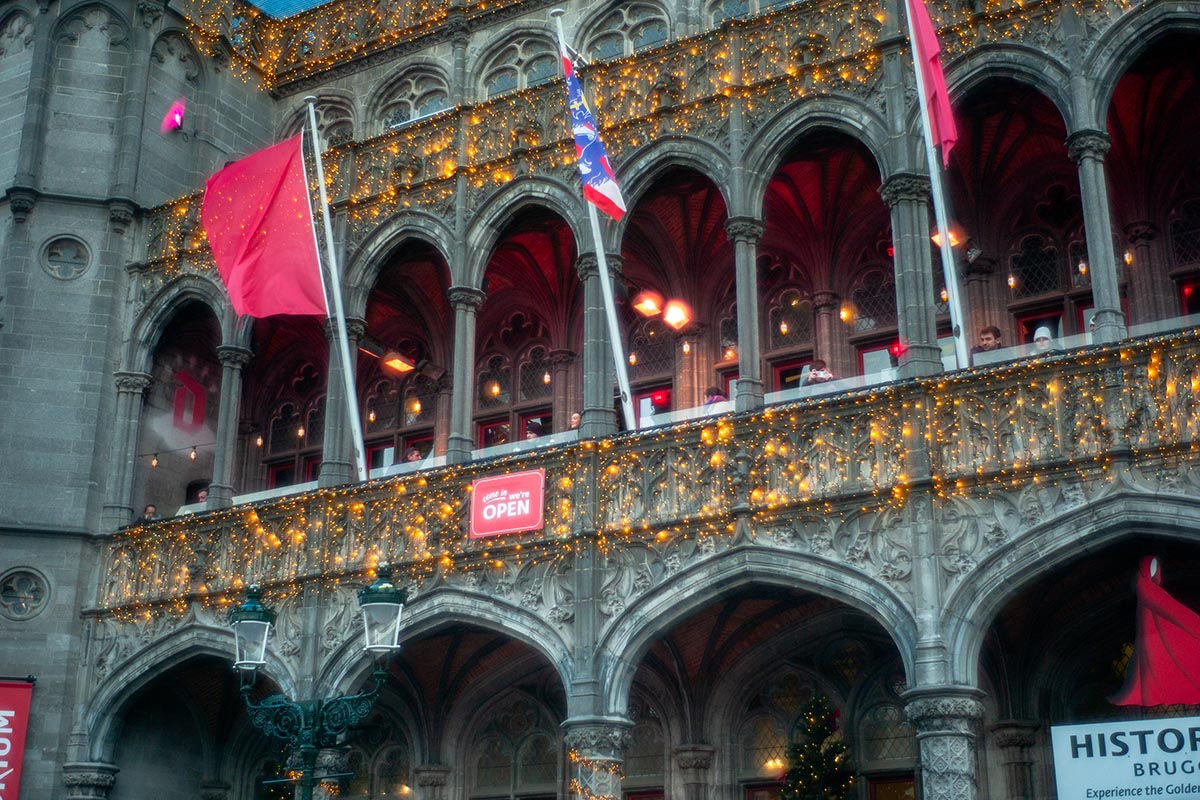
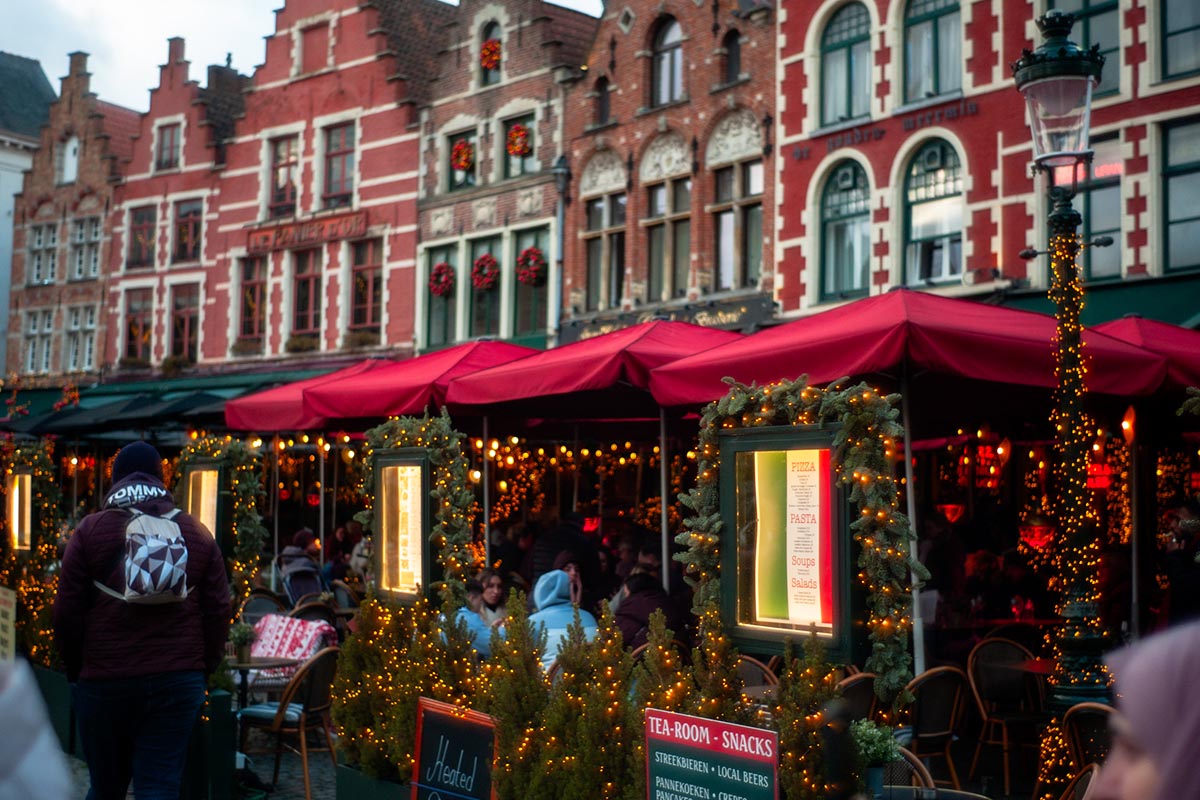
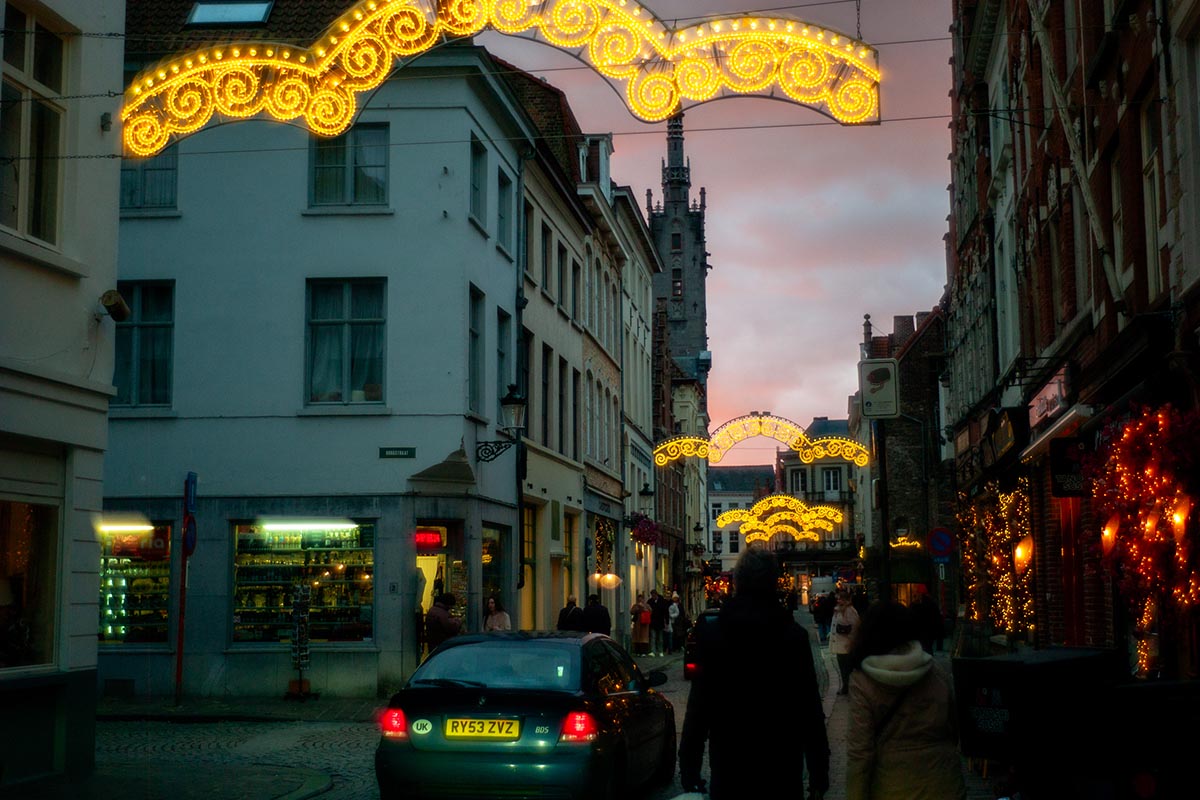
Bruges has an intimate, storybook charm that makes you feel as if you’ve stepped back in time. The city’s cobblestone streets, canals, and medieval architecture create a romantic, fairy-tale setting, especially during the Christmas season when festive lights twinkle along bridges and streets.
Compared to Brussels’ modern, bustling vibe, Bruges feels slow and relaxed. Its compact size makes it easy to explore on foot, and its atmosphere is strikingly similar to Colmar, even though the two towns are miles apart.
Even during peak tourist season, Bruges manages to maintain a serene, almost magical atmosphere, making it one of Europe’s most enchanting destinations for Christmas.